A report on the latest situation of Maryam Ebrahimvand in Qarchak Prison, Varamin; continued deprivation of contact
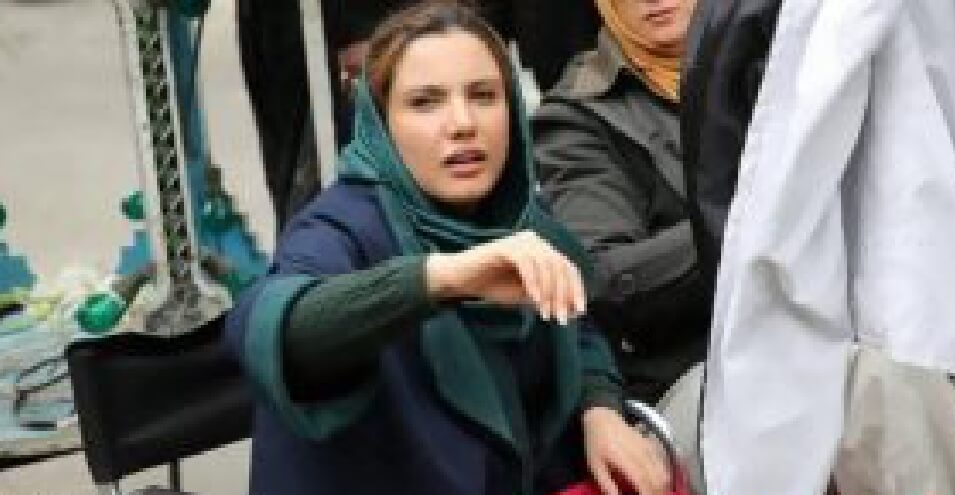
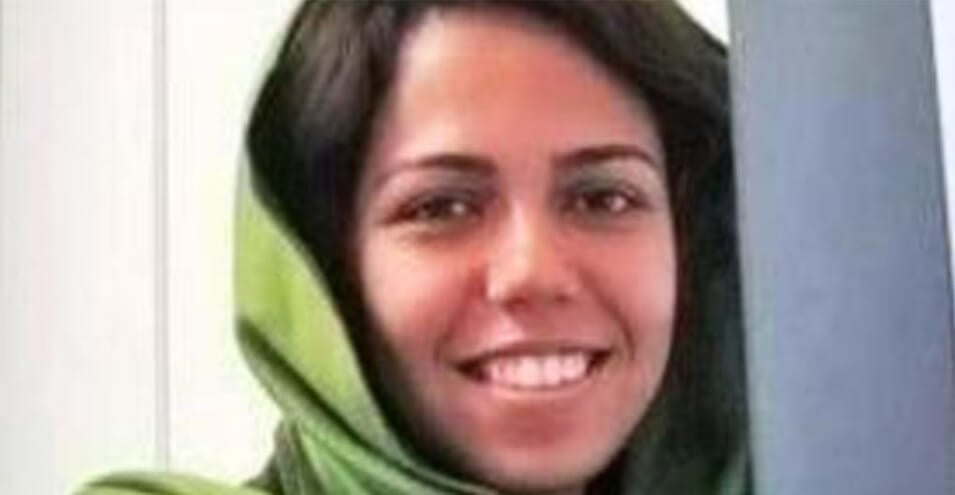
Maryam Ebrahim Vand, a writer, director, and film producer, has been deprived of her phone card and contact with her family for about a month. She has written a letter to prison officials protesting this and said she is on a hunger strike to protest this.
According to HRANA, the news agency of the Human Rights Activists in Iran, Maryam Ebrahimvand, a writer, director, and film producer, has been deprived of having a phone card and contacting her family for about a month now.
A source familiar with Ms. Ebrahim Vand's situation told HRANA: "Ms. Ebrahim Vand's phone card was deactivated by Qarchak Prison officials about a month ago for unknown reasons, and since then she has only been able to talk to her family and her defense attorney in a controlled manner in the prison security office. This is in a situation where her case is in the appeal stage and she must be in constant contact with her attorney during this period. On the other hand, she was transferred from the political ward of Qarchak Prison to the mothers' ward of this prison on January 25, and is now being held in this ward without observing the principle of separation of crimes."
Ms. Ebrahim Vand wrote a letter to the prison authorities protesting and said that she had gone on a hunger strike to protest this.
The full text of this letter, which was provided to HRANA for publication, follows:
"After 29 months of uncertainty, I, Maryam Ebrahim Vand, a writer and film director, was sentenced to 10 years in prison for making a film centered on the rape of girls and the problems of society and criticizing the president. After the initial verdict was issued on November 3, 2020, I was transferred from Evin Prison to Ward 8 of Qarchak Prison in Varamin, the ward for prisoners with political and security crimes.
Upon entering Ward 8, they confiscated my phone card after 1 week and stated that the Tehran prosecutor had banned you from begging. On December 13 of this year, special guards attacked the political ward with batons and tasers and severely beat all political prisoners, and took Golrokh Iraei out of the ward in the worst possible way with tasers and batons. After that, Sepideh Khoshbarat, one of the guards at Qarchak Prison, gave me 20 tasers to my left leg, seriously injuring me, and I still have trouble walking. So far, no medical attention has been given to my condition.
On the other hand, I am the only student in Qarchak Prison, but after taking two exams, I was deprived of my education by Shahr-e-Rey Prison and was not allowed to take university exams. Finally, on January 3, 2020, Mr. Hayat al-Ghaib, Director General of the Prisons Organization, visited the Qarchak Political Ward and expressed my protest against the deprivation of a telephone, participation in exams, and beatings by prison officers. He ordered that upon transfer from the political ward to the mothers' ward, where sixteen children under one year old are kept, "You have been given a telephone card and you have the right to make calls like all prisoners."
But unfortunately, Mr. Hayat Al-Ghaib falsely transferred me from the political ward to the ward for oppressed mothers and children who are being tortured in prison, and I am still deprived of a telephone and education. This is while my legal case is in a sensitive and critical situation and has recently been assigned a branch in the Court of Appeal. Therefore, I must contact my lawyer and family to pursue and overturn the illegal and unfair verdict of the lower court.
For this reason, I have been on a hunger strike since January 6, 2020. On January 19, on the fourteenth day of the hunger strike, when I left the ward to go to the political ward, where they were concerned about my physical condition and conditions, I was taken out. In front of Ward 8, one of the prison guards, Farzaneh Karimi, regardless of my physical condition, grabbed my arms and threw me against the wall, beating me, insulting me, and slandering me. I fell to the ground with a severe drop in blood pressure. Farzaneh Karimi loudly announced: “We can, we will!”
The political prisoners who witnessed such violent behavior and beatings against me, including Saba Kordafshari and Zohreh Sarv, expressed their protest. But no official was willing to respond. Considering that I am still on my hunger strike today, not only am I not receiving medical attention, but I was also beaten by the officers! On the other hand, political prisoners are not allowed to leave Ward 8 and are deprived of any phone calls. There is also the possibility of being beaten by the officers at any moment, and they can simply state that they are acting on the orders of the Tehran prosecutor. No one in Qarchak Prison will listen to our voices! I ask dear people to be our voices!
Maryam Ebrahimvand / January 20, 2020 / Qarchak Prison, Varamin.
Maryam Ebrahimvand, who has been in prison since July 21, 2018, was sentenced in November of this year by Branch 1059 of the Civil Service Court to 7 years in prison on the charge of “making a vulgar film,” 1 year in prison on the charge of “insulting the president,” and 2 years in prison on the charge of “spreading lies against the Islamic Revolutionary Guard Corps with the intention of disturbing public opinion.” She was sentenced to 10 years and 6 months in prison. In another part of her case, Branch 26 of the Tehran Revolutionary Court sentenced her to 6 months in prison on the charge of “propaganda against the system.” This sentence was consolidated in the final verdict of the Civil Service Court, and she was sentenced to a total of 10 years and 6 months in prison.
If this verdict is confirmed at the appeal stage, by applying Article 134 of the Islamic Penal Code, the harshest punishment, namely 7 years in prison, can be applied to him on the charge of "making a vulgar film."
Maryam Ebrahim Vand, born in 1991, is a writer, film director, and producer of the films "Love Humor," "We Are All Alone," and "Girls' Boarding House." In addition to her cinematic and cultural activities, one of the reasons for her fame was her candidacy in the 2017 presidential election, where she registered as one of the women candidates for the election.
Many prisoners in Iran go on hunger strikes as a last resort to achieve their demands. Many of these strikes have been in protest of the failure to address problems in their cases, the failure to respect the rights of prisoners or detainees, and long-term uncertainties.
Source: HRANA