Greece: Residents of burnt-out Moria camp should 'forget' about reaching Germany
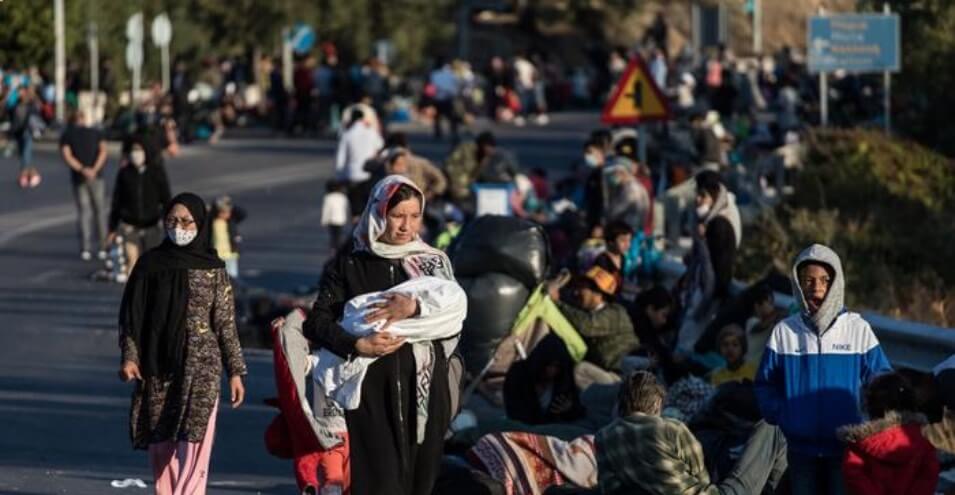
400 unaccompanied children from the burned-out Moria camp are being moved to northern Greece. Other asylum seekers from the camp must stay on Lesbos. Greek authorities have said they should forget about leaving the island and reaching Germany.
Thousands of refugees have been left without shelter and food after the Moria refugee camp on the island of Lesbos burned down. Greek television showed images of refugees lying on the side of the road, waiting for help. Some spent the night in a cemetery. Greek authorities are trying to find a solution for them.
The first priority will be to accommodate families and those most in need. The Greek Migration Agency said a large ship with a capacity of hundreds of people had been sent to Lesbos. Two Greek navy ships are also set to provide shelter for the refugees.
Three planes have flown to Lesbos to evacuate 406 unaccompanied children from the island of Lesbos to northern Greece. The European Union has promised to cover the cost of the transfer. The Greek government has said it will provide food to the refugees with the help of aid agencies.
Aid organizations say they have no access to refugees
Aid agencies complain that they are unable to reach the refugees. Christine Schmitz of the International Medical Volunteers, who has been on Lesbos since last month, says the roads leading to Moria have been blocked by the army and police.
Doctors Without Borders has also complained about the difficulty of reaching the refugees. They say some residents of Lesbos have blocked roads and prevented the setting up of field hospitals in front of the Moria camp. Some refugees are still in the burnt-out Moria camp and need help, but they have no access to them. Doctors Without Borders says preventing medical aid from reaching them is unacceptable.
According to the aid organization Mission Lifeline, some people are secretly trying to deliver water and food to the refugees. The organization said that the Lesbos police are blocking any kind of aid.
Indigenous residents oppose the construction of any new housing.
Efforts to set up temporary tents to house the displaced refugees have met with resistance from the island's residents and authorities. "It has become difficult for us to set up tents to house the refugees," said Giorgos Komotaskos of the Greek Ministry of Migration.
The residents of Lesbos, who had welcomed refugees with open arms and helped them in the past, have become less interested in having them there in the past few years. On Tuesday evening, September 8, parts of the Moria camp were set on fire simultaneously. The remaining part also burned down on Wednesday, leaving about 13,000 of its residents homeless.
The Greek government believes the fire was deliberately set by a group of refugees who were trying to leave the camp as soon as possible, fearing the spread of the coronavirus. The camp, which has a maximum capacity of 2,500 people, has been the scene of many conflicts and problems with more than four times that number. According to some reports, there have been clashes between some refugees and the island's indigenous people.
Government spokesman Stelios Pestas said those who took this action showed no respect for the host government and were blocking any solution. He urged the refugees to stop thinking that such actions would send them somewhere else.
Thus, the demand for a faster transfer of thousands of refugees to other locations was effectively rejected. Giorgos Komoutsakos, the deputy minister for migration, also said: "Anyone who thinks they will go to Greece now and then to Germany should forget about it."
Now the risk of a wider spread of the coronavirus also threatens the refugees. Before the fire, 35 cases of coronavirus had been identified among the refugees. After they were displaced, only eight have been found. It is not clear where the remaining 27 are, increasing the risk of the virus spreading unchecked.
Source: DW