According to Mr. Roshan, this is only a part of the sentences issued for the imprisoned Darvish, and no sentences have yet been issued or communicated to a group of them.
Nematollah Riahi was one of the Gonabadi dervishes who was arrested on February 19, 2017. After Mr. Riahi’s arrest, other dervishes gathered in front of the 106 Namjo Police Station to protest the continued detention of him, who suffers from a serious heart condition. The gathering led to a fierce clash between police officers and special forces with a group of Gonabadi dervishes.
In this incident, Kasra Nouri, one of the imprisoned Gonabadi dervishes, released an audio file and announced that special forces and security forces opened fire and fired tear gas to disperse the dervishes.
Saeed Sultanpour was a Gonabadi dervish who was injured by gunfire from police officers on February 20, 2017.
"Mockery trial" of Mohammad Salas on charges of murdering police officers
According to judicial officials, Mohammad Salas Darvish was a protester who, on February 20, 2017, drove a bus towards a group of officers in the Pasdaran Street area of Tehran, killing three of them.
Mohammad Salat was sentenced to death just one month after his arrest by Branch 9 of the Criminal Court of a Tehran province, headed by Judge Mohammad Reza Mohammadi Kashkuli, on three counts of premeditated murder and disturbing public order through rioting and assault.
Mr. Salas’s death sentence was carried out a few months later, in the early hours of June 19, 2019. His body was buried in a cemetery in Borujerd without the permission of his family and in the presence of “200 counter-riot officers.” The execution took place despite Mohammad Salas having denied the charge of premeditated murder in court.
According to Alireza Roshan, the execution of Mohammad Salas was a clear violation of human rights, even though he had said he was not the bus driver and his lawyer had also stated that Mr. Salas' confession was obtained under torture.
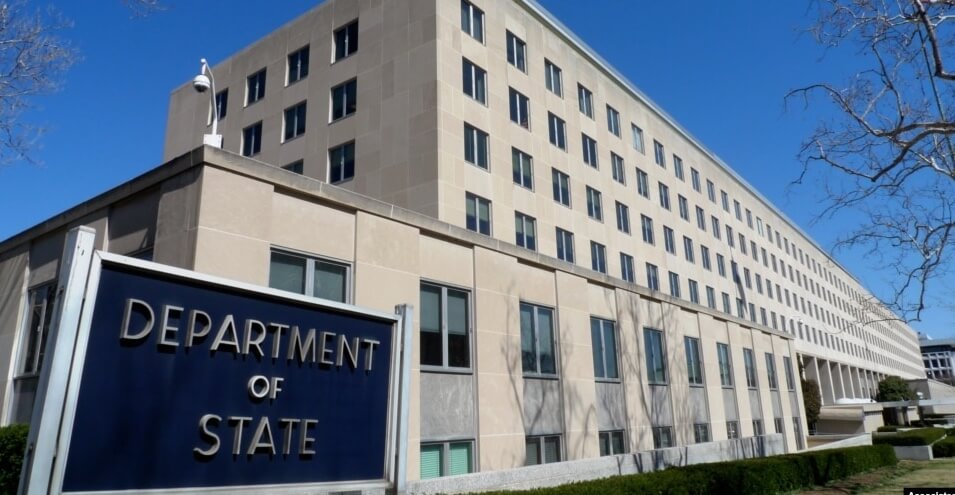
The United States government called the execution of Mohammad Salas Darvish Gonabadi, a prisoner in Iran, "cruel and unjust," and while condemning it, it also called on US allies around the world to condemn this action by the Iranian government.
In a note published in USA Today in August of this year by US Secretary of State Mike Pompeo, while referring to the repression of critics and protesters in Iran, he also referred to the execution of Mohammad Salas, a Gonabadi Dervish, calling the trial “a farce” and saying that Mr. Salas had no access to his lawyer. The death of Salas is part of a broader crackdown on Gonabadi Dervish that had begun earlier.
Murder of Mohammad Raji under torture during detention
Mohammad Raji, who was arrested by security agents in the Pasdaran area during the events of Monday, February 20, died "as a result of the blows he received" in custody.
On Saturday, March 3, 2017, officers from the Intelligence Department on Shapour Street summoned Mr. Raji's family and informed them that he was in a coma. One day after summoning Mr. Raji's family to the Intelligence Department, police officers informed them that Mr. Raji had died as a result of the blows he had received.
Heather Nauert, spokesperson for the US State Department, reacted to the news of the death of "Mohammad Raji" from the Gonabadi Dervishes, saying: "Once again, we are deeply saddened to hear of the death of a prisoner of conscience in custody."
The Gonabadi dervishes repeatedly protested during their detention against beatings during interrogation, lack of access to a lawyer, and lack of a fair trial. A number of dervishes refused to appear in court because their legal rights were not respected. Other dervishes also considered the ideological questions and some of the issues raised in the indictment to be examples of inquisition and refused to appear in court.
Mohsen Azizi was one of the dervishes who, without having a lawyer, was sentenced to 3 years in prison by Judge Ahmadzadegan in Branch 26 of the Revolutionary Court on charges of gathering and colluding to act against national security. With this ruling, Mr. Azizi called the Iranian courts unfair and refused to appear in the appeal court.
The unfortunate situation of female dervishes in prison
Sepideh Moradi, Elham Ahmadi, and Shokofeh Yadolahi are among the female prisoners who were transferred in June to the ward for prisoners convicted of murder, robbery, and drug offenses due to reporting on the substandard conditions of Qarchak Prison in Varamin, which was formerly a poultry farm. They are now in very difficult conditions.
This was while Shokofeh Yadollahi, who had suffered chronic headaches due to a skull fracture as a result of her violent arrest in the Golestan 7 incident, was advised by her doctor to be kept in a clean place away from pollution caused by drug and tobacco use.
These three female prisoners, Dervish women, were beaten in December when they demanded the return of their personal belongings from prison officials, on the orders of Mohammadi, the head of the prison.
After this incident, the male prisoners of Darvish in Fashafoyeh Prison went on strike for more than a month and refused to meet with their families.
This was not the only protest by the imprisoned dervishes regarding the process of handling their situation.
Not long ago, Rasoul Hoveida, a physiotherapist and prison dervish, released an audio file reporting the deaths of prisoners held in Fashafoyeh due to poor health and substandard medical conditions.
"Reza Sigarchi", another dervish imprisoned in Fashafoyeh Prison, also announced in a letter that he himself suffers from a heart condition, and the report of Rasoul Hoveida, another imprisoned dervish, confirms the poor medical and treatment conditions in this prison.