An economic official: Iran has the capacity to produce food for 300 million people; Nik Ahang Kowsar: Managers do not understand the situation
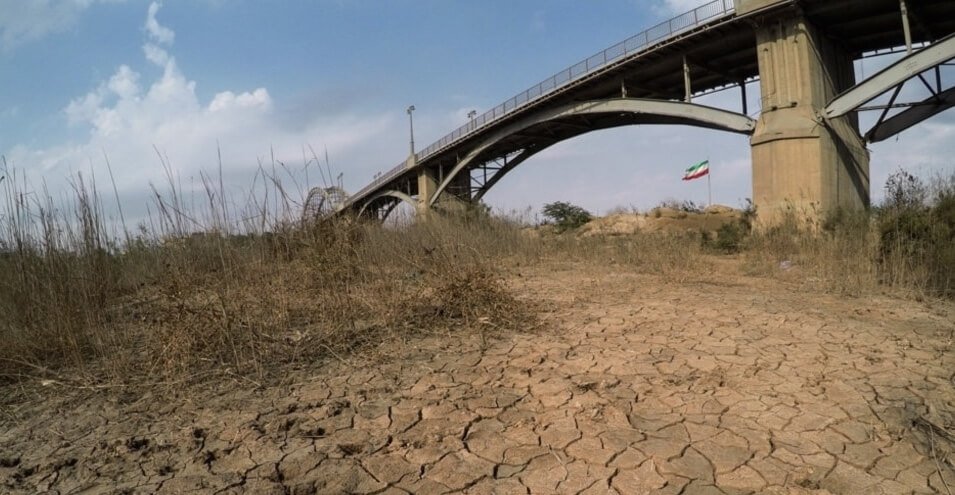
Despite the water crisis in Iran and warnings of the forced displacement of millions of people due to water shortages, the head of the Agricultural Commission of the Cooperative Chamber claimed that Iran has the capacity to produce food for “more than 300 million people.” According to Nik Ahang Kowsar, a water expert, these statements indicate that “managers do not understand the situation.”
Arsalan Ghasemi, head of the Agricultural Commission of the Cooperative Chamber, in an interview with ILNA published on Wednesday, April 1, called for a review of policymaking and decision-making in the agricultural sector, and referring to the 35 percent waste of agricultural products in the country, he said that "fundamental thinking" is needed to reduce this waste.
Stating that "Iran has the capacity to produce food for 300 million people," he said that the country's agricultural products are exported "officially and unofficially" to neighboring countries.
Nik-Ahang Kausar, a journalist and water researcher, in an interview with the Persian service of the Voice of America, emphasized that the ratio of water per citizen has become "one-thirteenth" compared to 100 years ago, referring to the impact of climate change and developments over time, including population growth.
This water researcher warned of "the emergence of public protests and even violence that cannot be prevented," saying: "The fact that 35 percent of our water resources are wasted due to agricultural waste shows that managers do not understand the situation, or if they do, they do not want to take logical action on this issue due to the ruling ideology. They want to produce more if water can be saved, based on the words of Ayatollah Khamenei during Nowruz this year."
The population increase policy, which is pursued in the form of the Youth Population Law, is one of the demands of the Leader of the Islamic Republic of Iran.
Previously, Mustafa Fadaeifard, former head of the specialized flood assessment committee of the National Committee for Large Dams of Iran, said: Iran's population in 1420 is expected to be "about one hundred million people," and the amount of urban and agricultural water needed for this population "will be more than the total renewable water in a normal period," and obtaining "renewable water" will not be possible.
Experts have also previously warned about the subsidence of 18 provinces in Iran, and Intellab, an international research institute in the field of information consulting, has described the subsidence of the land in Tehran, which in some places reaches 25 centimeters per year, as a "silent time bomb" that threatens the population of 13 million and the infrastructure of the Iranian capital.
In the summer and fall of 1401, two multi-day public protests related to the water crisis took place in the provinces of Khuzestan and Isfahan, and spread to other provinces. The suppression of these protests resulted in the deaths, injuries, and arrests of a significant number of protesters.