Rifts and Fears in the Islamic Republic Camp; From Insults to Trump to Whispers of Nuclear Doctrine Change
As tensions between Tehran and Washington remain at one of their most sensitive points, a series of unprecedented statements from political figures, media personalities, and those close to Iran’s ruling establishment have revealed signs of deep concerns and disagreements within the Islamic Republic’s structure. From harsh verbal attacks against Donald Trump to the resurgence of discussions about a possible revision of Iran’s nuclear policy, and expressions of concern by the Islamic Republic’s leader about security conditions, these remarks have found broad resonance in the country’s political and media landscape.
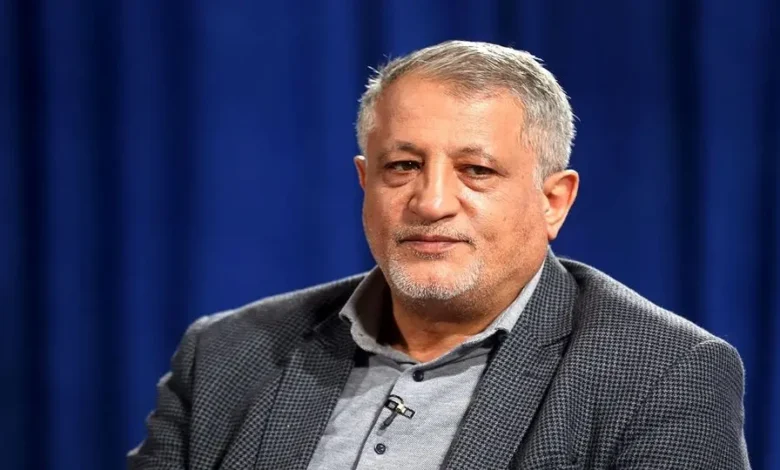
Mohsen Hashemi Rafsanjani, head of the central council of the Kargozaran-e Sazandegi party, in an interview with Jomhouri-ye Eslami news agency, while referring to Donald Trump’s return to the White House, described him as “an angry bull,” saying: “Common sense now tells us that we must do something so this angry bull can get through these remaining two years and step away from American power, then we can find a way for him to get out of the swamp he has gotten himself into and not cause further damage to Iran.”
Mohsen Rafsanjani further added: “We assume that he cannot be the president of America forever and make such decisions against Iran. It is possible that he will be in power for at most another two years. If decisions are made in Iran during these two years so that we can overcome his damages, later we can tear up any agreement; unless he himself does not abide by his own agreement? We too, whenever we have made an agreement and then found it was not in Iran’s interest and a wiser person came to power, can announce that we wrote this agreement under Trump’s unjustified pressure and now cannot implement it and want to hold new negotiations. He tore up the agreement, we will tear it up too, nothing will happen!”
These statements are being made at a time when discussions about the future of Iran’s nuclear program have intensified again in the Islamic Republic’s political and security circles. Mahdi Kharatian, an analyst close to the ruling establishment, referring to external threats against Iran, said that merely relying on the Islamic Republic’s leader’s fatwa to reject the possibility of building nuclear weapons is not sufficient. He emphasized that Iran has repeatedly faced direct and indirect threats and cannot rely on its previous positions without considering regional and global security developments.
Discussions about the possibility of change in Iran’s nuclear doctrine have been repeatedly raised in recent years in media outlets and international research centers. Some Western experts believe that Ayatollah Khamenei’s fatwa on the prohibition of nuclear weapons, contrary to what Islamic Republic officials claim, is not an unchangeable principle and can be subject to revision under specific circumstances. Think tanks such as the “Washington Institute” and the “Institute for Science and International Security” have also previously addressed the issue that the Islamic Republic’s strategic decisions depend more on security considerations and systemic interests than solely on ideological foundations.
In recent months, some officials and figures close to Iran’s ruling establishment have also openly discussed the possibility of changing their nuclear approach. These position-takings have caused concerns for international bodies. Rafael Grossi, Director General of the International Atomic Energy Agency, had previously warned that raising the discussion of changing Iran’s nuclear policy is a very serious matter and should not be overlooked lightly.
Kharatian’s remarks received more attention when he also spoke about the security conditions of the Islamic Republic’s leader and, referring to existing threats, expressed that the continuation of this situation is unbearable and the Islamic Republic’s leader cannot be kept in extraordinary security conditions for an extended period. These statements have been interpreted by some observers as a reflection of growing concerns within a section of the power structure about the future of Tehran’s confrontation with the West.
At the same time, Hussein Taheri, a panegyrist close to the ruling establishment, in remarks addressed to Islamic Republic officials, called for clarification about the status of negotiations and the possibility of military conflict. He told officials that if negotiations or an agreement are underway, or if the country is on the verge of war, the outcome should be clearly announced so that the government’s supporters know what position they should take in public spaces and streets.
All these position-takings are being raised at a time when international pressures on Iran’s nuclear program continue and, simultaneously, discussions about the future of Tehran-Washington relations have again become one of the country’s primary political topics. Many observers believe that the increase in such statements by government figures is a sign of intensifying concerns and disagreements within the Islamic Republic’s structure over how to address the upcoming crises.