New Blow from U.S. Treasury with Sanctions on Companies, Money Exchanges, and Tankers Related to Iran
The United States, by implementing a new set of sanctions against companies, individuals, and vessels related to Iran’s energy exports, has once again attempted to target the Islamic Republic’s revenue-generating pathways in international markets. U.S. officials say this network of shell companies, tankers, and complex financial mechanisms has been used to conceal the origin of Iranian shipments and circumvent international restrictions; an action that, according to Washington, has generated hundreds of millions of dollars in revenue for Iran’s government.
Based on information released by the U.S. Treasury Department, the new sanctions target a network involved in exporting Iranian liquefied gas to countries in South and East Asia. According to U.S. officials, part of these shipments were marketed as “Omani liquefied gas” to conceal their true origin and enable them to bypass sanctions barriers.
In this round of sanctions, 12 companies and business entities in various countries have been targeted. The majority of these companies are registered in the United Arab Emirates, Marshall Islands, and China and, according to the Treasury Department, have participated in the supply chain, insurance, ownership, or management of Iranian energy shipments. Additionally, six liquefied gas tankers have been added to the sanctions list, some of which operated under the Panama flag.
U.S. officials claim this network used what Washington calls the “shadow fleet”; a collection of ships and intermediary companies that conceal the origin of goods by changing flags, transferring ownership, and using complex legal structures. The U.S. government has repeatedly targeted similar networks related to Iran’s oil and energy product exports in recent months.
On the financial side, an Iranian money exchange and its managers have also been sanctioned. The U.S. Treasury Department claims this entity played a role in transferring hundreds of millions of dollars in foreign currency to previously sanctioned Iranian banks and is considered part of the Islamic Republic’s so-called “shadow banking” structure. Washington believes these financial networks provide Iran access to foreign currency resources outside the country.
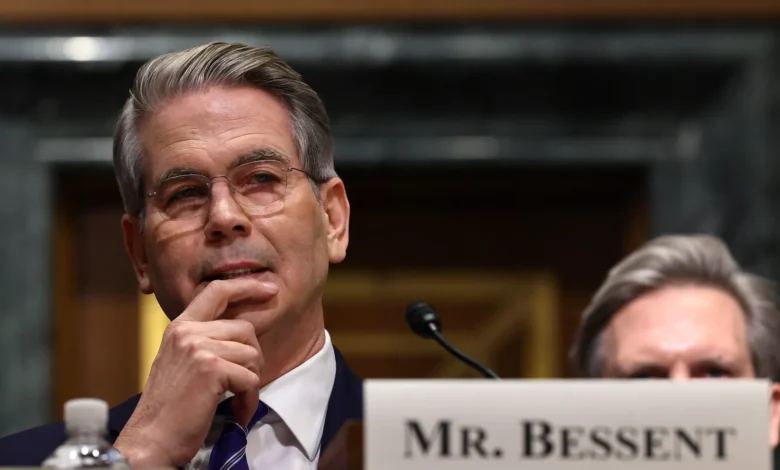
Scott Bessent, U.S. Treasury Secretary, while announcing these sanctions, emphasized: “Iran’s economy is in disarray and its military capability has been severely weakened.” He also announced that the U.S. government will continue efforts to cut off Iran’s access to the “shadow fleet, shadow banking networks, and global trade.”
These sanctions continue a policy that the U.S. government has termed “economic fury”; a campaign that has targeted dozens of companies, tankers, financial intermediaries, and business networks related to Iran in recent months. U.S. officials say the purpose of these measures is to limit the Islamic Republic’s ability to earn revenue from energy exports and transfer financial resources on an international scale.
Despite intensifying economic pressures, officials of the Islamic Republic have repeatedly stated in the past that they have been able to maintain a significant portion of their energy exports and create alternative mechanisms for foreign trade. However, economic experts believe that expanding sanctions could increase export costs, financial transfers, and access to global markets for Iran; an issue that, in the country’s fragile economic conditions, will have greater consequences for foreign trade and foreign currency revenues.