Reza Pahlavi Responds to Execution of Two December Protesters: Islamic Republic Has Brought Executions from Prisons to the Streets
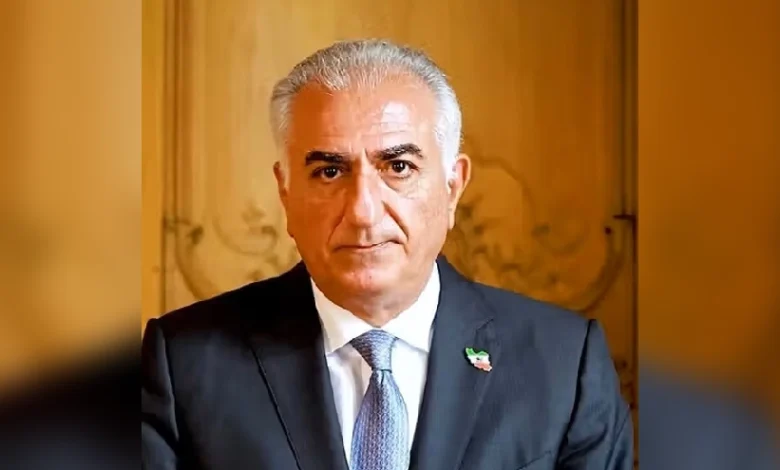
Prince Reza Pahlavi, in response to the execution of Abol-Fazl Sepahvandi and Amir-Hossein Safavi-Hoseinabadi, two protesters arrested during December demonstrations, stated that the Islamic Republic has brought executions from prisons to the streets in order to create terror and prevent the resurgence of public protests. He also warned that the lives of at least eight other detainees in this case are in immediate danger of execution.
Prince Reza Pahlavi, through a message posted on the social media network X, reacted to the execution of Abol-Fazl Sepahvandi and Amir-Hossein Safavi-Hoseinabadi, two of the protesters arrested during the nationwide December demonstrations, describing the act as part of the Islamic Republic’s policy of spreading terror and fear in society.
In his message, he wrote: “The Islamic Republic has been executing protesters and political prisoners in prisons for years, but now, fearing a new uprising by the Iranian people, it has brought executions to the streets to terrorize society and force it into silence through displays of death.”
Reza Pahlavi also warned that the lives of at least eight other detainees in this case remain in immediate danger of execution and could face the same fate as these two prisoners at any moment.
He further noted the confrontation between the people and the government, writing: “Today, two Irans stand face to face; on one side is the Islamic Republic, a criminal and oppressive government, and on the other side are the brave and heroic people of Iran.”
Prince Reza Pahlavi concluded his message by emphasizing: “The Iranian nation will not retreat and will continue the struggle, but they must not be left alone in this fight. The free world must stand alongside the brave women and men of Iran.”
This statement was released as families of the condemned prisoners and a number of citizens had gathered at Alikhan Square in Isfahan before the execution orders were carried out. Simultaneously, reports emerged of clashes between Islamic Republic special forces and protesters, and videos posted on social media showed citizens protesting and chanting “shameless, shameless” against security forces.
Earlier, the publication of images showing the installation of a metal scaffold at Alikhan Square had increased concerns about the possibility of public executions. At the same time, several informed sources indicated that the Islamic Republic is preparing to execute more of the detained protesters from the December demonstrations.
The December 18, 2025 protests in Isfahan began at Alikhan Square, which has now become a symbol of one of the most serious legal cases related to these demonstrations. Human rights organizations and news agencies had previously reported that in this case, 12 people have been sentenced to death and 23 people have been sentenced to five to ten years in prison, with the death sentences confirmed by the Supreme Court on July 5 and sent to the Isfahan Revolutionary Court for execution.
Before the execution of Abol-Fazl Sepahvandi and Amir-Hossein Safavi-Hoseinabadi, Esfandiari, 19, and Gol-Mohammad Mohammadi, a 24-year-old Afghan citizen, were also executed on July 28. According to reports, other convicts in this case, including “Abol-Fazl Ebrahimi,” “Amir-Hossein Ebrahimi-Analucheh,” “Shervin Baghriyan Jebeli,” “Qaaem Hosseini,” “Ali Dashti,” “Alireza Reissi,” “Alireza Sepahvandi,” and “Amir-Hossein Maleki,” have been transferred to solitary confinement, and concerns about the execution of their sentences continue.
Meanwhile, sources close to the family of Amir-Hossein Safavi-Hoseinabadi and political activist Mehdi Mahoudian announced that families of a number of the convicts had been informed to visit the central prison in Isfahan for “last visits,” a development that has intensified concerns about the imminent execution of the sentences.
Islamic Republic officials have accused the defendants in this case of involvement in the killing of four security personnel, arson, and destruction of public property during the December demonstrations—charges that formed the basis for issuing severe sentences, including execution.