Trump: Iran Is Under Complete Pressure; Protesters: ‘Even an Agreement Won’t Bring Change for the People’
While Washington speaks of maximum pressure and the possibility of a deal, critics warn that Iran’s repressive structure and economic crisis will persist even if an agreement is reached, and pressure on citizens could intensify even further than before.
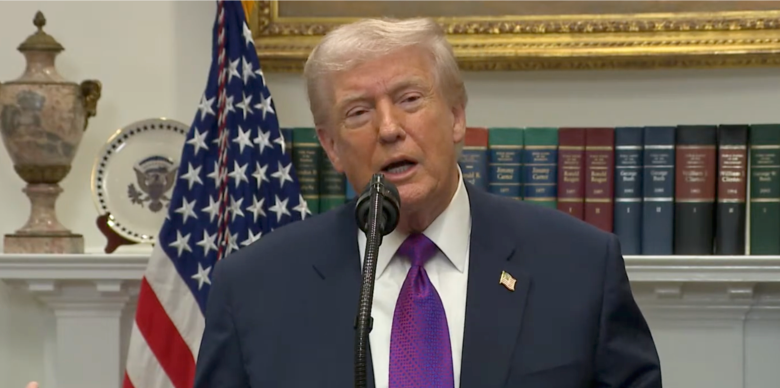
U.S. President Donald Trump, in recent remarks about the negotiation process with the Islamic Republic, said the current situation is not favorable but according to him the “outcome will ultimately be favorable.” Referring to widespread pressure on Iran’s military and economic structures, he claimed: “We are not satisfied with the current situation (negotiations), but we will be.” These remarks come as tensions between Tehran and Washington remain at a high level and speculation continues about either a deal or military confrontation.
Trump also described the situation of the Islamic Republic saying: “Their navy has been destroyed, their air force is gone and they have lost everything.” He added: “Iran came to the negotiating table in a situation where nothing is left for it. Either a deal is reached or we will have to finish the job.” This harsh rhetoric again demonstrates his maximum pressure approach in political discourse.
In another part of his remarks, he described Iran’s economic situation as “free fall” and claimed that external pressures have left Tehran with no choice but to accept a deal. Trump also said that the Islamic Republic’s recent decision to reopen the internet is a result of “heavy pressure” on the government. He added: “Iran thought it could withstand the pressure, but its calculation was wrong.”
Within this framework, Trump also emphasized that midterm electoral issues in America do not affect his decisions, saying: “The midterm elections are of no importance to me.”
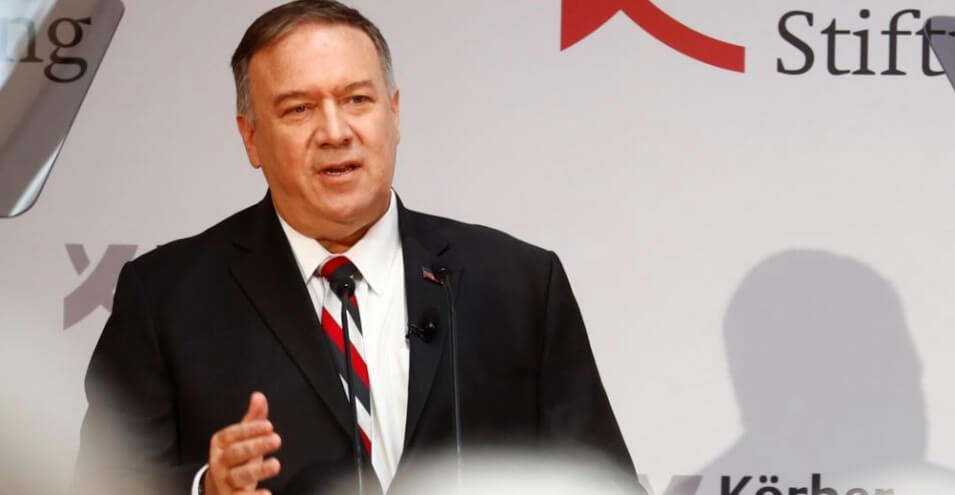
Following these positions, U.S. Secretary of Defense “Pete Hegseth” also, referring to Iran’s situation, said: “The ruling structure is under severe pressure to enter negotiations and at the same time, a global blockade has affected Iran’s economy.” He emphasized that America is ready to act, if necessary, through both diplomatic and military means.
Inside Iran, however, some political officials have also expressed skepticism about the negotiation process. “Abolfazl Aboutorabi,” representative from Najafabad, in harsh remarks said: “All the Leader’s red lines from the Strait of Hormuz, the nuclear issue and receiving compensation, have been violated in the negotiations.” He also described this process as “deception with a wooden candy to a 300 billion toman safe with no enforcement guarantees.”
This parliamentary representative continued: “Should we give the Strait of Hormuz so we can get our own money back with humiliation and disgrace? If we have opened the Strait of Hormuz, what guarantee is there that they won’t start the blockade again? No guarantee.” He also claimed at the end: “America, after the World Cup and congressional elections, will attack us again.”
Despite these political disputes, critics say that focusing solely on whether there is or isn’t a deal between governments hides the real picture of Iran’s crisis. From the perspective of many human rights analysts, even if a new agreement is reached, the internal repressive structure, pressure on protesters, economic hardship and the possibility of intensified security crackdowns will continue.
In fact, the main concern among civil activists is that political agreements at the international level may only change power equations, but will have no direct impact on the daily lives of the Iranian people; where, according to critics, economic pressure, unemployment, social restrictions and security crackdowns continue to be used as tools for controlling society, and in crisis conditions, there is also a possibility of intensified violence against protesters.
From this perspective, the main issue is not merely “agreement or no agreement,” but the fate of people who, in any political scenario, remain on the front lines of economic, security and social consequences.