Secret Execution of ‘Mojtaba Kian’ and ‘Abbas Akbari’, Acceleration of Islamic Republic’s Death Machine Against Protesters
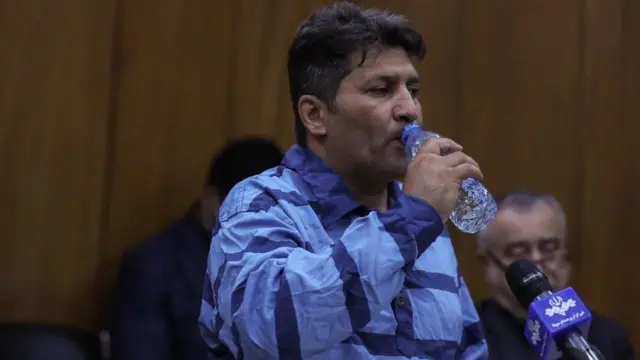
The secret execution of death sentences for Mojtaba Kian and Abbas Akbari Feizabad has been carried out while human rights organizations report on non-transparent trials, forced confessions, and the Islamic Republic’s use of capital punishment to create public terror and silence protests.
The Islamic Republic of Iran, continuing a wave of escalating repression and political executions, has secretly executed two more prisoners in cases related to security matters and recent protests and clashes—a move met with strong reactions from human rights organizations and growing concerns about the government’s use of capital punishment as a tool of intimidation.
According to reports released by human rights organizations, in the early mornings of the third and fourth of Khordad 1405, the death sentences of Mojtaba Kian and Abbas Akbari Feizabad were carried out in Qarchak Prison in Karaj and Dastgerd Prison in Isfahan. Official media of the Islamic Republic have also confirmed the execution of these sentences.
Mojtaba Kian, reportedly detained during clashes known as the “40-Day War,” was executed just a few months after his detention, without full access to legal proceedings and without a final visit with his family. The Islamic Republic’s judiciary accused him of “spying for Israel” and “sending information about defense centers”—accusations that human rights activists say were raised in a security environment without presentation of independent evidence.
The human rights organization Hengaw announced that the detention and trial process of this prisoner was “completely security-related, non-transparent, and rushed,” and that he was denied the right to freely choose a lawyer throughout his detention.
Meanwhile, Abbas Akbari Feizabad, one of those detained during the December 2025 protests in Nain, was also secretly executed. The judiciary accused him of “moharebeh” (enmity against God) and participation in armed attacks on government centers. However, human rights organizations say the Islamic Republic is attempting to link social protests to armed actions through security cases and coerced confessions to justify death sentences.
According to statistics released by human rights groups, Abbas Akbari is at least the fifteenth protester arrested in the December 2025 protests whose death sentence has been carried out—statistics showing that following widespread protests in recent years, the Islamic Republic has intensified the path of bloody suppression and revenge instead of responding to public demands.
International organizations, including Amnesty International, had previously warned that the Islamic Republic uses capital punishment as a political tool to create terror in society. The organization wrote in one of its reports: “Islamic Republic authorities use capital punishment as a tool for political repression.”
Critics say what is happening today in Iran’s revolutionary courts is not the execution of justice but the production of death sentences within a security structure devoid of transparency—a structure in which political defendants are often denied the right to free access to a lawyer, public trial, and independent legal proceedings.
In recent months, concurrent with increasing internal and regional tensions, the number of executions in Iran has noticeably increased. Human rights organizations warn that the Islamic Republic is attempting to spread an atmosphere of fear in society through rapid and secret execution of death sentences and to preemptively suppress any protest or opposition.