Statement by 55 Journalists: Internet in Khuzestan Disrupted to Prevent People’s Narratives
55 journalists stated in their statement: “Incompetent officials have placed media under censorship for years and harass independent journalists and reporters.”
A group of journalists inside Iran issued a statement calling for an “end to violence” against protesting people in Khuzestan and condemned the “suppression of the legitimate voice of protest of Khuzestan’s people and the suppression of the voice of media outlets attempting to present an honest narrative of the pain and demands of the people.”
55 journalists signed this statement which says “Incompetent officials who have placed media under the blade of censorship for years and harass independent journalists and reporters; after silencing the voice of media, they have disrupted the internet in Khuzestan to this time prevent people’s narratives of Khuzestan’s dark days.”
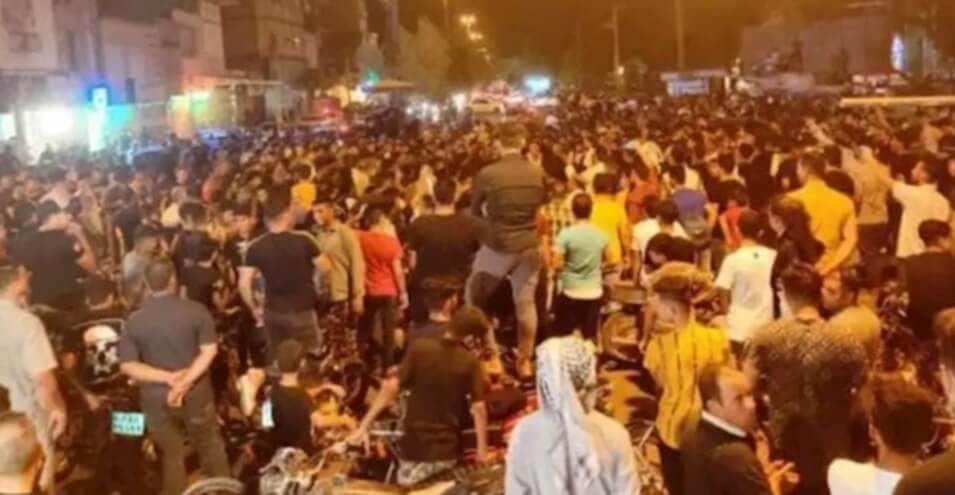
Over the past 10 days, widespread protests have taken place in Khuzestan focusing on the water shortage problem, which security forces have violently confronted. No exact figures have yet been released on the number of deaths and injuries. According to official announcements by government media, four protesters and one police officer have been killed so far. Amnesty International, however, says at least eight people have died in these protests.
The Islamic Republic has recently shut down internet in Khuzestan, and reports indicate the arrest of “hundreds” of people.
Reza Dehkadi, Setareh Lotfi, Mohammad Aghazadeh, Masoud Rafiei Taleghani, Mahdi Elyasi, Mahdi Mahmoudiyan, Mira Ghorbanifar, Milad Alavi, Milad Fadaeiasl, Elnaz Mohammadi, Niloofar Hamidi, Nima Afsharnaderi, Elaheh Mohammadi and Yagma Feskhami are among the journalists who signed this statement.
The signatories of this statement have accused some journalists of publishing “fabricated and commissioned narratives” as the narrative of Khuzestan.
It appears their reference is to reporters sent by Tasnim, Fars and Mehr news agencies who in recent days traveled to Khuzestan and published reports of normal conditions in Khuzestan under the title “Khuzestan Narrative.”
In recent days, reports have also been published about the expansion of protests in Iran and the holding of protest rallies in Tabriz, Isfahan, Yazd, Tehran, Sagez in Kurdistan, Bojnurd in North Khorasan and Alborz Province.
“Rebuild Khuzestan Instead of Using Violence”
Meanwhile, a group of organizations and activists in the field of children and youth issued a statement calling for an end to violence in confronting protests and warned: “The events that are happening today to vulnerable children and youth in Khuzestan and other parts of this land will have no consequence for them and the noble people of Iran except the institutionalization of violence-seeking and a spirit of vengeance.”
In this statement, the country’s officials were asked to “instead of using violence against the legitimate demands of the heroic people of Khuzestan and the future of their children and youth, pay attention and use the country’s financial capacity and human capital with specialized and coherent scientific planning to rebuild the environment, improve livelihoods and meet the primary needs of the people of that province.”
The Council for Expanding Peace Culture for Children, the Cultural Development Center for Children, the Rasme Kodaki Art and Cultural Institute, the Rasme Solh quarterly, the Flying Turtle Prize Judging Group, Afra Institute and the Creative Development Center are among the signatories of this statement who believe “the continuation of violent confrontation methods and the uncontrollable accumulation of various types of social abnormalities will sooner or later encompass all of Iranian society.”
Masoud Jaafari Jouzani, Emaadoldin Baghi, Shahla Mozaffami, Saleh Nagrekaar, Aliasghar Seyedabadi, Mahdi Khaki Firuz, Zahra Aliakbari, Claire Joubert and Mostafa Rahmandoost are among the other signatories of this statement who have warned that with the current approach “it is not late to face the flood of migration of children and youth to major cities such as Isfahan, Shiraz, Mashhad, Tehran and other areas, and we will increasingly witness homeless street children and youth, scavengers, addicts and the spread of slum living.”
The water shortage crisis in Khuzestan, which has intensified this summer, in addition to the lack of access of this province’s residents to drinking water, has caused serious damage to agriculture and livestock, which are the source of income and livelihood for many families in this region.
Source: Radio Farda