From Animal Sacrifice to the Lamb of God; Fulfillment of the Promise of Salvation in Jesus Christ
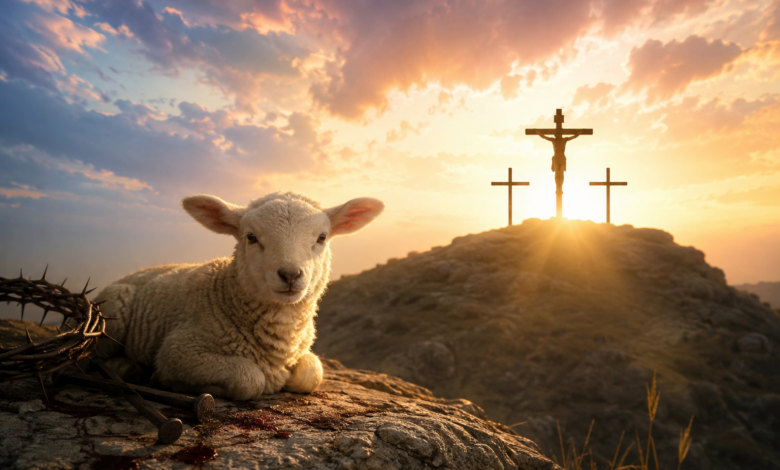
Eid al-Adha and the Truth of Salvation Revealed in the Blood of the Lamb of God
For many people, Eid al-Adha is a reminder of animal sacrifice and drawing near to God. Since ancient times, humans believed that by shedding the blood of sacrifices, they could lighten the burden of their sins and obtain God’s favor. This practice is not limited to Islam; in the Old Testament, the Israelites also sacrificed various animals to atone for their sins. Depending on the type and severity of the sin, the sacrifices varied; from doves to lambs and cattle.
But the important question is: “Could the blood of animals really cleanse human sins?”
The Holy Bible provides a clear answer to this question. The author of the Letter to the Hebrews declares that all the sacrifices of the Old Testament were merely shadows of a greater reality; a reality that was fulfilled in the person of Jesus Christ.
In Hebrews chapter 10, verses 1-7, we read:
“The law is only a shadow of the good things that are coming—not the realities themselves. For this reason it can never, by the same sacrifices repeated endlessly year after year, make perfect those who draw near to worship. Otherwise, would they not have stopped being offered? For the worshippers would have been cleansed once for all, and would no longer have felt guilty for their sins. But those sacrifices are an annual reminder of sins. It is impossible for the blood of bulls and goats to take away sins. Therefore, when Christ came into the world, he said: ‘Sacrifice and offering you did not desire, but a body you prepared for me; with burnt offerings and sin offerings you were not pleased. Then I said, Here I am—it is written about me in the scroll—I have come to do your will, my God.'”
These verses reveal a profound truth: “God never intended for humans to find salvation forever through animal sacrifice. The blood of animals could not change the human heart or cleanse the conscience. Repeated sacrifices were merely a reminder that humans continued to live in sin and still needed real salvation.”
Even today, many people live in injustice, corruption, lies, hatred, betrayal, and unfairness, yet believe that if they sacrifice an animal every year, their sins will be cleansed. But God desires more than outward sacrifice; He desires a repentant and transformed heart.
The world is full of people who oppress their fellow humans; they rob the poor of their rights, they lie, they spread hatred, and their lives are immersed in sin, yet they still hope that by performing a religious ceremony or sacrificing an animal, they can ease their conscience. The Bible teaches that human sin is far too deep to be cleansed by the blood of animals; for this reason, God provided a greater and more perfect way.
God became flesh and came into the world in Jesus Christ to become Himself the final and perfect sacrifice for the sins of mankind. He gave His life on the cross so that what animal sacrifices could never accomplish would be achieved: true forgiveness of sins and the gift of eternal life.
Jesus Christ is the “Lamb of God” who took upon Himself the sins of the world. His sacrifice was made once and for all; a perfect, spotless, and eternal sacrifice. For this reason, there is no need for repeated sacrifices, because true salvation comes only through faith in Him.
The message of the Gospel is that humans are not justified by outward works, religious rituals, or animal sacrifices, but are saved through faith in God’s grace and the sacrifice of Christ.
Eid al-Adha can be an opportunity to reflect on this great truth: “Does God desire only outward sacrifice, or a heart that has truly turned back to Him?”
The Bible declares that God’s answer was revealed on the cross; where divine love and God’s justice reached their pinnacle in the sacrifice of Jesus Christ. Whoever believes in Him will find not only forgiveness of sins, but also hope, peace, and eternal life.