Internet Blackout, Secret Executions, and Extrajudicial Killings; Three Prisoners Executed in Qazalhesar Prison
Under the shadow of internet blackout, secret executions in Iran have intensified, and as communication with the world is severed, political prisoners with security charges are being eliminated extrajudicially.
While internet access in Iran is repeatedly and deliberately restricted or cut off, troubling reports are emerging of an increase in extrajudicial and secret executions of political prisoners; a process that appears to be continuing with greater intensity in the darkness of information blackout, keeping the global public in the dark.
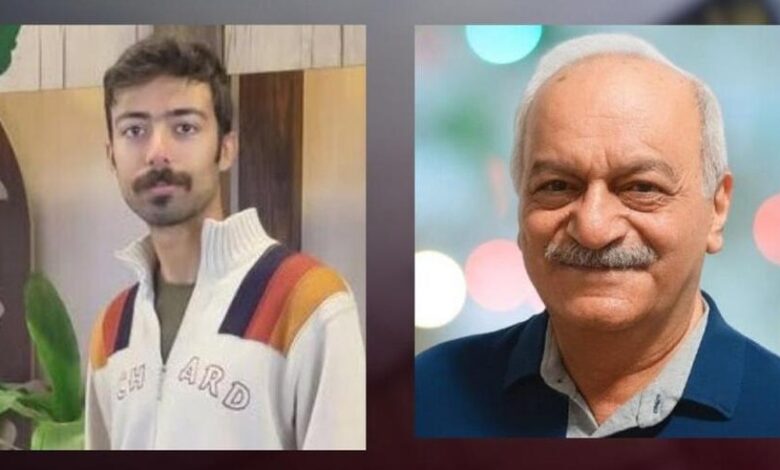
Early Saturday morning, April 4, corresponding to Farvardin 15, death sentences for two political prisoners named “Abulhassan Montazer” and “Vahid Bani-Amerian” were carried out in Qazalhesar Prison in Karaj; this occurred in conditions where these two were secretly hanged without prior notification and denied the right to a final visit with their families. The charge against these individuals is termed “moharebeh” (waging war against God); a charge that has been repeatedly used in recent years to suppress political and ideological opponents.
What makes this case even more concerning is its legal proceedings. Despite the fact that the Supreme Court had previously overturned the issued sentence due to flaws in the investigation, the Tehran Revolutionary Court, in sessions lasting only a few minutes and lacking fair trial standards, re-issued the death sentence. Reports also indicate that these prisoners were subjected to severe torture including beatings, electric shocks, whipping, and threats against their families, forcing them into coerced confessions.
These executions are part of a broader case in which at least six people have been executed in connection so far; a process that, according to human rights sources, has been “unjust” and “lacking legal standards.”
Within this context, “Mehdi Asgarzadeh,” a Kurdish ideological prisoner, was also previously executed in secret in the same prison; an individual who spent years in custody and prolonged imprisonment, and reports of torture and coerced confession extraction have been published about him.
A notable point in these cases is a repeating pattern in which the Iranian government, by leveling charges such as “espionage” or “collaboration with Israel” against political prisoners, attempts to justify their execution. This occurs while many of these charges are examined in closed, short-duration courts without the defendants’ access to independent counsel.
Internet cuts or restrictions at such critical times not only prevent timely news dissemination but also create conditions for carrying out these sentences quietly. In the absence of media oversight and pressure from global public opinion, there is a danger that more political prisoners will be executed in news silence.
From a human rights and ethical perspective, this process demonstrates an intensification of repression and disregard for fundamental principles of justice. For the international community, particularly human rights organizations and independent media, attention to this pattern and breaking the wall of silence is of vital importance. Because behind every internet blackout, lives of people whose voices never reach the world may be taken.