Death Toll Records Exposed: Unprecedented Surge in Executions in Iran and Warnings Over Judicial Repression Machine
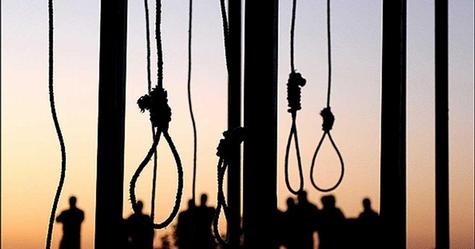
Death toll records exposed in Iran and unprecedented surge in executions come to the fore as human rights organizations have warned against turning capital punishment into a tool of repression.
Fresh reports recently published by two human rights organizations, “Together Against the Death Penalty” and “Iran Human Rights Organization,” present a troubling picture of the state of death sentence executions in Iran; a picture that, according to observers, indicates the country’s entry into one of the most severe periods of capital punishment implementation in recent decades.
According to this joint report released today on Farvardin 24, 1405 (April 13), at least 1,639 people have been executed in Iran in 2025; a figure that these two organizations describe as the highest number recorded since 1368 to the present. According to them, this figure represents only the minimum documented cases, and due to severe restrictions on access to information, it is likely that the actual number of executions may exceed even this figure.
The report also shows that the pace of execution of death sentences has experienced a significant jump compared to the previous year. In 2024, the number of executions was reported at 975 cases, and an increase to 1,639 cases in the following year represents a growth of approximately 68 percent in one year; an increase that, in the view of human rights analysts, is indicative of an intensification of the judicial-security environment in the country.
Among those executed, 48 women have also been recorded; a matter that, according to observers, reflects the expansion of the scope of this punishment implementation and its impact on different social groups.
Human rights organizations in these reports have warned that capital punishment in Iran, beyond being a judicial tool, has in some cases become an instrument for exercising political pressure and social control. They have also emphasized that following recent protests and political developments, concerns about the broader use of this punishment have increased.
In analytical reports related to this issue, it has been repeatedly stressed that the lack of transparency in Iran’s judicial system and restrictions on access to independent information make full verification of statistics difficult, and this is why the actual number of executions is likely higher than official and documented figures.
Overall, this data has once again sparked broad discussions about the state of human rights in Iran and the use of capital punishment as a governance tool; a discussion that remains one of the main focal points of criticism by international organizations and human rights advocates.