Peace Under Siege of Power; Vatican Warns of Diplomatic Silence in Today’s World
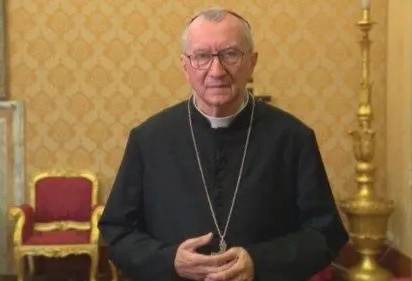
The Vatican, through a message, called on Catholics to be active voices for peace and not remain silent in the face of weakening diplomacy and the dominance of the logic of power.
Cardinal Pietro Parolin, Foreign Minister of the Holy See, in recent remarks warned of concerning developments in the international system and called on Catholics to play a more active role in promoting peace. He emphasized: “In circumstances where the logic of power has cast a shadow over global relations, the silence of believers can render the Church’s peace-promoting messages ineffective.”
This senior Vatican official, in an interview with an Italian cultural publication, while referring to the efforts of Church leaders to prevent conflicts, warned that if there is no practical support for these messages, there is a risk that these voices become a voice crying in the wilderness. Recalling the efforts of Pope John Paul II to prevent the Iraq War, he cited this experience as an example demonstrating what consequences can result from ignoring spiritual warnings.
In this regard, Parolin emphasized the necessity of believers standing with Pope Leo, the current leader of the Catholic Church, and called for confronting what he termed “false propaganda for rearmament.”
The Vatican’s Foreign Minister described the current global environment as one in which military solutions rapidly replace diplomatic tools. He expressed his astonishment, saying: “I am amazed that the military option is presented as a decisive and unavoidable choice.”
In his view, this process has caused diplomacy to become practically silenced, and the capacity for dialogue and mediation has been marginalized. In such circumstances, global sensitivity to the catastrophic consequences of war and the importance of international law is also on the decline.
Parolin identified one of the roots of the current crisis as a form of multipolarity based on power; a situation in which countries rely on their own interests and capabilities rather than adhering to shared global rules.
Referring to developments related to Ukraine and the Gaza Strip, he described this situation as a clear example of “double standards” and said: “Many countries have expressed their anger at attacks against Ukrainian civilians by Russian missiles and drones and have imposed sanctions against the aggressors. However, I do not believe the same has happened regarding the catastrophe of Gaza’s destruction.”
According to him, such an approach demonstrates that international law, in practice, is only cited when it aligns with the political interests of powers.
This seasoned Vatican diplomat also warned of the weakening of global multilateral structures and stressed that relying on the balance of power instead of international agreements is an unstable and dangerous path.
He clarified that accepting the logic of the strongest means rewriting global rules in favor of powers and weakening international institutions.
In another section of his remarks, Parolin referred to the situation of the European Union and criticized this union’s inability to adopt unified positions. He called for reviving the sense of European solidarity and emphasized that joint measures should be shaped without deviating from fundamental principles.
The Vatican’s recent positions continue an approach that has been raised repeatedly by the leaders of this institution over the past years; an approach that emphasizes the priority of dialogue, mediation, and tension reduction.
The Holy See has always sought to play the role of mediator or facilitator of dialogue in international crises and, through its diplomatic network, encourage countries toward peaceful solutions.
At a time when many analysts speak of the world’s return to power-centric competition, these warnings show that the Vatican’s concerns are not only directed at current conflicts, but at the future of the global order and peace’s place within it.