Confiscation for Survival; When the Government Takes People’s Assets in the Name of Security, for the Benefit of Power
Confiscation for survival; from the seizure of critics’ assets to the transfer of wealth abroad, economic pressure has been transformed into a tool of control and future-building for governance.
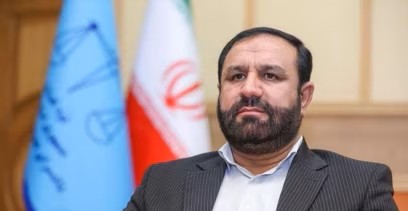
In continuation of intensifying the security atmosphere and suppressing critical voices, the Tehran prosecutor announced the issuance of a broad order to seize assets and freeze bank accounts of more than 100 Iranians living abroad; an action that once again has brought the discussion of political use of economic tools to the center of attention.
According to official announcements, these individuals include well-known figures from among actors, athletes, journalists, and employees of media outlets such as “Iran International” and “Mam o Tu.” The statement issued stated that this action was taken within the framework of countering “cooperation with the Zionist regime and hostile countries.”
The judiciary also emphasized in this regard: “In accordance with the law on aggravated punishment for espionage and cooperation with the Zionist regime and hostile countries against national security and interests, a judicial order was issued for the identification and seizure of assets and freezing of accounts of a number of famous figures living abroad.”
This is not the first time that the judicial and security structure of the Islamic Republic has used financial tools to pressure critics, but the breadth of this measure, which has targeted dozens of people in different countries, demonstrates a new phase of this policy.
According to reports, in just one section of this order alone, the accounts and assets of 63 employees of one media network and 25 others associated with another network have been targeted. Additionally, the names of individuals who merely supported foreign attacks in cyberspace are also seen on this list.
This is while many of these individuals live outside of Iran, raising the question: what is the real purpose of such actions: the administration of justice, or sending a political message and creating fear?
Experts believe that asset confiscation in this context is not merely a judicial action, but rather part of a long-standing pattern in the power structure of the Islamic Republic; a pattern that over decades has used the confiscation of assets to eliminate opponents and secure its own financial resources.
This process, from the beginning of the system’s formation to today, has been repeated many times in different forms: “from confiscating the assets of political activists and religious minorities to exerting economic pressure on critics living abroad.”
While a large portion of Iranian society is grappling with economic crises, inflation, and reduced purchasing power, such actions reinforce the perception that financial resources are not being spent to improve people’s conditions, but rather to preserve the power structure and its interests.
Critics say these policies ultimately serve one specific goal: “the accumulation of wealth and its transfer outside the country, where many of those attached to power have long provided a safe and comfortable life for themselves and their families.”
Meanwhile, multiple international reports in recent years have pointed to capital flight from Iran and extensive investment by some government-linked figures in Western countries, a trend that stands in complete contradiction with domestic economic pressure.
The confiscation of assets of individuals living outside of Iran demonstrates an attempt to expand the scope of control beyond borders. This action can also be seen as a warning to other critics: you will not be immune from pressure even outside the country.
This is while human rights organizations have repeatedly warned about the use of broad and vague security charges to restrict freedom of expression.
The government justifies these actions within the framework of “confronting the enemy,” but critics believe that such policies, rather than creating security, fan the flames of public distrust and deepen the gap between people and the authorities.
At a time when people face widespread economic pressures, asset confiscation, even if targeting individuals outside the country, carries a clear message: “the economy is not being used in the service of public welfare, but rather as a tool for controlling and eliminating opponents.”
The judiciary’s recent widespread asset confiscation order is not merely a legal decision; rather, it is part of a larger strategy in which economic tools are put to the service of political objectives.
Meanwhile, a fundamental question remains: “Are these resources being spent to improve people’s lives, or to ensure the future of those who are preparing themselves for the days after power?” The answer to this question may be the key to understanding many of today’s decisions.