A Cry for Religious Freedom; Prince Reza Pahlavi Speaks of the Suffering of Iranian Christians at CPAC
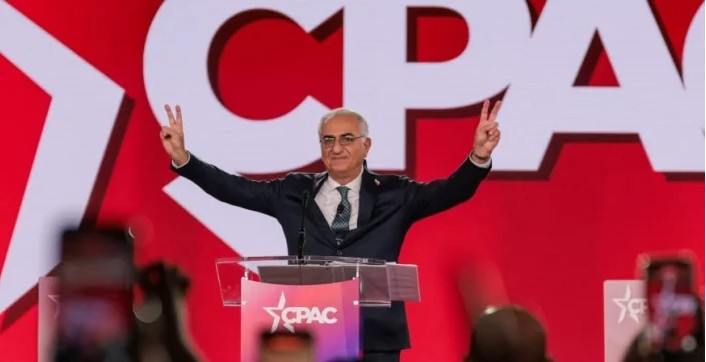
Prince Reza Pahlavi delivered an explicit and passionate speech at the CPAC conference, condemning the systematic persecution of Christians in Iran and calling for global solidarity in defense of religious freedom.
Prince Reza Pahlavi’s speech at the annual Conservative Political Action Conference (CPAC) this year was not only a reflection of Iran’s political developments, but also prominently addressed the alarming situation of religious freedoms, particularly for Christians within the country—a subject that has been raised with such clarity in international forums less frequently in recent years.
In his speech, Prince Pahlavi, painting a picture of today’s Iran, emphasized that the Islamic Republic systematically suppresses citizens not only in the political sphere, but also in the realm of religious beliefs. Pointing to widespread pressures on Christians, arbitrary arrests, the closure of house churches, and deprivation of basic rights, he described this situation as “a blatant violation of freedom of conscience and faith.”
He stated that Iranian Christians, particularly those who have converted from Islam to Christianity, face the most severe forms of discrimination and threats. According to him, these individuals not only face detention and imprisonment, but are also denied employment opportunities, educational access, and even personal security. He characterized these conditions as indicative of “the regime’s structural fear of the spread of free faith.”
Prince Pahlavi also referred to the role of the international community and called upon political leaders and human rights organizations to prioritize the situation of religious minorities in Iran, including Christians. He emphasized that the defense of religious freedom is an integral part of the struggle for freedom and democracy in Iran and must not be overlooked in political calculations.
Continuing, he recalled Iran’s historical legacy of inter-religious coexistence, noting that Iranian society has the capacity to return to a path of tolerance and mutual respect. He expressed hope that in a free future, followers of all religions, including Christians, will be able to practice their faith without fear of persecution and harassment.
This speech at the CPAC conference received considerable responses, and many attendees, particularly religious activists, emphasized the importance of addressing the situation of Iranian Christians. The raising of this issue at one of the most significant gatherings of American conservatives indicates growing international attention to the question of religious freedoms in Iran.
In sum, Prince Pahlavi’s remarks can be seen as an effort to connect political struggle with humanitarian and faith-based concerns; an effort that, by highlighting the suffering of Iranian Christians, once again places before the international community the question of how prepared it is to defend freedom of belief and human dignity.