Prince Reza Pahlavi’s Message Regarding Islamic Republic’s Attacks on Arab Countries
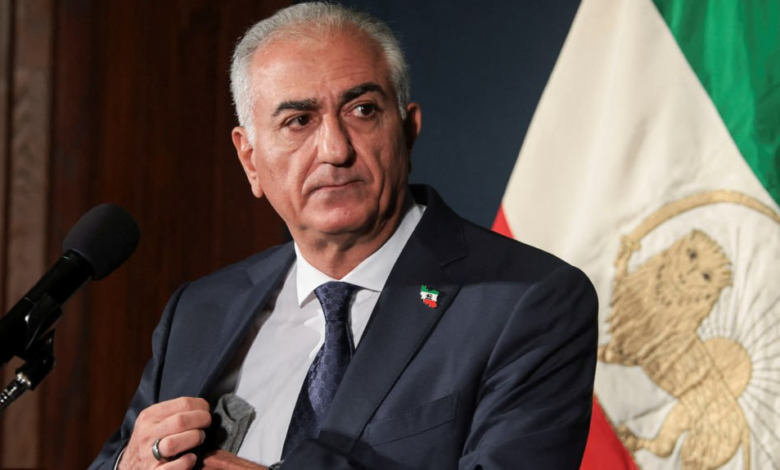
Prince Reza Pahlavi, in a message regarding the Islamic Republic’s attacks on Arab countries, condemned the violation of Iran’s neighbors’ sovereignty.
Following escalating tensions in the Middle East and after military attacks by Israel and the United States against Iran, reports indicate that the Islamic Republic of Iran has carried out missile attacks on several Arab countries in the region. According to these reports, missiles have been fired at the United Arab Emirates, Bahrain, Qatar, Kuwait, Oman, Jordan, Iraq, and Saudi Arabia; actions that have sparked widespread concerns about the expansion of conflicts in the region.
Analysts believe these attacks could lead to increased instability in the Middle East; a region that has witnessed multiple tensions between Iran and Arab countries in recent years. Many political observers view this action as a violation of the national sovereignty of Iran’s neighboring countries and a factor that increases the risk of broader conflicts in the region.
Meanwhile, Prince Reza Pahlavi, by releasing a message, condemned the Islamic Republic’s attacks on Iran’s neighboring Arab countries and considered it another example of this regime’s destabilizing policies.
The full text of Prince Reza Pahlavi’s message is as follows:
“The Islamic Republic has fired missiles at the United Arab Emirates, Bahrain, Qatar, Kuwait, Oman, Jordan, Iraq, and Saudi Arabia. This regime is targeting our Arab neighbors. The violation of their national sovereignty is unacceptable and we condemn it. But this is nothing new. The nature of the Islamic Republic has always been this, and this is why it must end.
For nearly five decades, this terrorist regime has wreaked chaos and bloodshed throughout our region. It supported Assad and turned Syria into a graveyard. It created Hezbollah, a state within a state in Lebanon. It armed the Houthis to destabilize the Arabian Peninsula. In Iraq, it strengthened militias that weaken Iraqi sovereignty, and it also attacked the economic centers of the Kingdom of Saudi Arabia and the United Arab Emirates.
None of these have ever been the will of the Iranian people, but rather the will of a regime that has occupied our country. However, the scene has now fundamentally changed.
Assad is gone, Hezbollah has been severely weakened. The regime’s military nuclear program has been pushed back. Its economy is in free fall. The pillars of this regime’s aggressive policies are collapsing.
The people of Iran have paid the price of reaching this point with their own blood. In just two days, the regime massacred tens of thousands of my fellow countrymen, but it could not break our people. Instead, it is the regime itself that is collapsing.
Today, history reminds us of the capacity of our future. Before the 1979 revolution, Iran had close cooperation with Arab leaders; from King Faisal to Sheikh Zayed, from King Hussein to President Sadat. In Oman, my father helped Sultan Qaboos defend his country against rebellion. At that time, we were true partners, and we will be true partners again.
The people of Iran have asked me to assume leadership of the transition period after this regime is gone. I have accepted this responsibility. Part of the great mission they have entrusted to me is restoring our country and our foreign relations to normal conditions. That is exactly what I will do.
My commitment is that this transition will take place in an orderly manner, the country will be stabilized, and Iranians will determine their future through the ballot box.
We will not repeat the mistakes that occurred in some other countries during their transition periods. We will avoid scenarios like “de-Baathification” and will preserve as many government employees and public service personnel as possible during the transfer process.
Iranians have made their choice at a very heavy cost. Now I ask our friends in the Arab world to join us and be prepared to recognize and engage with our transitional government.
We will rebuild our country not for expansion, but to serve the Iranian people. We will establish our diplomatic relations not based on ideology exports, but on mutual respect and shared interests. We will once again integrate into the regional and global economy to increase the welfare of citizens of all our countries.
Standing with the Iranian people is not charity work, but a strategic investment in transforming our region into one of the most stable, secure, and prosperous regions in the world. Together, we can build a Middle East that our children will be proud to inherit. Join us on this new path.”