“Alireza Jafarri” in the Line of Fire; Exposing the Use of Children in the Islamic Republic’s Military Structure
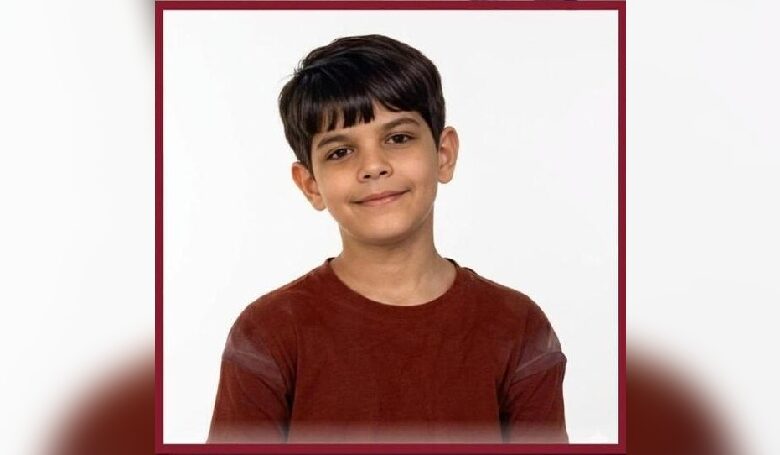
“Alireza Jafarri” in the Line of Fire is a revelatory account of the use of children in military structures and its deadly consequences, indicative of a grave crime against children by the Islamic Republic.
The death of 11-year-old Alireza Jafarri in Tehran has once again drawn attention to one of the darkest aspects of military conflicts in Iran; a matter that human rights activists refer to as “organized use of children.” Alireza Jafarri, a fifth-grade student, lost his life while, according to reports, he was present at a checkpoint inspection in the capital and was killed during a drone attack.
What places this incident beyond a mere casualty of war is the manner of this child’s presence in a military position. Based on family accounts, he was transferred to the mission site due to “staff shortages,” a matter that raises serious questions about the role of official institutions in employing underage individuals. Simultaneously, some Basij-affiliated organizations have stated that this child died “while on duty”; a phrase that itself constitutes a kind of confirmation of his presence in a paramilitary structure.
This incident has occurred within a broader context. In recent weeks, reports have been published of calls by the Islamic Republic inviting adolescents to participate in activities such as checkpoint patrols, support roles, and even operational positions. According to human rights organizations, such actions are not only concerning but constitute a clear violation of children’s rights.
International law experts emphasize that based on the Geneva Conventions and the Rome Statute of the International Criminal Court, the use of children in armed conflicts (particularly individuals under 15 years old) can be classified as a “war crime.” These laws specifically emphasize the protection of children as civilians and prohibit any use of them in military structures.
On a global scale, organizations such as UNICEF and the United Nations have repeatedly warned about the increasing trend of using children in conflicts. Reports published in recent years show that in some crisis-stricken regions of the world, children are employed not only as support forces but even on the front lines, a phenomenon that carries irreversible psychological and humanitarian consequences.
However, what has drawn particular attention regarding this incident is the contradiction between official narratives and accepted international principles. If the presence of a child at a checkpoint is defined as “service,” the question arises: where is the boundary between voluntary participation and the exploitation of children, especially in circumstances where structures of power and propaganda can influence family decision-making.
In response to this incident, human rights organizations have called for serious intervention by international bodies. They emphasize that without legal and diplomatic pressure, the process of recruiting and using children in military structures may continue; a process that violates not only international law but also fundamental human principles.
The death of Alireza Jafarri, regardless of all political and military dimensions, serves as a reminder of a bitter reality: in wars, children are often the first victims, but when they themselves become part of the machinery of war, this tragedy takes on far deeper and more troubling dimensions.