Vatican Foreign Minister Condemns Attack on Iran, Warns of Dangers of Preemptive War to Global Peace
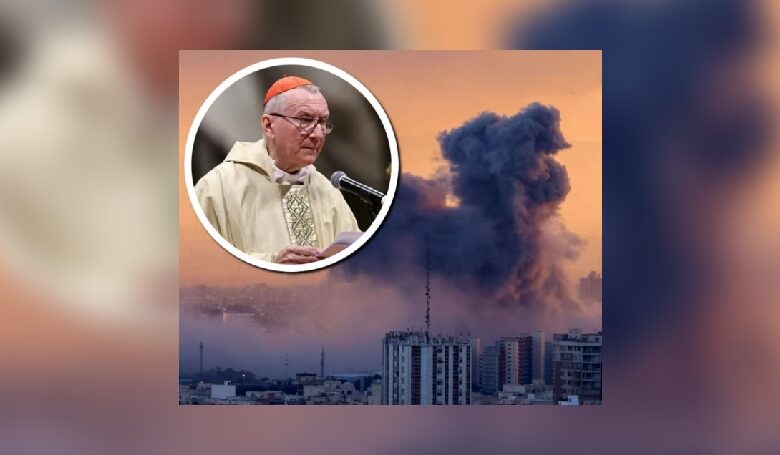
Vatican’s Foreign Minister condemned the attack on Iran, emphasizing that justifying preemptive war could weaken the global legal order and destroy the path to resolving crises through diplomacy.
Following heightened tensions in the Middle East and military attacks by the United States and Israel against the Islamic Republic of Iran, a senior Vatican diplomatic official warned of the dangerous consequences of such actions and emphasized the necessity of returning to diplomacy to resolve differences.
Cardinal Pietro Parolin, Secretary of State and Foreign Minister of Vatican, announced in an interview with the institution’s official media that countries’ increasing reliance on military force instead of international political and legal mechanisms could plunge the world into a cycle of violence and instability. In this interview, expressing concern about recent developments in international relations, he stated that the principles formed after World War II to prevent major wars are today more than ever under threat of weakening.
Parolin, referring to these attacks and arguments presented about “preemptive war,” warned that if such an approach were accepted as a principle, it could have uncontrollable consequences for global security. He stated in part of this discussion: “If countries are to claim the right to preemptive war based on their own criteria and without a transnational legal framework, the entire world will be exposed to the danger of conflagration.”
Vatican’s Foreign Minister further emphasized that lasting peace can only be achieved through dialogue and multilateral mechanisms. According to him, international organizations and frameworks such as the UN Charter were formed to prevent repetition of the catastrophes of major wars, and abandoning these principles could weaken the international legal system.
Criticizing the increase of military approaches in the foreign policy of some countries, he stated: “The notion that peace is achieved by force is false. Regardless of who is right in the causes of a war, war always brings casualties and destruction and will have devastating effects on civilians.”
Parolin also, expressing regret over a process he described as replacing “the rule of law” with “the law of force,” warned that such a development could confront the global order based on international law with a serious crisis.
This Vatican official also referred to the human consequences of conflicts in the region and stated that wars not only destroy infrastructure and economies of countries but also affect the lives of millions of civilians. He added that new conflicts in the Middle East have again exposed the peoples of this region to violence and insecurity.
According to reports, recent military attacks by the United States and Israel against targets in Iran were aimed at curbing the country’s missile and nuclear programs; a claim that Tehran has rejected and considered these attacks as violations of international law. These military operations brought a wave of political and diplomatic reactions at the global level and increased concerns about the expansion of conflicts in the region.
Parolin, in response to a question about protests and internal developments in Iran, also emphasized that the demands and aspirations of the people should be addressed and the opportunity to express views within the framework of law should be provided. However, he clearly stated that foreign military intervention cannot be a solution to such internal issues.
On this matter, he said: “The aspirations of the Iranian people must be heard and their right to freedom of expression must be guaranteed within the framework of law. This is a matter of deep concern, but at the same time one must ask oneself whether anyone really believes that the solution to these internal problems can be achieved through launching missiles and dropping bombs?”
Overall, Vatican’s recent position demonstrates serious concern of this religious institution about the expansion of military approaches in resolving international crises. Vatican diplomacy, which usually comments cautiously on military conflicts, this time has warned explicitly about the consequences of preemptive wars and emphasized the necessity for countries to return to the path of negotiation, international law, and multilateral cooperation.