Prince Reza Pahlavi’s Nowruz Message; A Call for National Solidarity in the Shadow of Crisis and Fateful Struggle
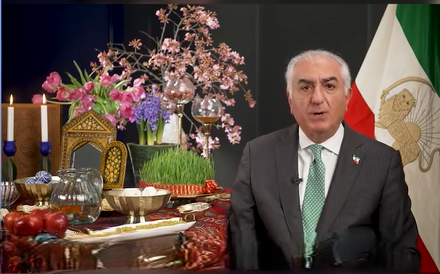
Reza Pahlavi, in a message addressed to Iranians, regarded Nowruz as a symbol of the return of life and the beginning of a new season and national solidarity for Iran.
Coinciding with the arrival of Nowruz and the beginning of the new solar year, Reza Pahlavi, in a message addressed to the Iranian people, while honoring the memory of those who lost their lives, emphasized the continuation of the path of national solidarity and efforts toward a free future.
This message has been released at a time when Iran is going through one of its most turbulent periods; a period marked by domestic unrest, political pressures, and security concerns, and one that has left many families in mourning for their loved ones.
In this message, Nowruz is described not only as an ancient ritual, but as a symbol of “the return of life” and “victory after darkness,” a concept that in the context of recent developments has taken on a deeper meaning.
Prince Pahlavi, also referring to what he called “a national struggle,” asked the Iranian people to preserve unity and loyalty to the ideals of those who have fallen, and to continue on the path toward a different future.
Prince Reza Pahlavi said in his message addressed to the Iranian people:
“In the name of Iran,
In the name of the eternal ones of the homeland,
This year, we celebrate Nowruz with the glory of remembering and honoring the bravest and most aware children of Iran; children who were filled with light, compassion and hope, and whose tradition was the celebration of life; those who sacrificed their precious existence for the homeland so that in the midst of darkness, the seed of eternal blossoming of free Iran would remain.
Nowruz, the ancient heritage of our land, is a symbol and reminder of this very truth: that after the most difficult and longest winters, life will triumphantly return.
On the threshold of a new and bright season in the history of our land, with strength, compassion, love and loyalty to the glorious children of Iran, we will be the custodians of hope and their path. In the heart of Nowruz, steadfast and firm beside one another, we return life to Iran.”
He further added in his continued remarks: “Today, we renew our year in the midst of a national struggle against the Islamic Republic and in the memory of all brave and eternal children of Iran.
The year that has passed was a year of organizing for final action; a year of the glory of national solidarity, unprecedented courage and great sacrifices; a year that brought us one great step closer to final victory; a year that showed that the determination of the Iranian nation to build a free and prosperous future is stronger than ever.
In the year that passed, the tyrant of the age was killed and his guardians have yet to be able to bury him in the ground. In the year ahead, together we will bury this tyrannical regime in the ground forever.
Our Iran lost tens of thousands of its best children in the struggle against this tyrannical regime in the past year. We send our respects to their pure souls, stand beside their families, and together with those brave souls and one another, we make a covenant to turn the new year into the year of victory of the lion and sun revolution of Iran.
In these opening moments of the year, we brighten our hearts and strengthen our unity, and with firmer steps we move toward a free and prosperous Iran.
A victorious Nowruz to you.”
This message has been released at a time when this year’s Nowruz for many Iranians comes with sorrow, concern and at the same time hope for change. Emphasis on “national solidarity” and “continuing the path of those who have fallen” are considered among the main themes of this message; a topic that in recent months has become one of the prominent discourses among certain segments of Iranian society.
Also, the use of symbolic concepts such as “Nowruz” as a sign of passage from darkness to light demonstrates an effort to connect Iran’s cultural heritage with today’s political and social developments.
In a situation where many Iranian families are beginning the new year in mourning for their loved ones, messages of this kind seek to create a semantic bridge between sorrow and hope, a bridge in which the memory of the past is connected with a vision for the future.
Nowruz, as also emphasized in this message, is not merely the beginning of a new year; rather, it reminds us of this profound belief that after every winter, spring is on the way.