Announcement of Interim Government in the Shadow of War; Return of a Controversial Force with a Contradictory Record
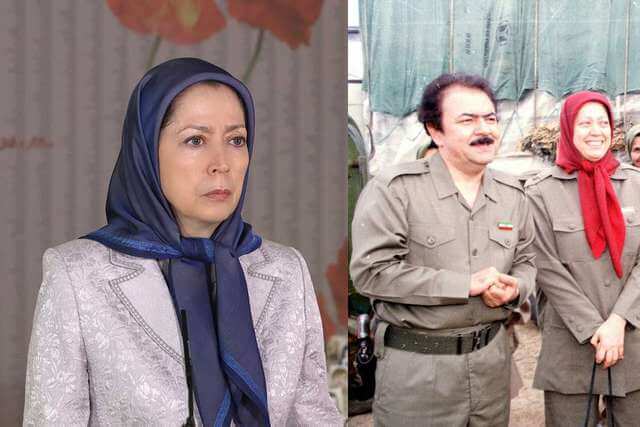
The claim by the “Mujahedin-e Khalq” organization regarding the formation of an interim government in the shadow of war has sparked controversial and contentious reactions.
Coinciding with the onset of military clashes between the United States, Israel, and Iran, the “National Council of Resistance of Iran” announced, in a controversial move, the formation of an “interim government” to transfer sovereignty to the Iranian people and establish a democratic republic; an announcement that not only encountered varying reactions but once again drew attention to the past and conduct of one of the most controversial opposition groups against the Islamic Republic.
This council, which took shape in the 1980s as a coalition of opposition forces in exile, quickly transformed into the political wing of the Mujahedin-e Khalq organization; a group that has trodden a tensionridden path in Iranian politics from the outset. Leadership of this movement is currently in the hands of Maryam Rajavi; a figure who has long sought to present this organization as an alternative for Iran’s future.
The announcement of the formation of an “interim government” came under circumstances where no specific details about its composition, structure, and social backing have yet been provided. In a statement released by the organization, emphasis was placed on the ten-point program of Maryam Rajavi as the basis for this plan; a program that emphasizes the creation of a secular, democratic system based on gender equality. Nevertheless, the lack of transparency regarding how these objectives would be achieved has led many analysts to view this announcement more as a propaganda move in the context of war rather than an executable operational plan.
Meanwhile, this group’s positions regarding the recent war have been accompanied by a certain caution. While some opposition figures explicitly supported military actions against the Islamic Republic, the Mujahedin-e Khalq attempted to maintain their focus on accusing the Iranian government as the “root cause” of the crisis, without directly demonstrating full support for foreign attacks.
Nevertheless, the most significant challenge for this group does not lie in its current positions but rather in its past; a past that continues to cast a heavy shadow over its credibility and social acceptance. One of the most controversial chapters in this record is the Mujahedin-e Khalq’s cooperation with Saddam Hussein’s government during the Iran-Iraq War. During that period, this group, by establishing itself on Iraqi soil and participating in military operations, effectively positioned itself alongside a government that was at war with Iran; an action that many Iranians have viewed as siding with the enemy during wartime.
Critics emphasize that this cooperation, particularly under circumstances when Iranian cities were targeted by military attacks, amounted to practical support for a structure that resulted in the killing of Iranian citizens; a matter that remains one of the primary reasons for widespread distrust of this organization.
Beyond this, the internal structure of the Mujahedin-e Khalq has also been a constant subject of criticism. Multiple reports from defectors and independent institutions have accused this organization of having “cult-like” characteristics; including severe restrictions on members’ personal lives, ideological controls, and even the imposition of a specific lifestyle. These matters stand in stark contradiction to the publicly proclaimed slogans about freedom and democracy.
Alongside this controversial political record, one of the darkest and most contentious aspects of the Mujahedin-e Khalq’s file relates to the organization’s internal structure and how it has treated its members, particularly women; a matter that has been subject to criticism for years by defectors and some sources.
According to these reports, during what was called an “ideological revolution,” members of this organization were forced to divorce their spouses and family relations were essentially eliminated. Subsequently, a structure emerged in which, according to critics, “all women must see themselves within Rajavi’s domain”; a statement that clearly demonstrates a kind of extreme concentration of power at the head of the organization.
Revelations by some former members also attest to meetings held under the title “Dance of Liberation”; sessions in which, according to these individuals, conventional moral and humanitarian boundaries were violated and relationships formed under organizational and ideological control. While these accounts have been denied by the organization, they continue to remain one of the main focuses of criticism against this group.
Within such a framework, the issue is not merely political disagreement, but rather raises more serious questions about the internal nature of these organizations: “Can a group accused of strict control over members’ private lives, imposing forced divorces, and creating opaque and controversial relationships claim to champion freedom, democracy, and leadership of a society?”
Critics believe that even if part of these reports is true, it demonstrates a profound gap between this organization’s publicly declared slogans and its internal realities; a gap that seriously undermines the legitimacy of any political claims it makes.
Furthermore, such conduct demonstrates that a group exercising this degree of control and violation of individual freedoms lacks the capacity to lead and claim to transfer power to the Iranian people.
From a political perspective, this group is effectively isolated among Iran’s opposition. Many opposition movements against the Islamic Republic, both within and outside the country, show no inclination to cooperate with the Mujahedin-e Khalq. Even among anti-government forces, there are sharp criticisms regarding the historical conduct and approaches of this organization.
Nevertheless, the Mujahedin-e Khalq has managed to create a network of international connections and lobbying efforts. The presence of Western political figures at this group’s gatherings and support from some politicians, particularly in the United States, demonstrates their continued effort to gain legitimacy at the global level; although such support does not necessarily equate to widespread acceptance among Iranians.
Ultimately, the announcement of the formation of an “interim government” in the midst of war, rather than indicating a real shift in political balance, reflects competition among various opposition currents to position themselves during a crisis situation. But the reality is that without broad social backing and without transparent accountability for the past, any claim to future leadership of Iran will face serious doubts.