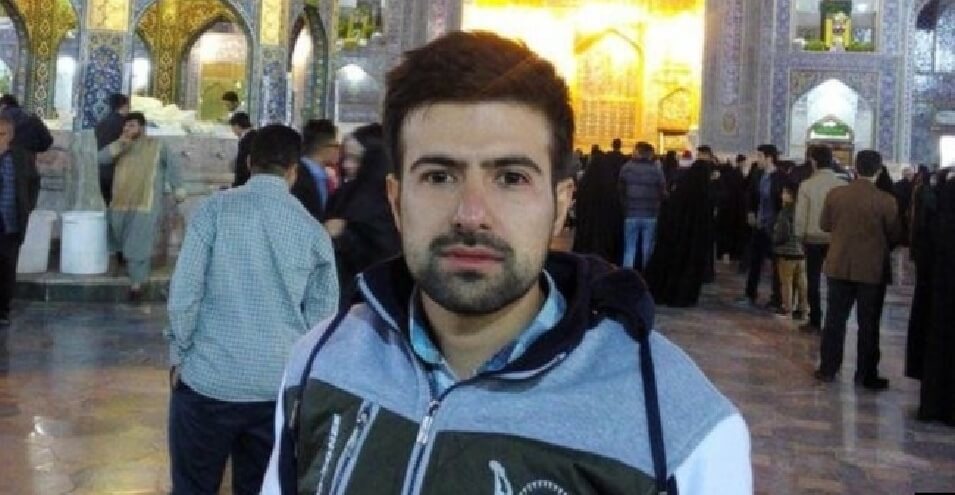
Executions for Intimidation; Three Young Men in a Cycle of Accusation, Confession and Death
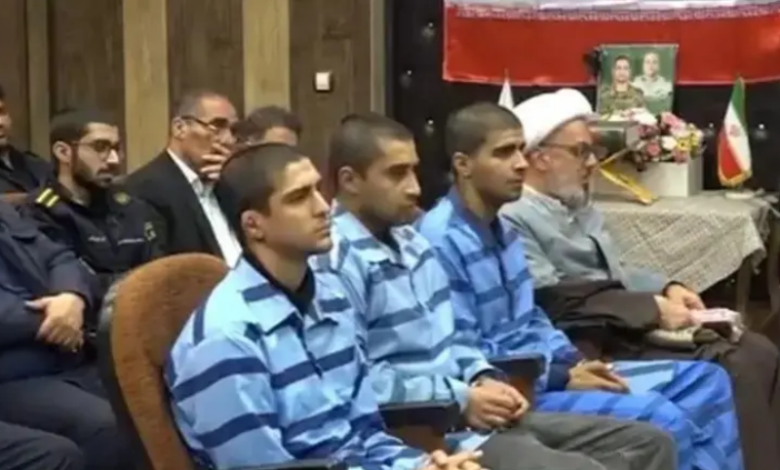
Swift executions in the shadow of crackdown, the narrative of an ambiguous case file and unanswered questions about justice—a justice that has been employed solely in a cycle of accusation, confession and death to intimidate the Iranian people.
As waves of domestic and international criticism over judicial proceedings in Iran continue to mount, the judiciary of the Islamic Republic announced the execution of three young men; a measure that has once again brought serious discussions about transparency, justice and respect for the rights of the accused to the forefront of attention.
According to official announcements, “Saleh Mohammadi,” “Mehdi Ghasemi” and “Saeid Davudi” were executed on charges of participating in the killing of two IRGC personnel during protests on December 9, 2025 in Qom. The official narrative claims that these three individuals, using cold weapons including knives, spears and even throwing a sword, attacked these personnel at two different locations in the city (Nekouyi Intersection and Nabuwat Square) and killed them.
However, what has made this case highly controversial is not merely the charges brought, but rather a series of ambiguities and contradictions in the legal proceedings. In addition to murder charges, these individuals faced heavier accusations such as “operational cooperation with Israel and the United States” and “incitement to war and killing”—accusations that, according to many observers, are increasingly being used in security cases to enhance sentences.
More shocking is the speed of execution. According to reports, their death sentences were swiftly carried out on the morning of March 19, following confirmation by the Supreme Court, and in the presence of a crowd of Qom residents; an issue that once again raises serious questions about the theatrical nature of such punishments and the purpose behind publicizing them.
Among these, the identity of one of the executed has also drawn attention. Saleh Mohammadi, born in 2006, was previously known as a young athlete in the field of freestyle wrestling and had even managed to win a bronze medal in international competitions. The transformation of such a figure into an accused with heavy security charges and ultimately execution is shocking for many observers and is regarded not only as disturbing but as a sign of a concerning trend in dealing with protesting youth.
Meanwhile, human rights organizations had previously warned that dozens of people, including minors, are at risk of execution. Some reports have also stressed that confessions of the accused in such cases have been obtained under pressure and torture—a claim that, if true, would call into question the legitimacy of the entire judicial process.
This case, beyond the fate of three individuals, has become a symbol of a deep crisis in the judicial system; a crisis in which the line between justice and vengeance appears more blurred than ever. In circumstances where transparency, access to independent counsel and fair trial are considered among the most basic rights of the accused, the execution of death sentences in such an atmosphere is not only unconvincing but also fuels public mistrust.
The essential question remains: Were these executions the result of a fair judicial process, or part of a broader policy to create terror and silence the voice of protest? Until a clear answer is given to this question, a shadow of doubt will hang heavily over such verdicts.