Account of a Strange Scenario; Ahmadinejad as America and Israel’s Option for Iran After War?
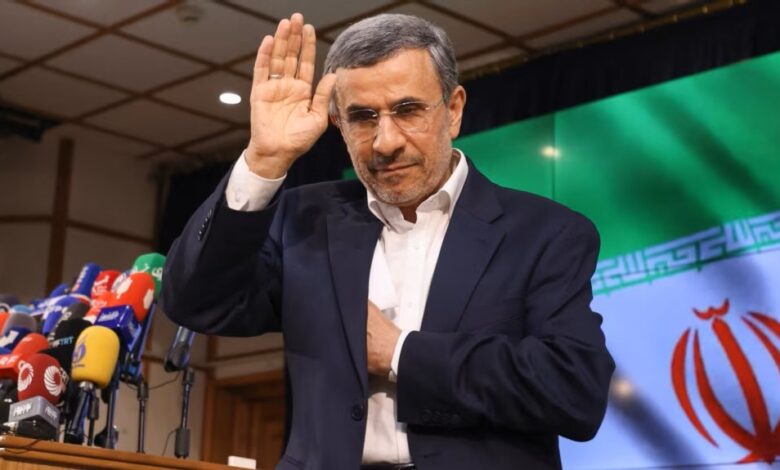
Recent statements by one of Israel’s highest-ranking former intelligence officials have sparked widespread discussion about the true objectives of the recent war against Iran and behind-the-scenes scenarios for regime change in the country. “Tamir Heiman,” former head of Israel’s Military Intelligence Organization, acknowledged in a media interview that the United States and Israel were examining a scenario during their joint operations against Iran in which Mahmoud Ahmadinejad, Iran’s former president, was considered as part of the post-war power structure; a plan that, according to him, never reached the implementation stage.
These remarks come as last month, reports were published in American media outlets citing informed officials about the existence of a covert program to use Ahmadinejad as part of a regime change project in Iran. According to these sources, the designers of this scenario believed that Ahmadinejad, despite distancing himself from parts of the ruling structure in recent years, still maintains a social base and connections within the country that could be exploited in critical circumstances.
However, what has made this narrative controversial is Ahmadinejad’s own political history. During his presidency, he repeatedly took hardline stances against Israel, questioned the Holocaust, and became one of the most recognized anti-Israel figures on the international stage. This fact has led many analysts to express skepticism about the logic of such a choice.
Tamir Heiman claimed in his interview that the plan in question was not limited to Ahmadinejad alone and was part of a set of special operations meant to be executed simultaneously. According to him, the role of Kurdish armed groups was of key importance in this project, and the entire operation was supposed to begin with their movements. Heiman claimed that Recep Tayyip Erdoğan’s strong opposition to any strengthening of Kurdish forces in the region ultimately led Donald Trump to abandon this path.
Based on the account presented by former Israeli officials, Erdoğan had argued that creating any new political or military structure centered on Kurdish groups could pose a direct threat to Turkey’s national security. According to Heiman, this position was influential in Washington’s final decision to shelve parts of the regime change program in Iran.
Meanwhile, some Western experts view this entire scenario with skepticism. A number of Iran analysts believe that Ahmadinejad, contrary to some foreign planners’ assumptions, no longer holds decisive political influence in Iran’s power structure, and making him the centerpiece of a power transfer project does not align with the country’s domestic political realities. Others have suggested that portions of these narratives may have been discussed more at the level of study scenarios and hypotheticals in intelligence circles and never developed into a complete operational program.
In another part of his interview, Heiman referenced the decision-making environment on the eve of the war, claiming that the Trump administration’s previous successes in the Venezuela file played a role in shaping the White House’s confidence to enter into direct confrontation with Iran. He also claimed that Israel had no specific attack plan at the beginning of the year, and it was Trump who, by announcing his decision for military action, changed the equations and provided the groundwork for joint planning.
Regardless of the accuracy or feasibility of these claims, the disclosure of such a scenario has once again drawn attention to the issue of external regime change, the role of regional actors in Iran’s developments, and the complexity of geopolitical competition in the Middle East; a matter that remains one of the most contentious issues in international politics.