“Paul Mouri”: Iran’s Future Could Change the Fate of Armenia, the World’s First Christian Nation
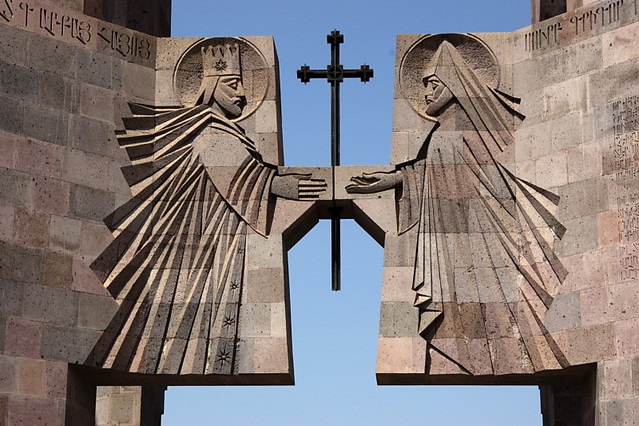
In a fresh analysis on Iran’s future, “Paul Mouri,” a Christian researcher, warns that developments in Iran could alter the fate of Armenia; a country that, as the world’s first Christian nation, stands at a sensitive point in the region’s geopolitics.
In the midst of rising regional tensions and concerns about Iran’s future, Paul Mouri, CEO of the Rescue Armenia organization, has warned in an analytical article in The Christian Post that the current developments in Iran could have consequences extending beyond this country’s borders and even impact Armenia’s fate.
Mouri explains in this analysis that a potential crisis in Iran is not merely a domestic or regional issue, but could change the geopolitical balance across a large part of the Middle East and the Caucasus. He reminds that Armenia, as the first country in the history of Christianity to adopt Christianity as its official religion, finds itself in a sensitive position among regional powers; a position that could undergo change should Iran’s circumstances shift.
From the perspective of many Christian analysts and international organizations, Armenia’s stability is important not only for its people, but also for preserving the historical presence of Christians in the Caucasus region. This country has been recognized over centuries as one of the important centers of Eastern Christian traditions, and any instability around it could have broad cultural and religious consequences.
According to this analyst’s belief, Armenia is located at one of the world’s most important geopolitical chokepoints; a region where energy routes, trade paths, and the competition of global powers from the Persian Gulf to the Black Sea converge.
In such circumstances, what happens in Iran could transform the South Caucasus into a path for connecting regional economies or, conversely, turn this region into a scene of competition and even conflict between great powers.
Geopolitical analysts also believe that developments in Iran could alter the balance of power between the region’s main players, from Iran and Turkey to Russia and Western countries. Under such circumstances, a small country like Armenia could be affected more than others by these changes.
In an article he has written on this matter, Mouri outlines three different scenarios for Iran’s future and examines the consequences of each for Armenia and the South Caucasus.
First Scenario: Weakening of central power or internal instability in Iran.
According to him, if Iran experiences widespread instability, the northwestern regions of this country could witness the emergence of new and unpredictable actors. Such a situation could confront Armenia’s southern borders with security challenges and send a wave of refugees into the country. This issue is of particular importance for the border province of Syunik in Armenia.
From a humanitarian perspective, this scenario could also have significant consequences. Armenia is a country with a limited population and relatively limited economic resources, and the sudden influx of a large number of refugees could place heavy pressure on its social infrastructure and public services.
Second Scenario: Greater centralization and increased security control.
In this case, external pressures and sanctions could lead to greater isolation of Iran. Mouri believes that in such circumstances, Iran would remain an important player in the region, but limitations in formal trade could increase the use of informal economic networks. Such a process could place Armenia, which depends on some of these routes for economic ties with Iran, in a more difficult position.
Some economic experts have also warned that in such circumstances, regional trade could become increasingly dependent on non-transparent routes; a trend that could entail financial and political risks for smaller economies like Armenia.
Third Scenario: Gradual reforms and economic opening.
In the third scenario, which Mouri believes to be more desirable, Iran moves toward political and economic reforms and expands its connections with lawful global financial and commercial networks. In that case, Armenia could benefit from its geographical position to become a bridge between the Persian Gulf, the Black Sea, and Eurasia; without being forced to circumvent sanctions or engage in risky geopolitical competition.
In such a scenario, regional infrastructure projects could also flourish, and Armenia could become one of the key transit routes for goods and energy between Asia and Europe.
In another section of this analysis, the importance of regional transportation projects is mentioned. One of these projects is the “North-South International Transport Corridor,” which is designed to strengthen the communication route between the Persian Gulf, the Caucasus, and Europe.
Mouri warns that if Iran enters a phase of severe instability or prolonged isolation, regional actors may seek alternative routes for east-west trade; routes that could sideline Armenia from economic equations or even lead to the creation of corridors designed without regard to this country’s sovereignty.
In recent years, the issue of transit routes in the South Caucasus has become one of the region’s most important geopolitical issues. Some projects, such as proposed corridors between the Caspian Sea and the Mediterranean, could transform the region’s economic map and either strengthen or weaken the position of countries like Armenia.
This analyst also points to the human dimension of a potential crisis in Iran. He warns that serious collapse within Iran could send a wave of refugees toward Armenia.
For a country with a population of less than three million that is still coping with the consequences of Armenian population displacement following the Karabakh wars, such a migration wave could place heavy pressure on its social and economic infrastructure.
Christian humanitarian organizations have repeatedly warned that small countries in the region often face shortages of resources and international support during humanitarian crises. For this reason, some activists have called for preventive planning to deal with such scenarios.
For this reason, Mouri emphasizes that Western countries and international organizations should prepare now to assist Armenia, rather than seeking solutions after a crisis occurs.
At the end of the article, Mouri raises an issue beyond regional politics and asks whether countries like Armenia that are small, democratic, and historically Christian can remain as independent and secure states in the future international order or not.
According to him, Armenia’s fate is not merely a local issue, but constitutes a test for the international system. Whether this system is still capable of protecting small nations, or whether geopolitical power and competition between great powers will determine their fate.
Some Christian analysts believe that Armenia’s fate also symbolizes broader challenges faced by many Christian communities in the Middle East and Caucasus; communities that, amid geopolitical competition and regional security developments, strive to preserve their historical and cultural identity.