Prince Reza Pahlavi: We Are Not Against Religion
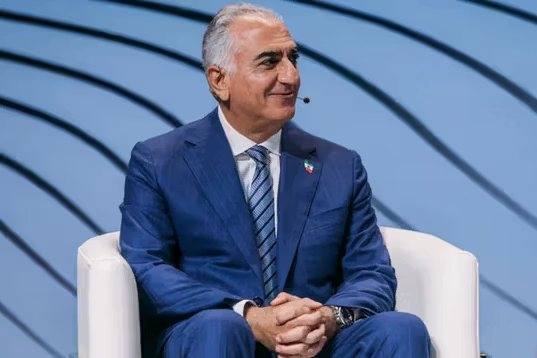
Prince Reza Pahlavi stated in recent remarks: “We have no problem with religion, we have a problem with religious government.”
In the midst of widespread protests in Iran, Reza Pahlavi, the leader of the opposition in exile, has once again emphasized the separation of citizens’ religious beliefs from the structure of governance, and insists that opposing the Islamic Republic does not mean opposing religion.
In his recent remarks that have gone viral again, Reza Pahlavi said: “The Islamic Republic wants to scare people by saying we are against religion. We have no problem with religion, we have a problem with religious government. Otherwise, everyone should be free to have whatever religion they want.”
This stance has been repeated by him multiple times over the years, and is particularly evident in his interviews with media outlets and in official statements. In numerous interviews and speeches, Pahlavi has emphasized that the separation of religion from government is one of the fundamental principles of his democratic vision for Iran.
In several speeches and public messages, he has stated: “The regime ruling Iran is afraid of the separation of religion and government and claims that those who seek secularism are against religion, which is not true.”
He insists that in his view, the separation of religion from government is in the interest of religion and believers themselves, not against them. Pahlavi has also stated that contrary to what the Islamic Republic government claims, he is not opposed to religious freedoms and believes that citizens should enjoy freedom of faith and belief within the framework of law.
This perspective aligns with his effort to present himself as a national, democratic, and inclusive voice for Iranians who are fighting not only against oppression and corruption, but also against the current “religious government.”
Pahlavi has repeatedly sent messages to Christian, Muslim, and followers of other faiths in Iran that opposition to the ruling system should not be interpreted as opposition to faith. In interviews and messages that have been covered by international media, he has emphasized that: “The persecution of religious minorities in Iran, from Zoroastrians to Christians, Bahais and Sunnis, demonstrates a serious problem in government, not in people’s beliefs. Religious freedom, freedom of justice-seeking, and political freedom are all part of a broader vision for the Iran of tomorrow.”
He has also stated in interviews with international media outlets, including an interview with CBN News, that despite limitations and repression, the people of Iran are seeking true freedom, and has emphasized that the growth of other faiths including Christianity in Iran is on the rise, which itself is a symbol of the desire for religious freedom.
Reza Pahlavi’s positions on religion and government, particularly for Christian audiences and freedom advocates worldwide, contain multiple messages:
- He seeks to demonstrate that opposition to the power structure in Iran is not anti-religion, but rather anti-religious dictatorship.
- This distinction can be understandable and acceptable for those concerned about the religious future in Iran.
- Emphasis on religious freedoms, including the freedom of Christians and other minorities, may be of interest to Christian audiences, especially in light of multiple reports of persecution of religious minorities in Iran.