Genocide Charge Against Islamic Republic with Khamenei’s Legal Responsibility for Deadly Suppression
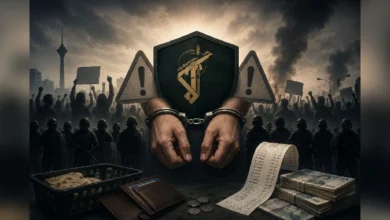
Iran Human Rights Organization reported genocide charges of planned mass killing against the Islamic Republic, focusing on Khamenei’s legal responsibility in deadly suppression of protests and warned of repeated crimes in prisons.
As the Islamic Republic continues to refrain from presenting transparent figures on protest casualties, Iran Human Rights Organization, based on field data, eyewitness accounts, and information from families, warned about the actual scale of protester killings and considered this suppression as an example of an organized and widespread crime; a crime that can be examined under international law as a “crime against humanity.”
Mahmoud Amiri-Moghaddam, director of Iran Human Rights Organization based in Oslo, in a message published on social media X on Tuesday, January 20, 2025, corresponding to December 30, 1404 (Persian calendar), announced that the actual number of protesters killed in the latest round of Iran’s protests may exceed even the highest media estimates.
Emphasizing existing evidence, he stated that what has been published so far reflects only part of the reality and the scale of killing is far more extensive.
According to Amiri-Moghaddam: “The Islamic Republic has undoubtedly committed one of the largest mass killings of protesters in contemporary times,” and evidence shows that this killing was carried out in a planned manner with complete coordination. From a legal perspective, organization, scale, and targeting of civilians are considered key elements in defining crimes against humanity; elements that according to this human rights organization are clearly evident in the suppression of Iran’s protests.
The director of Iran Human Rights Organization emphasized that these crimes were committed “based on a single order from the leader of the Islamic Republic, Ali Khamenei,” and with the participation of suppression forces, particularly the Islamic Revolutionary Guard Corps. Raising such claims highlights the direct responsibility of the chain of command; a concept recognized in international criminal law as “command responsibility,” enabling prosecution of commanders and high-ranking officials even without direct participation in the field.
Amiri-Moghaddam considered addressing this case beyond domestic mechanisms and called for its pursuit through the International Criminal Court. He also described listing the Islamic Revolutionary Guard Corps on the international terrorist list as one of the immediate demands of the human rights community, a measure that could pave the way for legal accountability, targeted sanctions, and limiting this institution’s operational networks on a global scale.
In another part of his remarks, he warned against threats by Islamic Republic officials about issuing and enforcing execution sentences for protesters and asked the international community to take these threats very seriously. According to him, there is a risk that a new wave of killings may occur, this time in prisons and away from public view, a scenario that could exemplify the continuation of the same suppression policy but in a more hidden form.
Based on the latest estimate by Iran Human Rights Organization published on December 24, 1404 (Persian calendar), the number of killed protesters was announced as more than 3,428 people. According to this report, 3,379 of these individuals lost their lives only during December 18-22 (Persian calendar); a statistic that from a human rights perspective demonstrates the unprecedented severity of state violence within a very limited time period.
This human rights organization also, referring to limitations such as internet cutoff, severe security situation, and difficulties in verifying information, announced that it currently refrains from publishing daily statistics; a matter that according to observers itself indicates the likelihood of a higher actual death toll and the existence of systematic cover-up within the ruling structure.
Overall, Iran Human Rights Organization’s assessments present a picture of comprehensive and organized suppression that raises not only political responsibility but also international legal responsibility of the Islamic Republic’s leaders; an issue that could in the future lead to opening legal cases and ending the immunity of perpetrators and those who ordered this killing.