Donald Trump Explicitly Calls for End of Ayatollah Khamenei’s Leadership in Iran
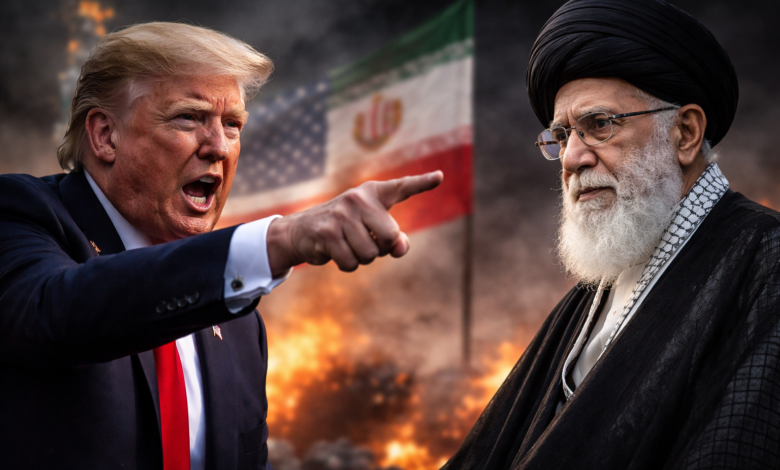
“Donald Trump,” President of the United States, in harsh attacks against Khamenei, said: “It is time for Iran to seek new leadership.”
Donald Trump, President of the United States, at a time when deadly protests in Iran have entered their third week and thousands of citizens of this country have lost their lives under the bullets of security forces, in an unprecedented and fearless attack, with a sharp and direct tone, has called for an end to 37 years of Ayatollah Ali Khamenei’s rule in Iran.
Trump, a few hours ago on Saturday, January 17, corresponding to December 27, in an interview with the “Politico” publication, said: “The time has come to seek new leadership in Iran.” Without mincing words, he described the current government structure as the cause of the collapse and destruction of Iran, and added that Tehran’s leadership relies on repression and violence to govern the country, not on actual management.
Trump continued in a hostile and critical tone: “What he (Khamenei) has committed as a leader of a country is the complete destruction of the nation and the use of violence at unprecedented levels.”
While criticizing the methods of repression, he emphasized that even for managing a country at a minimal level, leadership should focus on proper governance, the way I do in the United States, not kill tens of thousands of people to maintain control. Trump concluded his response saying: “Leadership means respect, not fear and death.”
Trump also called Khamenei a “sick man” who should stop the killing of people and at the same time indicated that Iran has become “the worst place to live across the world.”
Trump’s remarks came after harsh messages were issued by the leader of the Islamic Republic on the X social network, blaming him for the violence and deadly unrest in Iran. Khamenei in one of these messages wrote: “We hold the President of the United States responsible for the casualties, damages, and lies inflicted upon the Iranian nation.”
According to official Iranian reports, which were first announced by Iran’s leader, thousands of protesters have been killed during the protests, although there is no exact and reliable independent statistics, and reports vary significantly in their measurements.
Khamenei also accused the United States of interference and attempts to expand military, political, and economic dominance over Iran and claimed that the protests are part of a foreign conspiracy.
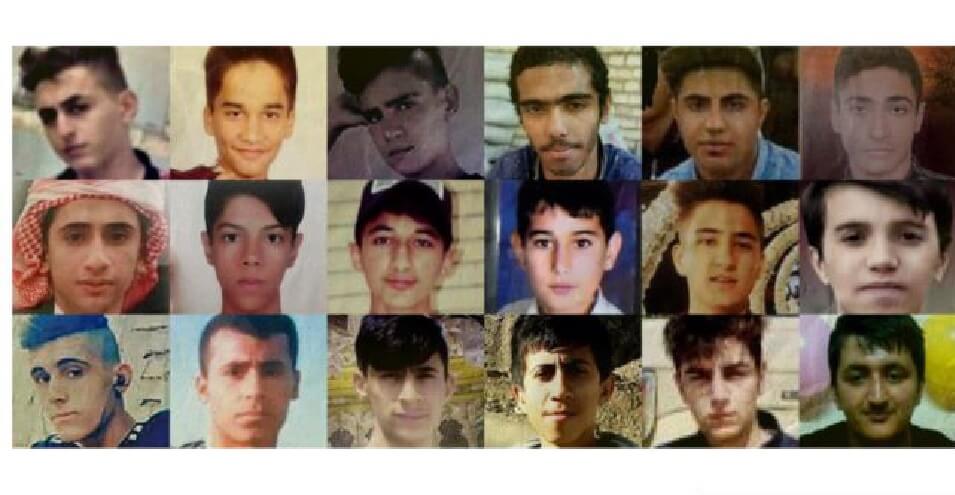
The protests in Iran began in late December and initially started due to economic problems, but quickly turned into widespread protests against the Islamic Republic system, calling for fundamental changes. International parties and human rights groups have condemned the dramatic reduction of freedoms, the use of violence against protesters, and widespread arrests.
Meanwhile, international reports indicate that human rights groups and independent reports have documented over twenty thousand deaths and tens of thousands of arrests in these protests, and concerns about executions and violent confrontations continue.
Previously, the White House had stated in a warning tone that if the situation develops in a way that bloodshed continues, Trump would not hesitate to use military force against Iran.
Some analysts say that if these positions were to be implemented, it could increase tensions in the region at an unprecedented rate and exacerbate the humanitarian and geopolitical crisis.
Trump, following Ali Khamenei’s remarks and Ali Salehi, Tehran’s prosecutor, about America’s involvement in the protests, explicitly declared that he seeks an end to Ali Khamenei’s rule and the replacement of new leadership in Iran. These remarks have not only intensified the verbal confrontation between the two countries, but also demonstrate the depth of the differences and the growing crisis that has placed Iran not only on the domestic scene, but at the center of global attention.
This sharp positioning in the midst of deadly protests has cast the shadow of military threats and the consequences of humanitarian crisis more than ever, and ultimately, the keywords “new leadership,” “repression,” and “death of thousands,” are not only headlines for the media, but bitter realities that have shrouded the future of the region in a haze of crisis and instability.