Crisis Warning: Military Movements in Iran and Evacuation of Barracks Amid Protests
Following Trump’s warning of intervention and concerns about war influenced by protests, the evacuation of barracks in various cities has begun.
As nationwide protests in Iran have entered their second week, independent reports indicate widespread movements at military and law enforcement centers across the country, which could represent another dimension of the political, social, and security crisis. These movements have occurred simultaneously with escalating international tensions regarding Iran and concerns about the possibility of intensified conflicts.
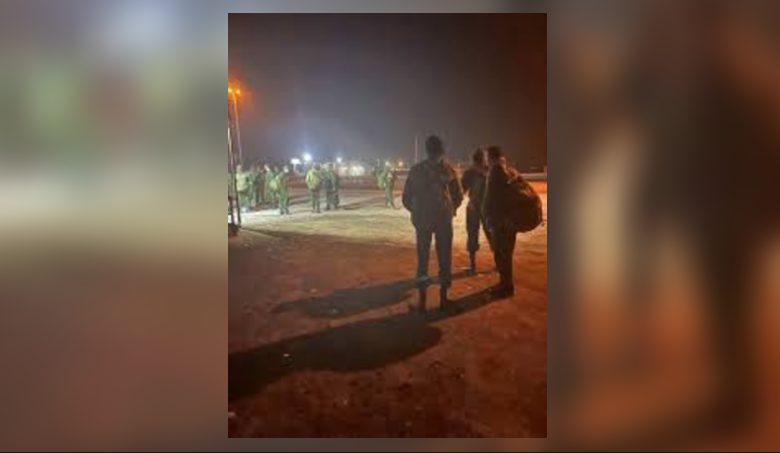
Based on reports from reliable sources and videos circulated on social networks, on the morning of Tuesday, January 6, corresponding to December 16, 1404 (Persian calendar), several military and law enforcement barracks and headquarters in different cities across the country were suddenly evacuated, and soldiers were told of the possibility of war and were discharged overnight.
According to an informed source: “Among the first military centers evacuated was the Martyr Dorweshi Barracks in Ahvaz, belonging to the law enforcement force, where soldiers were told to leave the center earlier.”
These movements included transferring forces to backup headquarters such as parking lots, silos, or government buildings, an action that, according to a law enforcement source, began from Monday night, December 15, following the recent international ultimatum.
While one law enforcement official stated: “The possibility of war is the main factor behind these movements; as they want to minimize casualties in case of an attack; but there could be other reasons as well, including those related to decisions arising from the prolongation of protests.”
International reports also indicate rising tensions and concerns about the crisis spreading beyond Iran’s internal uprisings. Media outlets in recent weeks have referenced the ups and downs of regional tensions and global positions regarding Iran, including warnings about the possibility of intensified conflicts and diplomatic and military responses at the regional level, a matter that demonstrates the impact of Iran’s crisis beyond the country’s borders.
Martyr Dorweshi Barracks in Ahvaz, which was among the first centers evacuated, is located far from the city center; however, some soldiers who were forced to leave at midnight struggled for hours waiting for transportation or walking to bus stations or taxi stands to return to urban areas.
Additionally, reports have been published of warning messages sent to military residential districts in Tehran, indicating that the security crisis may have spread beyond the country’s major provinces.
Anti-government protests in Iran have now continued for more than ten days and, despite widespread crackdowns, remain unquelled. The government led by Masoud Pezeshkian has undertaken certain economic reforms, which experts believe are timed too late and the society cannot tolerate the pressure of poverty and severe inflation. The prices of essential items such as oil, rice, and chicken have increased significantly and in some cases have become scarce, which itself could be a factor in the spread of public discontent.
At the global level, the consequences of Iran’s crisis have also received attention. The Kremlin, in response to American warnings about the possibility of an attack on Iran, called for restraint and asked both sides to refrain from escalating tensions, a matter that shows tensions surrounding Iran beyond borders.
Media outlets have also reported that Western countries have warned about the possibility of increased military activities and caution in the Strait of Hormuz and areas surrounding the Persian Gulf.
Military movements and barracks evacuations (while protests continue in Iran) demonstrate the complexity of the current crisis. Although official authorities have not yet provided clear explanations, the coincidence of these measures with domestic security sensitivities, economic pressures, and international tensions has led analysts to view it as a sign of instability and the possibility of the crisis continuing to higher levels.
This report can be used as an overall picture of Iran’s security, political, and social situation at this stage of the protests and the responses of military and governmental institutions, a picture that goes beyond a single event and speaks to a multilayered crisis whose effects may continue in the coming months.