Call for ‘Jewish Migration’ Remains Unanswered Response to Global Anti-Semitism

Gideon Saar’s call for Jewish migration to Israel in response to rising anti-Semitism is a challenge that carries deep social and political consequences in itself.
Gideon Saar, Israel’s Foreign Minister, in a controversial response to what he has called “rising anti-Semitism,” has urged Jews living in several Western countries to migrate to Israel. This call comes amid multiple reports of increasing anti-Jewish incidents worldwide and the Jewish Agency’s extensive program to attract Jewish migrants.
In his address to the J-50 Assembly meeting, Saar told leaders of Jewish communities: “We support every Jew’s right to live safely anywhere in the world. However, today I call on Jews from Britain, Australia, France, Canada, and Belgium to return to Israel.”
This call is part of Saar’s effort to increase “Aliyah” (Jewish migration to Israel) in response to concerns about security and violence against Jews in Western countries. He also stated that he will continue this appeal and spoke of “learning from history.”
The J-50 Assembly was established last May by Saar to create direct and continuous dialogue between the Israeli government and leaders of Jewish communities worldwide, with the stated goal of providing public diplomacy solutions and countering rising anti-Semitism.
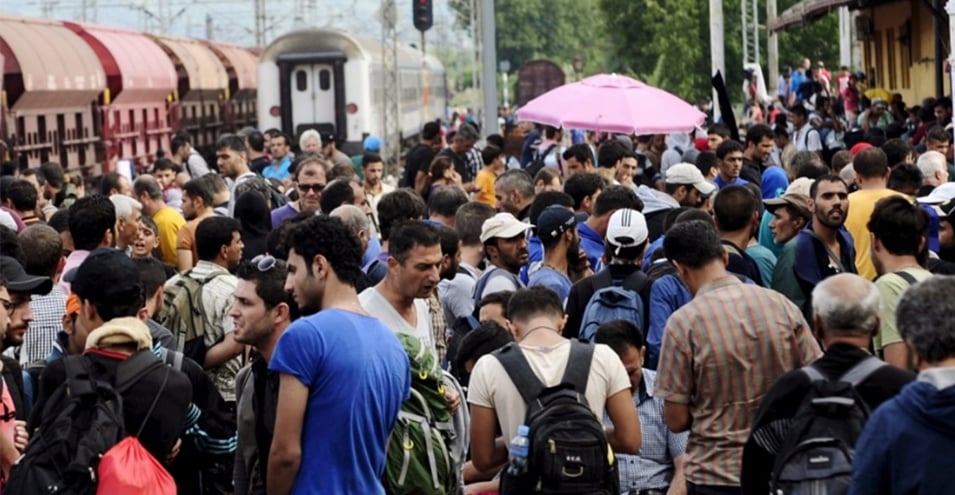
The Jewish Agency, an organization that facilitates the migration of Jews to Israel, announced that approximately eight million Jews worldwide are eligible to migrate under the “Law of Return.”
Daniel Mor, Deputy Head of the Israel Allies and Global Philanthropic Affairs Division at the Jewish Agency, said: “This organization hopes to plan for the migration of one million Jews over the next five years.”
Mor also divided the factors affecting migration decisions into two categories: “Push factors, such as unfavorable economic conditions, security concerns, and rising anti-Semitism that drive people to leave their countries, and pull factors such as a sense of identity, seeking a better life and security, which make Israel an attractive destination.”
While the Israeli government views this call as a response to increasing threats and the need for greater security for Jews, some analysts consider it a complex challenge with social and political consequences.
On one hand, an official government invitation to migrate could lead to weakening Jewish communities in countries of origin. On the other hand, overreliance on security as the main driver of migration could present Judaism in the diaspora as purely a security issue, which could be linked to criticisms of Israeli domestic policies.
This issue has been raised at a time when criticisms of Israel’s international policies have intensified, and some Western countries have taken specific stances against Tel Aviv’s regional policies, which could further complicate the complexities of migration policy.
Gideon Saar’s call for Jewish migration to Israel in response to “rising global anti-Semitism” reflects the Israeli government’s effort to strengthen the Jewish population and respond to concerns about diaspora security. However, the social and political dimensions and long-term consequences of such calls remain subjects of discussion and debate, particularly in circumstances where global migration and security calculations have become more complex than ever.