Bahá’í Prisoner Roya Sabat Denied Medical Treatment While Incarcerated in Adel Abad Prison
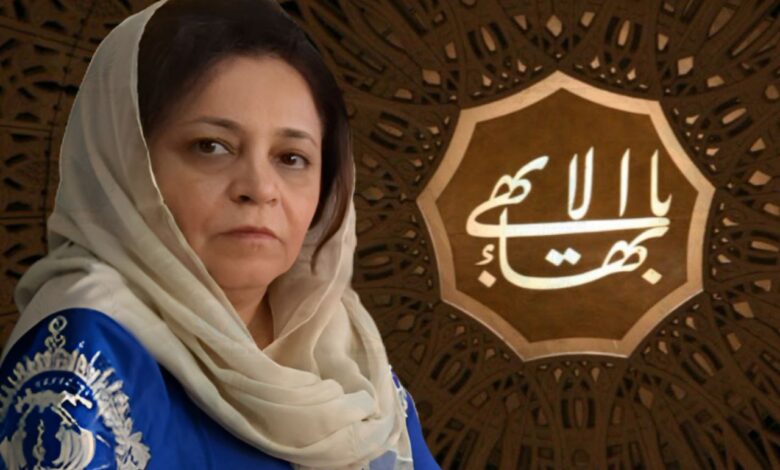
Roya Sabat, a Bahá’í citizen imprisoned in Adel Abad Prison in Shiraz, has been denied access to specialized medical treatment and medical leave despite suffering severe injuries and deteriorating health conditions. Simultaneously, human rights reports indicate an intensification of pressure by the Islamic Republic against religious minorities, from Bahá’ís to Christians, including confiscation of their property and religious sites.
Roya Sabat, a Bahá’í citizen residing in the United Arab Emirates who traveled to Shiraz to visit her elderly parents, remains incarcerated in Adel Abad Prison. According to human rights organizations, despite suffering severe physical injuries and deteriorating health, she has been denied access to specialized medical services.
According to published reports, Sabat fell in the prison health clinic on July 1, 2026, sustaining serious injuries to her lower back and neck. Following this incident, she submitted at least three written requests for referral to forensic medicine and for medical leave, but prison officials and judicial authorities rejected these requests.
The situation became even more alarming when, according to the same reports, on August 7, Roya experienced severe headaches and dizziness, with her blood oxygen level dropping to 70 percent. However, rather than referring her immediately to a medical center, prison officials merely advised her to breathe in open air—a claim that, if true, raises serious questions about how Islamic Republic prison authorities handle medical emergencies involving ill prisoners.
Meanwhile, reports indicate that security agencies are attempting to open a new case against this Bahá’í citizen within the prison, reportedly related to charges of “promoting Bahá’ísm.”
Roya Sabat entered Iran in December 2023 to visit her elderly parents but was arrested by Islamic Revolutionary Guard Corps intelligence forces in February of that year. She subsequently faced trial in Shiraz’s Revolutionary Court on charges including “membership in groups and organizations opposing the system” and “propaganda against the system,” and was sentenced to a total of 25 years imprisonment, with 10 years reportedly constituting the primary sentence to be served.
Roya Sabat’s case cannot be viewed as merely an isolated legal matter. Her situation exists within a broader context in which religious minorities in Iran, particularly Bahá’ís and Christians, face restrictions, detention, social and economic deprivation, and security pressures.
International bodies have emphasized the continuation and intensification of this trend in 2026. The U.S. Commission on International Religious Freedom, in its assessment of Iran’s situation, stated that the Islamic Republic systematically targets religious minorities, including Bahá’ís, Christians, Jews, and Sunni Muslims, and has intensified suppression of religious freedom.
Regarding the Bahá’í community, pressures extend beyond detention and imprisonment. United Nations documents reveal reports of confiscation and destruction of property belonging to the Bahá’í community as well as their personal belongings. In the most recent official contact between UN experts and the Islamic Republic in April 2026, concerns were raised about arbitrary detention, enforced disappearance, torture, and inhumane treatment of Bahá’í community members.
In this context, UN experts expressed concern about what they described as “increased systematic targeting” of Bahá’ís and discussed the publication of inflammatory narratives against this community in state media and the broadcast of forced confessions from some imprisoned Bahá’ís.
However, religious pressure in Iran is not limited to Bahá’ís. The Christian community, particularly converts to Christianity and Protestant and evangelical churches, has faced a wave of arrests and convictions in recent years.
According to a joint annual report by Article 18, Open Doors, Christian Solidarity Worldwide, and Middle East Concern, at least 254 Christians were arrested in Iran in 2025 for their religious activities or beliefs—a figure nearly double the 139 cases recorded in 2024. Additionally, 57 Christians in 2025 served sentences in prison, exile, or forced labor, compared to 25 in the previous year.
The report also shows that the total sentences handed down against Christians in 2025, despite a reduction in the number of convicted individuals compared to the previous year, reached 280 years; a matter which, according to the report’s authors, reflects an escalation in penalties. At least 11 Christians were also sentenced in that year to sentences of 10 years or longer.
Another aspect of these pressures directly relates to Christians’ religious life and property. A British government report on the situation of Christians in Iran, published in June 2026, documented examples of confiscation of Bibles, crosses, musical instruments, and personal items of Christians. In one case, following a raid by security forces on the home of three Christian citizens in Tehran, their Bibles, crosses, and musical instruments were seized. In other cases, Bibles and other Christian literature have been confiscated by government order.
On the other hand, the Islamic Republic recognizes Christians, Jews, and Zoroastrians as official religious minorities in its constitution. However, international reports show that this legal recognition has not prevented the application of extensive restrictions, particularly against Christian and Bahá’í citizens. The British government report states that Iranian authorities continue to arrest convert Christians and other Christian activists on vague charges such as “propaganda against the system,” “promoting Zionist Christianity,” and crimes related to national security, with sentences increasingly becoming more severe.
In this context, Roya Sabat’s case presents a picture of another dimension of this pressure structure: a prisoner of conscience who not only faces a lengthy sentence because of her religious beliefs, but, according to reports, has also been denied specialized medical treatment and medical leave even under serious physical conditions.
The continuation of such cases raises a fundamental question: if freedom of conscience and religion, even for minorities that are legally recognized, is accompanied by imprisonment, security pressure, confiscation of property, and restrictions on worship, what practical meaning does “religious freedom” have within the structure of the Islamic Republic?
From imprisoned Bahá’ís like Roya Sabat and other members of this community to Christians arrested for conducting religious ceremonies or possessing religious books, these collective reports paint a picture of increasing pressure on religious minorities in Iran—pressure that, according to published reports, has now extended beyond prisons and detention centers to the property, religious sites, and even homes of these citizens.
Under such circumstances, Roya Sabat’s case is not merely the story of one imprisoned Bahá’í; rather, it exemplifies a situation in which religious belief can become a cause for detention, deprivation, confiscation, and even denial of medical treatment.