Mashhad Defined Only as a Pilgrimage Destination: A Limited View of the City, Women, and Society
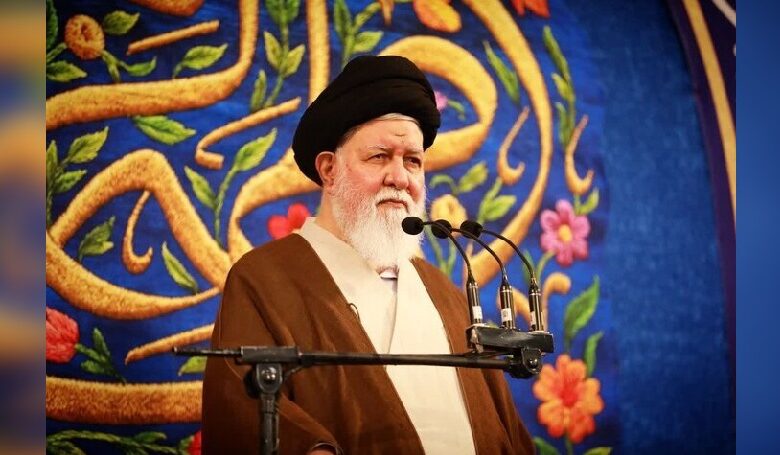
Recent remarks by Ayatollah Alamolhoda regarding pilgrimage, tourism, women’s presence in stadiums, and the hijab have once again brought a limited perspective on Mashhad and women’s social role to the center of public debate.
Recent statements by Ayatollah Seyyed Ahmad Alamolhoda, the Supreme Leader’s representative in Razavi Khorasan province, regarding the status of Mashhad have sparked new reactions and discussions in the country’s media and social sphere. In his speech, he emphasized that Mashhad should be defined solely as a pilgrimage city, rejected any form of tourism and recreational development in the city, and suggested that such tourism should be pursued in cities like Mazandaran, Isfahan, or Shiraz instead.
Referring to the experience of some Arab pilgrims, particularly from Iraq who prefer to travel to Tehran or the Turquoise Resort area for leisure, he viewed this as evidence of a natural division of cities’ functions and emphasized the need to preserve Mashhad’s religious identity. From his perspective, Mashhad holds a unique position and should not be compared with tourism patterns in other cities.
A significant portion of Alamolhoda’s remarks stemmed from his disagreement with the Ministry of Culture, Handicrafts, and Tourism, with the central point of contention being the division of types of tourism. He stated that religious tourism should be specifically strengthened while respecting Mashhad’s sanctity, and any development of historical or recreational tourism should be transferred to other parts of the country.
This viewpoint is being presented at a time when urban and economic experts have repeatedly warned in recent years that making cities one-dimensional in identity, particularly a city like Mashhad with a population in the millions and diverse social needs, could lead to economic, cultural, and social challenges.
In another section of his remarks, he addressed the issue of women’s presence in stadiums, taking a position that simultaneously contains both a jurisprudential permission and practical restrictions. He stated: “From a jurisprudential perspective, there is no obstacle to women entering stadiums.” However, he still emphasized that this presence should come with specific conditions and added in a proposal: “A special and separate seating area for women should be created in Azadi Stadium so that their excitement is not transmitted to men and abnormality does not occur.”
He also recalled that in the design of Imam Reza Stadium, he emphasized from the beginning the creation of separate seating for women and continued: “I am neither absolutely opposed to women’s presence in stadiums nor absolutely in favor of current conditions; rather, I believe that with respect to religious conditions and the creation of an independent space, their presence has no problem.”
These remarks are being presented at a time when women’s presence in stadiums has become in recent years one of the symbols of the struggle between social demands and restrictive interpretations of public spaces.
In another section of his remarks, Alamolhoda addressed the issue of the hijab and methods of dealing with non-compliance, and criticizing emotional and harsh approaches, he said: “The worst method of countering improper dress is an emotional response. One should not react with insult or expression of hatred simply upon seeing a person with inappropriate attire.” Emphasizing the need for a compassionate approach, he added that one should speak to an improperly dressed person like a sick family member and reminded: “This is not good for you.”
The Supreme Leader’s representative in Razavi Khorasan also emphasized the necessity of argumentation in speech and writing, and said that the hijab should be introduced as a tool for “protecting women’s dignity” and preventing misuse, not merely as a command.
Another notable point in Alamolhoda’s remarks was his criticism of some organizations active in the field of modesty and hijab. Acknowledging the ineffectiveness of some methods, he said that even “our own friends sometimes do not listen” and warned that one should not enter into dialogue with society with a top-down perspective.
In this regard, he proposed implementing a “conversation cafe” plan in parks and public spaces; a plan that according to him could provide a setting for calm, non-emotional, and persuasive dialogue among women. He emphasized that defending the hijab will only be effective when distanced from emotional and confrontational spaces.
The totality of Ayatollah Alamolhoda’s remarks presents a clear picture of his approach to society: an approach that attempts to distance itself from verbal violence, but nonetheless emphasizes division, control, and a limited definition of urban and social spaces. Whether in defining Mashhad solely as a pilgrimage city, in conditional women’s presence in stadiums, or in the method of dealing with the hijab, the fundamental question remains: “Can this approach adequately address today’s diverse and changing Iranian society, or does it only deepen the gap between official policymaking and social reality?”