With Surge in Executions in Iran; Unrest in Prisons and Sixth Day of Concerned Families’ Gathering
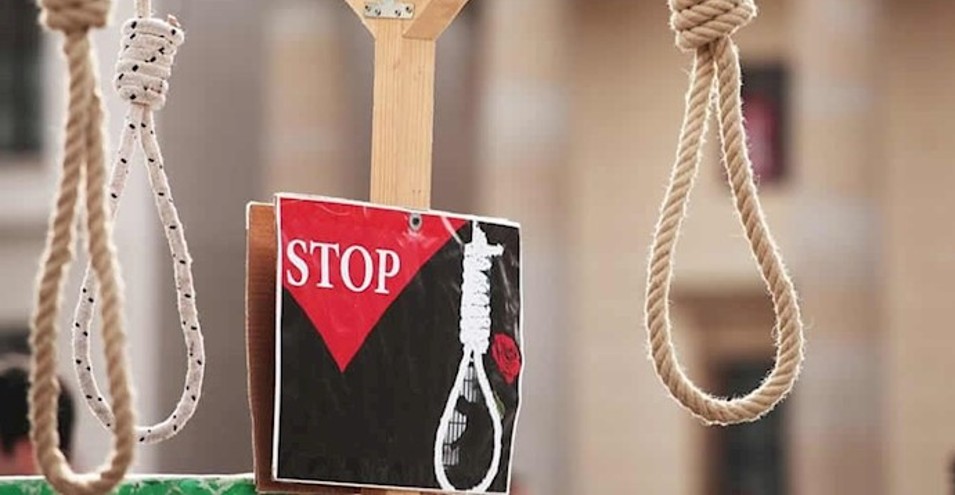
Hrana News Agency – Executions in Iran, particularly executions of prisoners convicted of drug-related crimes, have experienced a significant surge since June of the current year. Given the lack of communication from the judiciary regarding the reasons for the high number of weekly executions in Iran, a wave of unrest and concern has spread among prisoners and their families. In recent days, families of prisoners have undertaken an unprecedented spontaneous series of gatherings in various cities including Tehran and Karaj. Despite the peaceful nature of these gatherings, a number of participants were arrested by law enforcement forces.
According to Hrana News Agency, the news organ of the Iranian human rights activists collective, with the surge in execution sentences to 99 people in June – approximately four times the previous month – and the subsequent continuation of high numbers of execution sentences in the months following until now, a tense atmosphere of fear and terror has dominated prisons, particularly detention facilities holding death row inmates.
Iranian prisons, which have a weak track record in managing and securing the prison environment, have been exposed to the risk of incidents due to the prevailing atmosphere of fear and terror. Hrana News Agency has received numerous calls from prisoners’ families confirming this unprecedented issue.
Unlike executions for qisas (retaliatory justice) which require the consent of the victim’s family, half of the executions carried out during this short period are related to those convicted of drug-related crimes. This alone demonstrates that the high number of execution sentences are being carried out based on decisions by various judicial-security departments.
Families concerned about the fate of their children have undertaken an unprecedented series of gatherings in various cities including Tehran and Karaj. These gatherings, which lasted six days, were met with violence by law enforcement forces yesterday.
The law enforcement attack on the aforementioned gatherings occurred while participants had peacefully expressed their protest and called for a halt to this process.
Law enforcement arrested at least 30 people at yesterday’s gathering, with 8 of these individuals still in detention at the time of this report.
Judicial officials have provided no clarification regarding these executions, with only approximately one-third of these sentences being announced by official institutions or media.
Of the 306 executions reported from the beginning of 1401 until September 11, 2022, 267 were men, 9 were women, and 30 had unknown gender. Among these individuals, 4 were under 18 years old at the time of arrest, 1 was a Pakistani national, and 8 were Afghan nationals.
151 of the executions were carried out as qisas, 130 were executions of those convicted of drug-related crimes, 12 were accused of aggravated sexual assault, 2 were security-related charges, and the charges of 11 others remain unspecified.
Sistan and Baluchestan province with 56 executions, Alborz with 55 executions, and Fars with 28 executions have led in carrying out death sentences during this period.
During this period, 42 others have also been sentenced to death.
The wife of one of the death row inmates in Karaj Central Prison, in contact with Hrana, said: “The number of executions has increased in just these past few weeks. Both my husband and other prisoners are worried and fear imminent execution, and we are worried about the execution of my husband’s sentence. We were waiting for a sentence commutation, but with the process that is being pursued, my children may become orphaned. What is the reason for the acceleration of executions anyway? All these people were in prison and didn’t escape anywhere.”
A prisoner who was recently transferred from Karaj’s Rajaee Shahr Prison on leave spoke about the execution atmosphere: “Everyone is worried, but especially death row inmates under state execution orders, which also include drug offenders, are concerned about the possibility of their sentences being carried out. Many of these people turned to selling drugs out of poverty and need. If they can fix the economic situation, why does their power only reach petty dealers?”
Based on statements by the head of the Prison Organization and Security and Correctional Measures, 45 percent of the country’s prisoners are related to drug crimes.
Hrana had also published a report in June this year comparing the execution of death sentences in Iran in June against statistics of executions in the previous month as well as the same period in the previous year.
The execution of death sentences, including those related to drug-related crimes and other acts that are not defined as “serious crimes” according to international law, had previously been criticized and protested by human rights organizations and the UN special rapporteur on human rights regarding Iran.
The continuation of executions in the summer of 2022 occurs while Jafari Dolab Abad, the former prosecutor of Tehran in 2017, announced the reform of the law against drug crimes and promised to reduce the issuance and execution of death sentences. Although based on annual statistics published by the Iranian Human Rights Activists’ Statistics Center, the execution of sentences for drug-related crimes has been declining, the continuation of such executions and the carrying out of at least 130 cases in less than six months indicates concerning circumstances.
Based on the annual report of the Statistics, Publication and Works Center of the Iranian Human Rights Activists collective for the period (January 1, 2021 to December 20, 2021), at least 299 citizens were executed and 85 others were sentenced to death. Among those executed, 4 child offenders were executed.
According to this same report, more than 88 percent of executions carried out in Iran are not announced by the government or judicial institutions, which human rights organizations term “secret” executions.
Source: Hrana