Practical Solutions Against Iran, On the Eve of Donald Trump and Benjamin Netanyahu’s Decision-Making
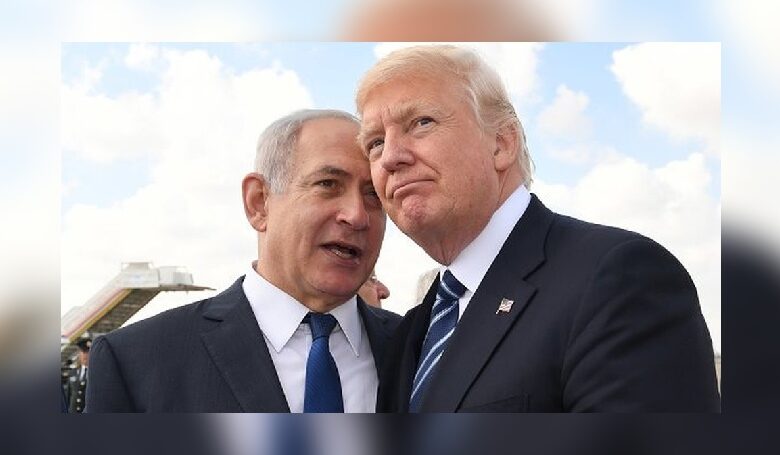
The upcoming meeting between Donald Trump and Benjamin Netanyahu in Florida will focus on the issue of Iran and practical options for action against Tehran, ranging from intelligence files to the possibility of military options.
In the coming days, the upcoming meeting between Donald Trump, President of the United States, and Benjamin Netanyahu, Prime Minister of Israel, in Florida has captured the attention of the world. This meeting, scheduled to take place on December 29, 2025 (8 Dey 1404) at the Mar-a-Lago estate, will particularly focus on the issue of the Islamic Republic of Iran and possible options for taking action against Tehran.
Israeli officials are seeking to go beyond this meeting’s political statements and define practical steps to confront what they consider the “Iran threat.” In this regard, Tel Aviv is preparing a comprehensive intelligence file on Iran that covers multiple dimensions.
According to published reports, this file focuses on several key sections: “The Islamic Republic’s efforts to revive its nuclear program, the reconstruction of ballistic missile arsenals, the expansion of regional activities through the Islamic Revolutionary Guard Corps and proxy groups, and increased financial and military support to groups such as Hamas, Hezbollah, and the Houthis.”
Israeli officials hope that presenting this file to Donald Trump will lead to closer coordination between Tel Aviv and Washington to shape an operational strategy against Tehran, an issue they have described as “the root of the Iran problem.”
International media have reported that Netanyahu intends not only to outline Iran’s threats during this meeting, but also to present practical military options to Trump for dealing with Iran’s missile and nuclear programs.
The idea put forward by Israeli officials includes the assertion that Iran may be rapidly reconstructing and expanding its missile capabilities, an issue Israel views as an “immediate threat” and one that could influence America’s decision on further action.
In this context, reports indicate that discussions will not only include intelligence briefings but also military options and possible attack scenarios; scenarios that Netanyahu is said to intend to present to Trump.
Middle East analysts believe that Israel has extended its perspective beyond merely protecting its borders and holds a broader strategic assessment regarding Iran’s role in the region. Some reports suggest that eliminating or weakening Iran’s capabilities could also lead to changes in the balance of power in Lebanon, Gaza, and Yemen.
Beyond military and security aspects, reports show that there are also disagreements between Washington and Tel Aviv over how to confront Iran, including on issues of nuclear talks with Tehran and America’s role in this process.
While Israeli leaders attempt to persuade Trump to adopt a harder approach against the Islamic Republic, analyses show that the United States is also carefully examining the consequences of a direct military confrontation with Iran. Simultaneously, security assessments regarding the possibility of misinterpretation of military actions or exercises have become an important issue that Israeli and American officials emphasize.
Meanwhile, sections of the press and foreign policy observers note that some officials in Washington may prefer to pursue a path of escalating sanctions and economic pressure rather than direct military action; a matter that has also been referenced in Israeli reports.