Systematic Violation of Children’s Rights by the Islamic Republic Through Deployment to War Zones
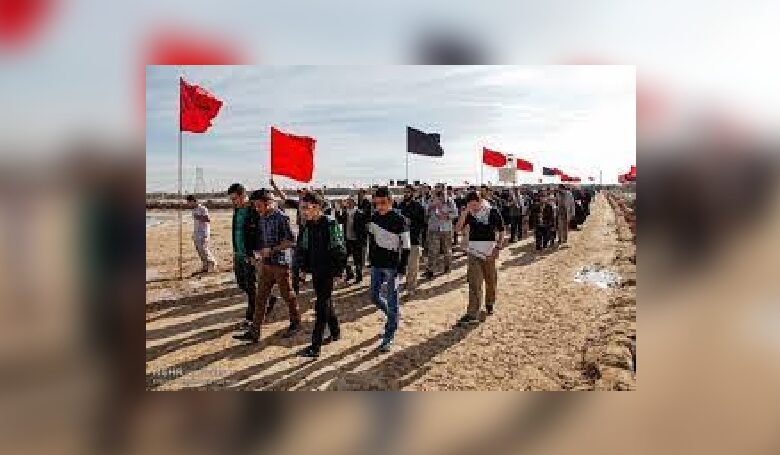
Fresh reports once again demonstrate that the systematic violation of children’s rights under the guise of “Rahian-e Noor” camps has become a tool for advancing the ideological policies of the Islamic Republic.
Contrary to Iran’s formal commitments under the Convention on the Rights of the Child and international laws prohibiting children’s participation in military activities, newly released reports show that the deployment of students to war and operational zones in the country has intensified this year.
According to recent reports circulated on social media, at least 210 students from the provinces of Qom, Semnan (Sorkheh), Yazd (Khatam), and the city of Parand in Robat Karim county have been sent to camps known as “Rahian-e Noor” in recent days. Furthermore, official statistics indicate that 10,000 male and female students from Qom province alone have been sent to these areas since the beginning of this year, a figure that has raised concerns among human rights organizations more than ever.
According to the Islamic Republic of Iran Broadcasting Organization, 90 male students from Khatam county participated in a four-day caravan to the southern regions of the country. The commander of the Khatam Resistance Zone of the Islamic Revolutionary Guard Corps announced that these students visited Abadan, Khorramshahr, Arvand Rood, and Khuzestan (areas where traces of war are still evident).
In another report, government media, without specifying exact numbers, reported the collective deployment of Qom students to war operation zones. Reports from Robat Karim also indicate that 120 male students from Parand city were sent in another caravan to “the eight-year war operation zones.”
In Sorkheh county as well, according to media affiliated with the Basij organization, groups of students have been deployed to similar camps. The director of the Sorkheh camp organization, while emphasizing that this deployment is “the second phase” of the current year, refrained from providing statistics—a fact that raises questions about the actual scope of this ideological operation.
It is worth noting that under the Convention on the Rights of the Child, individuals under 18 years old are considered children, and their employment in military activities is prohibited. Iran, which joined this convention in 1994 and is a signatory to this treaty, has violated its commitments in cases such as child labor, judicial punishments, marriage, and military training.
Nevertheless, human rights organizations have repeatedly emphasized that Rahian-e Noor camps, particularly for students who are below the legal age, include: “exposure to scenes of violence and remnants of war, receipt of ideological and paramilitary training, presence in unsafe areas, unwilling exposure to political propaganda”—which clearly constitutes instrumental use of children for the military-oriented goals of the Islamic Republic.
Beyond legal aspects, the bitter history of multiple incidents in these camps (including bus accidents that have resulted in student deaths and injuries in recent years) has consistently been criticized by families and child rights activists.
Despite these warnings, the government continues to emphasize increasing these deployments; an action that, given the dire economic and social conditions, represents a dangerous and ideological prioritization.
Educational and sociological experts emphasize that placing children and adolescents in actual war environments has long-term effects on their mental health, attitudes toward violence, and worldview. The Islamic Republic government, however, presents this program as part of “educating a revolutionary generation.”
This occurs while Christian, Bahá’í, Sunni, and other minority families have repeatedly complained in recent years of religious and ideological pressures in schools, coercion to participate in government programs, and educational restrictions. The forced or semi-forced deployment of students to war zones is seen as part of this same set of controlling policies that violate children’s rights and have transformed the country’s educational environment into a tool serving official ideology.