Transfer of ‘Timur Hosseini’ to Qarchak Prison, Continued Pressure on Christian Citizens
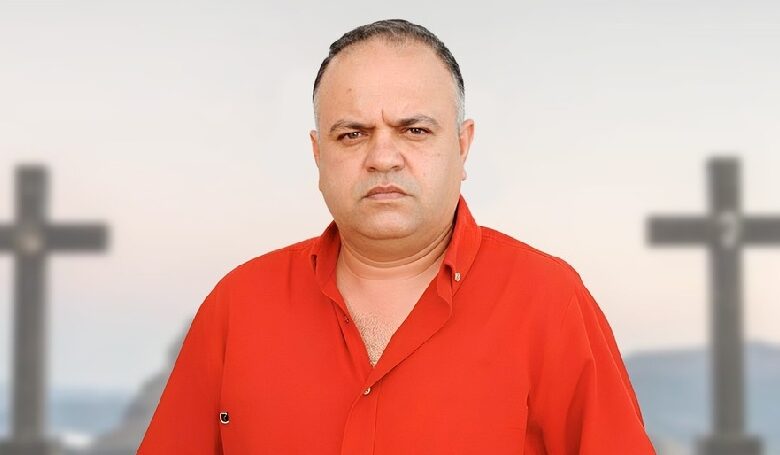
The transfer of Christian citizen ‘Timur Hosseini’ to Qarchak Prison demonstrates that security-related prosecutions and issuance of controversial sentences continue for Christian citizens.
Timur (Kourosh) Hosseini, an Afghan Christian citizen who has lived and worked in Iran for more than two decades, has once again become the focus of religious minority rights activists. Published reports indicate that he was transferred to Qarchak Prison in Karaj on Sunday, November 16, 2025, to begin serving his prison sentence; a transfer that has once again raised serious questions about how security and judicial authorities treat citizens who openly practice their Christian faith.
According to informed sources, this 52-year-old citizen was arrested during a nighttime raid by security personnel on December 11, 2023. According to one informed source’s account, at 10 p.m., security forces stormed his home, arrested him, and confiscated several pamphlets related to Christian teachings. This type of sudden raid, which occurs without transparency regarding the reasons and security grounds, has become a concerning practice for years and has been repeatedly criticized by human rights organizations.
Hosseini, who has always been known as a law-abiding citizen and worked in the shoe-making profession for years, was temporarily released on February 19, 2024, after more than two months of detention, in exchange for a heavy two billion toman bail. An amount that itself demonstrates the severity of the security prosecution against individuals who are under pressure solely because of their religious beliefs.
On March 13, 2024, the judicial system issued an indictment against Hosseini and three other Christian citizens (Zahra (Hana) Gholami, Hossein (Daniel) Mohammadi, and Sirus Khosravi) with serious charges of ‘membership in a group or association aimed at undermining the country’s security’ and ‘establishing a house church.’ Based on available information, no evidence has been presented of any violent, organized, or anti-security action. This is an issue that has been repeatedly reported regarding similar cases and has led analysts to view these charges as more politically and ideological in nature than security-related.
A court hearing was held on July 3, 2024, in Branch 2 of the Shahriyar Revolutionary Court, and Judge Bahram Panahi, citing Article 498 of the Islamic Penal Code, sentenced three of the defendants to two years in prison and the fourth defendant to one year in prison. Despite the defendants’ appeals, the verdict was confirmed exactly on December 21, 2024, in Branch 36 of the Tehran Court of Appeals; a process that, from a legal perspective, raises further questions about the independence of the judiciary in cases involving beliefs.
On March 29, 2024, a request for retrial of these citizens was filed with the Supreme Court, but the court rejected the request without providing public explanation. This rejection of the request eliminated the final legal opportunity for the defendants to prevent the execution of the sentence.
Timur Hosseini, a father of three children and a recognized employed member of his community, has now been sent to Qarchak Prison while concerns have increased regarding the situation of his family and his conditions of detention in a prison with a long history of human rights violations.
This fundamental question remains: “Why, when peaceful religious activities have not been criminalized under Iranian law, are citizens who have converted to Christianity still facing security charges, serious indictments, and disproportionate convictions?”
The recent event shows that security measures against Christian citizens have not only not decreased, but have also taken on a more complex and organized form through reliance on ambiguous laws and broad interpretations.