Joe Rogan, Famous American Podcaster, Reveals His Inclination Toward Christianity
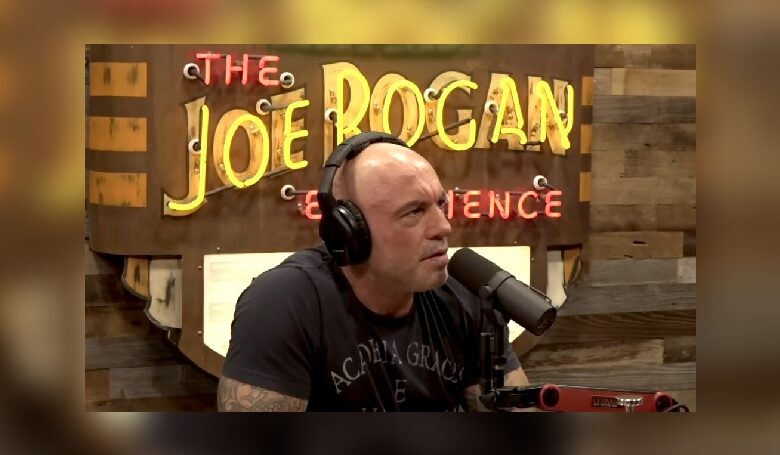
In recent remarks, “Joe Rogan” stated that the Christian narrative is not a myth and that his views on the Bible and the origin of the world have changed through regular church attendance.
Joe Rogan, one of the most famous media figures and podcasters in the world, has openly disclosed his growing inclination toward Christianity in his latest statements and spoke of a profound intellectual transformation that has taken shape in him over the past year.
In the November 30 episode of the podcast “American Alchemy,” he announced that his increasing interaction with the Christian community and regular church attendance have transformed his perspective on faith, human history, and the origin of the world.
Rejecting the notion that the Bible is “a myth,” Rogan said: “In my opinion, Christians carry a truth. I don’t think Christianity is a myth; perhaps not all the details are completely accurate, but the whole story is not a myth.”
He also emphasized that a large part of the Bible’s appeal to him lies in the fact that these texts are ancient accounts of real events in human history. Rogan, who resides in Austin, Texas, disclosed for the first time that he regularly attends a non-denominational church in the city.
Referring to his lived experience among the Christians at this church, he said: “They are the best people I have ever seen. These people are kind even outside the church setting; no one honks in the church parking lot and everyone respects each other. This lifestyle is truly effective.”
According to him, this practical observation of kindness, Christian behavior, and an atmosphere different from everyday culture played a significant role in changing his perspective on Christian faith. One of the most controversial parts of his recent statements was his direct criticism of the scientific Big Bang theory and its comparison with the narrative of Christ’s resurrection.
Rogan stated clearly: “It’s funny that people doubt the resurrection of Jesus Christ, but they are convinced that the entire universe was created from a particle smaller than the tip of a needle and suddenly came into being for no apparent reason. In this regard, the Jesus narrative makes more sense to me.”
He also said that in his view, the Big Bang “ultimately asks people to accept a miracle,” with the difference that the Biblical narrative explains more clearly that the origin of the world is the will of God.
Rogan emphasized that many of those who describe the Bible as “a myth” lack a proper understanding of ancient historiography and the cultural conditions of the time when the sacred texts were written. He said: “I hear this claim from people who think they are intelligent. But in my opinion, the matter is more complex than a simple myth. These are historical texts, but confusing historical texts; because they belong to the distant past and were recorded in a different cultural and linguistic context.”
Rogan added that although some parts may require interpretation from a linguistic or archaeological perspective, this does not diminish the overall truth of the narrative.
A turning point in this journey was his detailed conversation with “Wes Huff,” a Christian apologist and researcher of the historical credibility of the Bible. After this conversation, according to Huff, Rogan maintained his connection with Christian circles and church attendance became a fixed habit for him.
Analysts at Christian media outlets believe this process shows that Rogan is moving from a stage of “curiosity” toward “deep examination of faith.” Analysts expect Rogan’s remarks to generate widespread reactions in the scientific and media spheres.
It is likely that science-oriented media will label his statements as “unspecialized” and emphasize the scientific basis of cosmological models. However, some researchers will probably remind that questions about the origin of existence go beyond the realm of science and enter the domain of philosophy and theology.
These media outlets may analyze Rogan’s inclination toward Christianity as “a cultural change” and even “at odds with the dominant trend,” especially given his widespread influence on younger generations; however, from the Christian perspective, Rogan’s transformation is a strategic opportunity; because it shows that even among cultural and media figures, the thirst for spirituality and the search for divine truth remains alive. His presence could open the door to conversation for millions of his followers and redirect the attention of secular individuals back to the truth of the Bible.
Joe Rogan’s recent statements, whether from a cultural or faith perspective, constitute an important turning point. Many observers are questioning whether these inclinations will lead to a complete faith, an open commitment, or even a public declaration of Christianity.
What is certain is that the change in perspective of one of the world’s greatest podcasters, who has always emphasized open-mindedness and curiosity, shows that today more than ever, discussions about spirituality and the truth of the Bible have returned to the center of attention.