Resonance of Pope Leo XIV’s Visit to Turkey and His Stop at the Blue Mosque with a Message of Coexistence
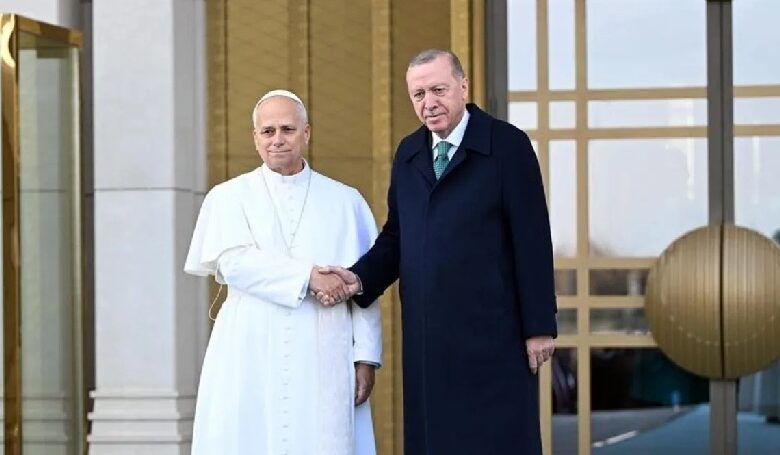
During Pope Leo XIV’s visit to Turkey, the leader of Catholics conveyed a fresh message of coexistence and mutual respect among religions through his presence at the Blue Mosque.
Pope Leo XIV, the newly appointed leader of the Catholic Church, entered Turkey on his first foreign trip and today, Saturday, November 29, corresponding to December 8, visited one of the most significant stops of his journey, the Blue Mosque, officially known as the Sultan Ahmed Mosque in Istanbul. This marks his first visit to a Muslim place of worship since his election as the leader of 1.4 billion Catholics worldwide; a visit that many observers regard as a sign of the continuation of dialogue and mutual respect among religions.
Pope Leo XIV, who assumed the papal throne following the death of Pope Francis, is following his predecessor’s path in supporting dialogue between Islam and Christianity. Before him, Pope Benedict XVI visited the Blue Mosque in 2006 and Pope Francis in 2014. However, unlike those two, he decided not to visit Hagia Sophia; a symbolic building whose tumultuous history has always been at the center of global attention.
Hagia Sophia, a masterpiece of sixth-century Byzantine architecture, was converted into a mosque following the conquest of Constantinople in 1453 and during the newly established Turkish Republic, following Atatürk’s initiative, its use was changed to a museum in 1935. Its inscription on UNESCO’s World Heritage List confirmed its global significance. However, its reconversion to a mosque in 2020 by the Erdoğan government sparked widespread criticism, and even Pope Francis had spoken of this decision with sorrow.
The Blue Mosque, famous for its blue Iznik tiles, is one of Istanbul’s most striking monuments and with its six tall minarets, has created an unparalleled spectacle on the historical horizon of this city. This masterpiece from the era of Sultan Ahmed I has always been considered a symbol of the rich Ottoman heritage.
Pope Leo XIV will continue his program by meeting with local church leaders, including the leader of the Orthodox Church. On Sunday, he will participate in worship ceremonies at the Armenian and Orthodox churches and will then travel to Lebanon, where he is to hold a Last Supper ceremony on Beirut’s coast with the attendance of approximately 120,000 people. Additionally, his participation in an interfaith meeting at the Beirut center will be another important part of this spiritual and diplomatic visit.
Pope Leo XIV’s visit to the region, at a time when religious and political tensions in the Middle East have once again become the focus of global attention, is viewed by many analysts as an effort to rebuild bridges of dialogue and coexistence between Christianity and Islam.