“Ignatius Maloyvan”: From Torture to Sainthood in the Global Church
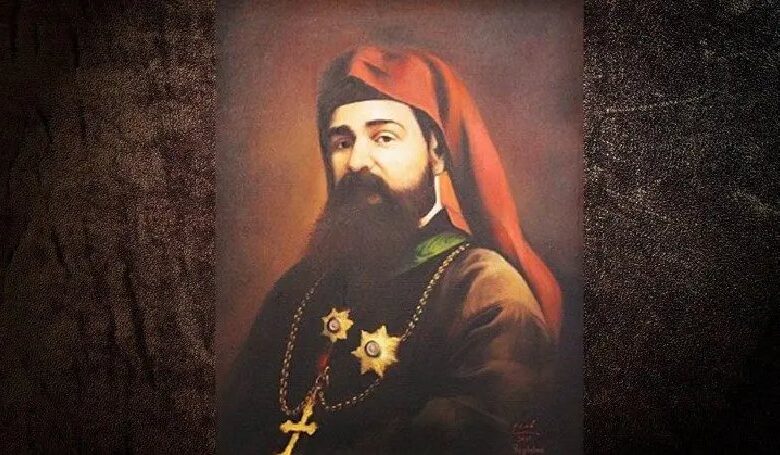
In an unprecedented ceremony in Vatican City, an Armenian primate who kept his faith steadfast through the harshest trials was added to the roster of saints in the Catholic Church.
In Saint Peter’s Square in Vatican City, one of the most significant moments in the history of the Catholic Church was recorded. Pope Leo the Fourteenth, in a grand ceremony, recognized seven prominent Christian figures as saints, among whom shone the name of “Ignatius Maloyvan,” the Armenian Primate. This ceremony, which brought together more than 70,000 people from around the world, represented not only a celebration of personal faith, but also a manifestation of new hope for Armenian Christians and the Church.
Ignatius Maloyvan was born in 1869 in “Mardin” (in the Ottoman Empire). His original name was “Shakrallah Malkan.” From childhood, he was interested in spiritual matters and moved to the monastery of “Our Lady of Bzommar” in Lebanon, where he completed his religious studies.
In 1896, he was ordained to the priesthood and later served actively among Armenian communities in Alexandria and Cairo. In 1911, he was chosen to become the Armenian Primate of Mardin, and from that time onward, he became known among his people as a “servant and spiritual father.”
With the outbreak of the Armenian Genocide, conditions became severe for churches and Christian communities. Ottoman forces, under the pretext of security, targeted churches and Christian centers. On June 3, 1915, Maloyvan was arrested along with 27 other Armenian Catholics.
He was subjected to immense pressure in court to renounce his faith. However, he clearly stated that he was not willing to abandon his beliefs, even if his life was in danger. Torture, brutality, and physical abuse were inflicted upon him and his fellow prisoners, but he did not renounce his faith.
It is said that just before his execution, Maloyvan performed the Last Supper ceremony for his companions in the same prison and distributed sacred bread. Some accounts say that “a cloud of light enveloped the group” and a spiritual fragrance filled the air, as if his martyrdom was something beyond an earthly death.
Finally, near “Diyarbakir,” probably on June 10 or 11, 1915, Ignatius Maloyvan was martyred. In those moments, his last words were: “I will give my life and soul for my faith and religion, and I take pride in the cross of the Lord.”
And then he said: “My God, have mercy on me and I entrust my soul into your hands.”
The canonization process for Maloyvan required years of effort and examination. He was elevated to the status of “Blessed” by Pope John Paul II in 2001 as a martyr.
In 2025, Pope Francis approved his canonization. On June 13, 2025, in a public consistory in Vatican City, it was formally announced that his name, along with six other figures, would be added to the list of saints. The date of the official canonization ceremony was set for October 19, 2025, in Saint Peter’s Square, a ceremony presided over by Pope Leo the Fourteenth.
The Armenian Catholic Church and Armenian communities around the world welcomed this event. In Lebanon, the President of Lebanon received an official invitation to participate in the ceremony. Church media and Armenian Christian rights advocates also referenced this canonization as a historic moment for faith in various statements.
World Christian media followed this canonization not only as an internal Church event, but with interest as a sign of faith’s resistance against oppression.
Vatican News reported in detail: “Ignatius Maloyvan, as a great martyr among the Armenians, will soon be canonized.”
In published reports, it has been emphasized that this canonization is an opportunity for believers to witness the power of martyrdom and loyalty to faith, especially at times when pressure on Christians is high in certain areas.
Pope Francis approved his canonization process and called him the “Martyr of Mardin.” In the consistory that examined canonizations, it was formally announced that the name of Maloyvan and other figures would be included in the list of saints on the announced date.
These developments generated hope and special attention not only among Arabic-speaking and Armenian Christians, but throughout the Latin Church and Catholic communities around the world.
The canonization of Ignatius Maloyvan is a historic opportunity to revisit the meanings of martyrdom, loyalty, and hope in the Church. He is a symbol of a person who, in the most difficult circumstances, chose faith. For today’s Christians, especially in regions where religious freedom is under pressure, this canonization is a reminder that genuine faith is revealed when a person is willing to sacrifice his life for faith in God.
Moreover, this event is a renewed emphasis on Armenian Christian identity and historical heritage, showing that despite diaspora, hardship, and pressure, Armenians remain faithful to their memories, names, and martyrs. On the other hand, Maloyvan’s canonization, in a period when the world faces crises of identity, bigotry, and ideological divisions, is an answer to the question that the value of martyrdom is the greatest indicator of pure faith.
Ignatius Maloyvan, raised in the Church from childhood, rose to a leadership role, resisted in the time of oppression, and in his final moments, chose love for God over his own life. Today, on the eve of his canonization, his name shines like a lamp in the darkness of history.
For Christian audiences, this event is a living message: “As long as we have faith, no oppressor’s injustice can extinguish our light. He who endured has now joined the company of saints, and his path will be a guiding light for generations to come.”