Endless Executions in Iran Break Death Records
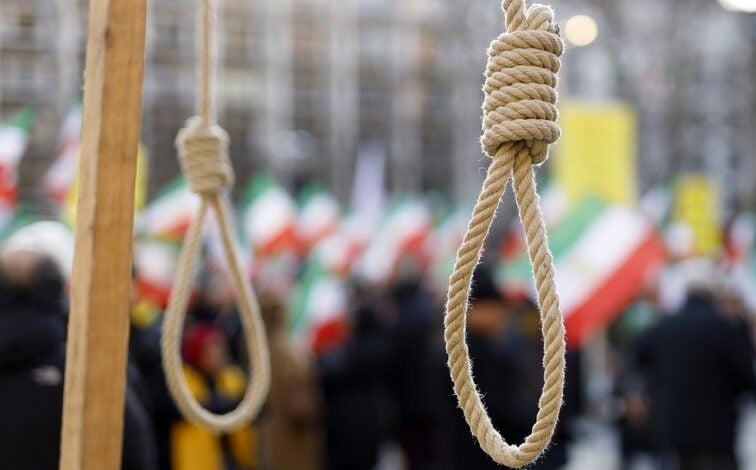
The dramatic and endless increase in executions in Iran has broken death records.
The United Nations Office of Human Rights released a report on Friday, August 29 (September 7) that once again exposes the horrific dimensions of the Islamic Republic’s execution policies. According to the report, in just the first eight months of the current year, 841 people have lost their lives as a result of death sentences in Iran; a figure that the United Nations describes as showing a “significant increase” compared to last year.
In July alone, 100 people were executed, a figure more than twice the number of executions in the same period in 2024. This pace in carrying out death sentences not only demonstrates the Islamic Republic authorities’ disregard for international calls to stop capital punishment, but also reveals that execution has become a political tool for suppression.
Among those executed are groups that have faced years of structural discrimination, including women, Afghan migrants, and ethnic minorities such as Baluchis, Kurds, Arabs, and particularly religious minorities. This concentration on vulnerable groups demonstrates that the government is exploiting the inequalities and social marginalization of these populations to advance its intimidation policies.
Ravina Shamdasani, senior spokesperson for the Office of the High Commissioner for Human Rights, said at a conference in Geneva: “The high number of executions demonstrates a systematic pattern of using capital punishment as a tool to create fear and suppress any form of opposition.”
She also added that the office has witnessed “the disproportionate targeting of ethnic minorities and migrants on death row” and recalled that Iran has repeatedly ignored repeated calls to join the global movement to abolish capital punishment.
The UN report also emphasizes that eleven others face the risk of imminent execution; six charged with the vague offense of “enmity against God” and five others for their connection to the nationwide protests “Woman, Life, Freedom” in 2021, clearly demonstrating that execution in Iran is not merely a criminal penalty, but a tool for political revenge against protesters.
Despite the repeated publication of such reports, international reactions remain largely limited to expressions of concern. Neither sufficient targeted sanctions against judicial and security officials have been imposed, nor effective political pressure to force Tehran to change course. According to observers, this very silence and inaction have sent a message to the Iranian government that it can continue executing capital sentences without consequences.
The increasing executions and deliberate selection of victims, rather than being signs of justice enforcement, demonstrate a government policy for survival through intimidation. The fundamental question remains: for how long will the international community witness the deadly record-breaking of the Islamic Republic without taking serious action to stop this cycle of violence?