Eighty Thousand Watchful Eyes of the Islamic System, Paving the Way for Complete Surveillance of People’s Lives and Clothing
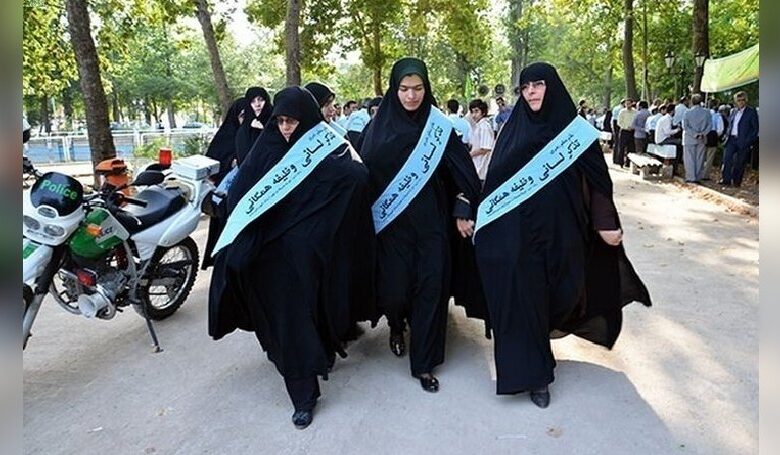
The Islamic Republic system, by appointing eighty thousand enforcers of virtue, has expanded comprehensive surveillance over people’s lives and clothing.
The new project titled “Chastity and Hijab Status Room” shows signs of systematic expansion of social control, a plan that critics view as another step toward the “Talibanization” of Iranian society.
While Iran continues to grapple with the aftermath of nationwide protests in 1401 and the state killing of Zhina (Masha) Amini, authorities of the Islamic Republic have expanded the scope of control and surveillance over citizens through a new plan. “Rouhollah Momennesab,” the secretary of the Tehran Province’s Board of Enjoining Good and Forbidding Evil, announced the organization of more than 80,000 personnel known as “enforcers of virtue” and the creation of a structure called the “Chastity and Hijab Status Room.”
According to Momennesab, this plan is being implemented in cooperation with the prosecutorial office and the Cyber Police to deal with content creators deemed by the government as “norm-violators” through closer monitoring of virtual space content and reports from popular forces. He emphasized that these personnel include thousands of educators and judicial officers who will play a “monitoring and reporting” role in schools, universities, public spaces, and even the virtual sphere.
Momennesab said: “Our approach is completely intelligent, multi-layered, and data-based. By establishing the Chastity and Hijab Status Room, enemy actions are monitored and analyzed, and cultural, media, and legal solutions are designed and communicated to relevant institutions.”
These statements come as human rights organizations and civil activists view similar plans as widespread violations of privacy and human dignity. Experts believe that the Islamic Republic, by using religious language, is institutionalizing organized espionage among citizens, a measure that could lead to increased social violence and public distrust.
On the other hand, many international observers view the stated objective of the board—combating secularism and social indifference—as an effort to suppress individual and cultural freedoms in a society where a large portion of women are no longer willing to accept mandatory hijab.
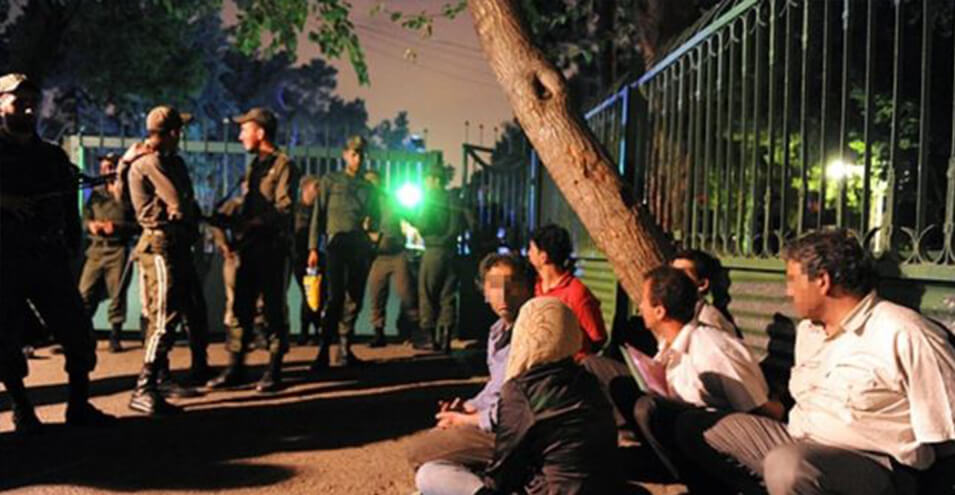
In recent years, numerous reports have been published about street confrontations between enforcers of virtue and people. From violent encounters in the metro and streets to interference in how citizens dress or live their lives. Many of these cases, according to experts, exemplify the instrumental use of religion to control human bodies and behavior.
Moreover, domestic media have reported on the Board of Enjoining Good and Forbidding Evil’s action in seizing the sale of dolls called “Mortaza and Mortaziyeh” from online shops; an action that shows the scope of surveillance has even extended to the realm of children’s entertainment.
Christian analysts and human rights observers view this process as a sign of increasing religious authoritarianism in the structure of the Islamic Republic. In this view, a concept recognized in Christian theology as “the divine gift of human life” stands in stark contradiction with policies that limit human dignity, freedom, and agency.
Such plans are not merely, as critics argue, “an attempt to preserve morality,” but rather constitute a form of comprehensive ideological control over citizens’ bodies and minds; an effort that further stifles the spirit of freedom in an already oppressed society.