“Faith in Chains, Justice in Silence,” New Wave of Bahai Persecution in Iran
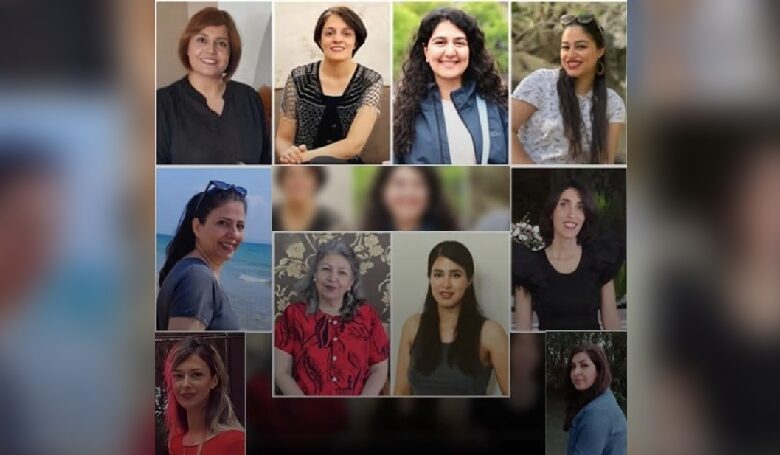
A new wave of persecution against Bahais in Iran has once again targeted justice, freedom of faith, and human dignity.
At a time when the world still trembles from the consequences of war and violence in the Middle East, news of the issuance of severe sentences against ten Bahai women in Isfahan has sounded a new alarm bell for religious freedom in Iran.
According to reports published on social media, the Isfahan Province Court of Appeal has upheld the original sentence against these women and has sentenced them to a total of 90 years in prison, 900 million tomans in fines, and additional punishments.
The official charge against them has been described as “deviant propaganda and educational activities contrary to Islamic law through the promotion and teaching of Bahai beliefs.” However, what is astonishing and concerning are the specifics of these charges: organizing painting classes, English language classes, yoga classes, and nature outings.
The names of these Bahai women who are now facing the execution of their sentences are: “Yeganeh Agahi, Yeganeh Roohbakhsh, Arzoo Sobhaniyan, Mozhgan Shahrzaei, Shana Shoghaifar, Nada Emadi, Nada Badkhosh, Parastoo Hakim, Nada Emadi, and Bahareh Lotfi.”
Since the establishment of the Islamic Republic in 1978 until today, the Christian and Bahai communities in Iran have been the target of structural discrimination and systematic pressure. Bahais have been deprived of basic citizenship rights such as education, employment, and freedom of conscience, and in many cases have been detained, tried, or ostracized from society solely because of their religious beliefs.
Human rights activists say that this new wave of arrests and judicial sentences should be understood as a continuation of the policy of suppressing religious minorities, which has intensified following recent tensions in the region.
An international observer has stated in an interview with foreign media: “When organizing art and educational classes is considered an example of deviant propaganda, it means the judicial system has become a tool for silencing any form of independent cultural and social activity.”
For the Christian community worldwide, this event is a reminder of a profound challenge: Will the international conscience remain silent in the face of the suppression of faith?
Our Christian teachings command us to defend freedom of faith and the dignity of humans, regardless of their religion and beliefs. As Christ said: “Blessed are those who are persecuted because of righteousness, for theirs is the kingdom of heaven.” (Matthew 5:10)
The sentences handed down against these ten Bahai women are not only a flagrant violation of religious freedom, but also a symbol of the continued suppression of faith in contemporary Iran—suppression that today targets Bahais, but whose consequences affect all of society.
The global Christian community must pray for these women and all those suffering in Iran and other countries because of their religious beliefs, and must be their voice. Freedom of faith is humanity’s divine heritage, and no government should put it in chains.