Security Council Fails to Extend Sanctions Relief Against Iran
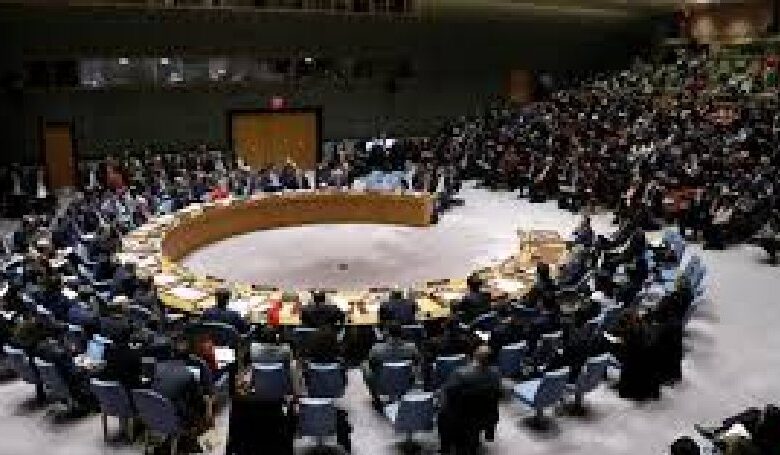
The Security Council failed to pass a resolution on extending sanctions relief against Iran, paving the way for the return of United Nations sanctions against Iran.
The United Nations Security Council on Friday, September 19, corresponding to Mehr 28, failed to pass a draft resolution aimed at extending the suspension of Iran’s sanctions within the framework of the 2015 nuclear agreement. This means that at the end of the current month, UN sanctions will automatically be reimposed on Iran.
The draft resolution, presented by South Korea as the rotating president of the Security Council, received only four votes in favor. In contrast, nine countries opposed it and two members abstained. Based on the recorded votes, Russia, China, Algeria, and Pakistan voted in favor of the resolution, while France, the United Kingdom, the United States, Sierra Leone, Slovenia, Denmark, Greece, Panama, and Somalia voted against it, with Guinea and South Korea abstaining.
This failure occurred while three European countries, including France, Germany, and Britain, had previously initiated the snapback mechanism to begin the process of returning sanctions. A process that set a 30-day period to find a diplomatic solution, which is now coming to an end.
“Vassily Nebenzia,” Russia’s representative to the United Nations, while referring to Europe’s efforts to activate the snapback mechanism, said: “Countries that signed Iran’s nuclear agreement do not have the right to reimpose UN sanctions against them.” He emphasized that “the reimposition of sanctions against Iran has no legitimacy and this action is a form of political extortion.”
China’s representative also supported the political approach and negotiations, emphasizing: “Iran’s efforts should be recognized and sanctions should be suspended for a period.” He also warned that the reapplication of pressures weakens the diplomatic process.
In contrast, “Barbara Woodward,” Britain’s representative, cited Resolution 2231 and said: “Resolution 2231 allows for the reimposition of sanctions against Iran.” She added: “European countries have acted within the framework of their legal obligations.”
France’s ambassador also claimed that Iran has increased its uranium enrichment level to 48 times the permitted amount and called for full cooperation by Tehran with the International Atomic Energy Agency.
“Dorothy Shea,” the US representative, in this session, defending her country’s position, stated: America’s negative vote does not mean obstruction in the path of diplomacy, but Iran has not met the necessary conditions for extending the suspension of sanctions.
With the failure of this resolution, the return of UN sanctions against Iran has become inevitable. The pressure from the United States and three European countries shows that Iran’s nuclear issue remains one of the most challenging issues on the Security Council’s agenda.