Gen Z Uprising in Nepal Leads to Government Overthrow
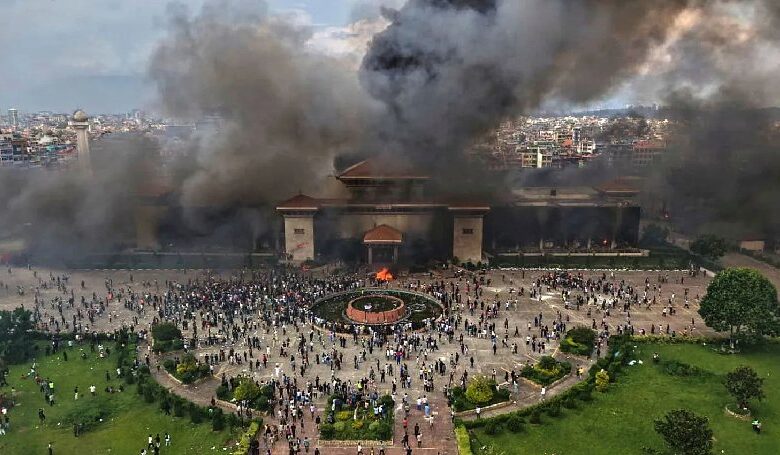
A Gen Z uprising in Nepal has resulted in the overthrow of the government, with the military entering the streets to restore order.
Widespread protests by Gen Z in Nepal, with the prime minister’s resignation and military deployment to the streets, have toppled the government. An experience that Iran’s people also need a stronger coalition to end their oppressive rule.
Widespread protests in Nepal, known as the “Gen Z Uprising,” ultimately led to the prime minister’s resignation and the collapse of the government. On Wednesday, September 10, corresponding to September 19 in the Persian calendar, the military deployed to the streets of Kathmandu, the capital, and asked people to stay home so that armed forces could restore order. Soldiers set up checkpoints and distributed information about curfew regulations, taking control of the city’s main centers.
The Nepali Army announced in a statement that “27 people suspected of looting have been arrested.” The deployment of military forces was a sign of relative restoration of control to a city that had witnessed government building fires, attacks on political officials, and the escape of hundreds of prisoners from prisons in recent days.
Prime Minister “Khadga Prasad Oli” resigned from his government position as protests intensified and criticism spread, though this move failed to reduce the anger of protesters. “Ram Chandra Poudel,” Nepal’s president, accepted his resignation and called for avoiding further violence.
The wave of protests began when the government blocked Facebook, X, and YouTube networks to pressure social media platforms and force them to accept government oversight. This measure sparked the anger of young people and quickly transformed into a symbol of deeper discontent stemming from corruption, unemployment, and social discrimination.
According to World Bank reports, youth unemployment rates last year were around 20 percent, and more than two thousand young people migrate abroad daily for work.
Widespread violence peaked last Tuesday when police opened fire on protesters, killing at least 19 people. This incident further inflamed public anger, and protesters set fire to government buildings, media outlets, and even the homes of politicians.
Reports indicate that some political leaders, including “Sher Bahadur Deuba,” leader of the Nepali Congress Party, and his wife “Arzu Rana Deuba,” the foreign minister, became targets of protester attacks and were seen with bloodied faces in released videos.
Nepal’s recent developments have shown that an organized popular uprising can bring even an entrenched government to its knees. These developments hold special significance for Iran’s people as well. The “Woman, Life, Freedom” uprising that began in autumn 2022 has faced the Islamic Republic’s bloody suppression, yet continues in various forms, and the fire of this protest has not yet been extinguished.
Nevertheless, Nepal’s experience shows that achieving complete overthrow requires more than scattered protests: “nationwide unity and solidarity among all segments of Iranian society—women and youth, workers, teachers, and retirees who have repeatedly shown their discontent—but to finally transcend oppressive rule, these movements must transform into a united and harmonious wave.”
Like Nepal’s people, Iranians seek to end structural corruption, suppression of freedom of expression, and censorship of cyberspace. Just as Nepal’s youth, through their unity, forced the prime minister and government to step down, Iranians too need stronger solidarity, greater coordination, and the continuation of struggle to achieve true freedom from the Islamic Republic.