Alarm Bell for Major Disaster in Tehran with Two Earthquakes in South Tehran
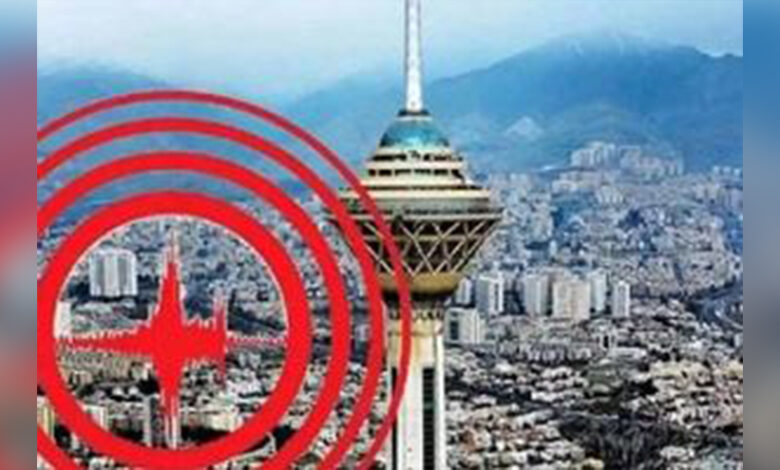
The occurrence of two earthquakes in south Tehran has sounded the alarm bell for a major disaster in the capital.
Early Friday morning, March 15, two earthquakes occurred near Varamin and the Javadabad area in south Tehran at depths of 8 and 9 kilometers.
One earthquake was recorded at 2:35 AM with a magnitude of 3.3 on the Richter scale at a distance of 13 kilometers from Javadabad, 24 kilometers from Varamin, and 24 kilometers from Pishva. Another earthquake occurred at 3:24 AM with a magnitude of 3 on the Richter scale at a distance of 10 kilometers from Javadabad, 21 kilometers from Varamin, and 22 kilometers from Pishva.
This terrifying earthquake has increased many concerns about the possibility of another earthquake in the capital. These concerns have been heightened due to deteriorating infrastructure, population density, and non-resistant buildings. While no reports of damage from this earthquake have been recorded, it could serve as a major warning bell for the occurrence of a larger earthquake.
Since Tehran is located on several active faults, non-standard construction, dilapidated buildings, and poor crisis management also increase the severity of potential earthquake hazards in the city. According to geological reports, among the major and minor faults in Tehran, the Mosha, North Tehran, Parchin, Kahrizak, and Rey faults are considered the most important and dangerous.
Following the two earthquakes that occurred early this morning, Ali Nassiri, head of Tehran’s Crisis Prevention and Management Organization, announced: “The North Tehran fault can cause earthquakes with high power, and due to the proximity of this fault to the deteriorated urban fabric, the danger is even greater. The worst-case scenario for Tehran is an earthquake with a magnitude of 6.7 on the Richter scale, which we hope never happens.”
Seyyed Mohammad Aghamiri, head of the construction committee of Tehran City Council, also stated: “There are 68 bridges in Tehran that do not have adequate safety measures, and in case of an earthquake, their columns will be broken. Since an earthquake with a magnitude of 7 on the Richter scale in Tehran is inevitable, after the earthquake, roads will be blocked and debris removal trucks will not be able to pass through.”
While referring to the deadly Turkey earthquake that occurred in February 2023, he said: “In that incident, the cities of Istanbul and Ankara were able to manage the earthquake, but if an earthquake occurs in Tehran, the command center will face problems. Parliament should allocate national funds to strengthen Tehran’s infrastructure against earthquakes.”
Mahdi Babaei, head of the safety committee of Tehran City Council, while expressing concern about the existence of 4,000 unstable neighborhoods in Tehran, announced: “The capital needs 500 emergency water tanks to deal with earthquakes, but so far only 50 tanks have been installed.”
Concerns become catastrophic when at least 29 hospitals have been built on major faults, which not only cannot contribute to crisis management during an earthquake, but will themselves become crisis centers.
Geological experts have repeatedly warned that based on research findings, the probability of a severe earthquake in Tehran between 2024 and 2030 is very high, and officials should take preventive measures before it occurs; however, government officials and city managers have expressed hope that an earthquake will not occur in Tehran.
Mehdi Zare, a seismology professor, while expressing concern about an earthquake in Tehran, said: “Various studies on the faults in the north, center, and south of Tehran show that each of these faults has the capability to cause a major earthquake, even exceeding magnitude 7. A major earthquake in Tehran is an inevitable reality that will occur sooner or later; however, weak public awareness, poor management, economic interests of specific groups, and neglect by some officials have caused this issue not to be seriously placed on the agenda. To reduce earthquake hazards in Tehran, a comprehensive program with a practical and scientific approach must be implemented.”
He also warned that if these measures are not taken, in the event of an earthquake in Tehran, we will face a major crisis in human, economic, and social dimensions that will take years to remedy.
Experts, through earthquake simulations on simulated models, estimated the number of deaths in a major earthquake in Tehran at more than 50,000 people and hundreds of thousands injured. They estimated that in an earthquake with a magnitude of 7 on the Richter scale, at least 30 percent of deteriorated buildings will be completely destroyed.