Challenges Faced by Iranian Christian Refugees in Georgia
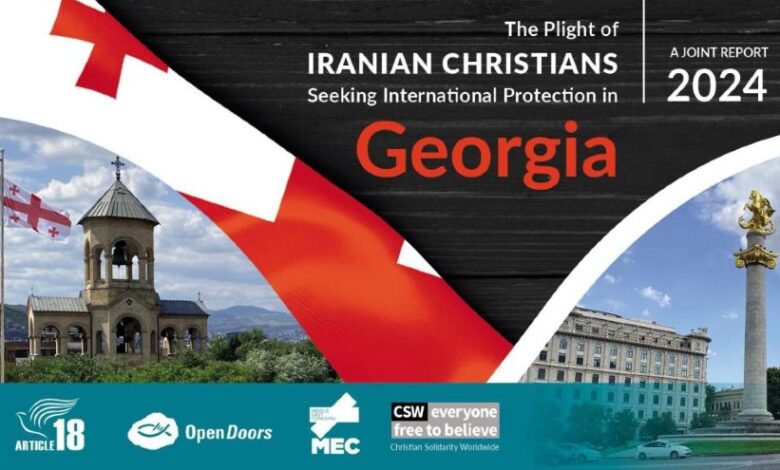
Christian organizations have released reports on the challenges facing Iranian Christian refugees in the country of Georgia.
Christian organizations “Article 18,” “Open Doors,” “MEC,” and “Christian Solidarity Worldwide” have released reports regarding the situation of Iranian Christians who have applied for asylum in Georgia but whose applications have been rejected by the government.
The reports from the aforementioned Christian organizations were prepared and published based on interviews with a group of refugees and their lawyers. According to these reports, Georgian authorities responsible for handling migration cases continuously reject asylum applications without regard to the fact that if refugees return to Iran, they will face persecution and harassment by the government.
In the report released by the mentioned organizations, it states: “Refugees face an uncertain future with little hope of being recognized as asylum seekers but with few alternative options for accessing international protection. Some individuals whose asylum applications have been rejected in Georgia previously lived for years as refugees in neighboring countries such as Turkey. They have expressed that they no longer know what to do and where to go.”
In their released report, Christian organizations noted that nearly one-fifth of all refugees in Georgia are Iranian, and announced that approximately 90 percent of asylum applications are based on conversion to Christianity and fear of persecution by the government and its agents in Iran.
The mentioned organizations also highlighted in their reports that there are various reasons for rejecting these applications, including “Georgia’s developing relations with the Islamic Republic government” and “intolerance toward Christian beliefs other than Georgian Orthodox.” As a result, hundreds of Iranian Christians are currently seeking asylum in Georgia with little hope of being allowed to remain long-term in the country.
In most cases, it has also been stated that one of the reasons for rejecting their applications is due to the alleged insincerity of their faith. However, based on interviews conducted with “Reza Fazioli” and “Amin Zanganezhad,” despite the fact that their Christian faith was accepted by Georgian authorities, their asylum applications were rejected.
Reza Fazioli, a Christian citizen, said in his interview with Christian organizations: “Thank God I was the first person whose Christian faith was confirmed by Georgian authorities, but then they told me that you will not have any problems in your own country and you can return.”
The mentioned reports state that the phrases included in the rejection letters for Reza Fazioli and Amin Zanganezhad’s asylum applications were completely similar. “Hadi Pourmohammadi,” another refugee whose application was rejected, stated: “It seems there is one letter for all Iranian Christians; they just changed my name and put my friend’s name in it.”
In conclusion, the report from the four aforementioned Christian organizations also presented recommendations to Georgian authorities regarding the situation of Iranian refugees, particularly Christians. They called on the Georgian government to recognize the diversity of Christian beliefs when assessing the authenticity of religious conversion. They also called on the international community to provide new safe and legal pathways for the resettlement of refugees.