Simona Brambilla Appointed as Head of Major Vatican Institution
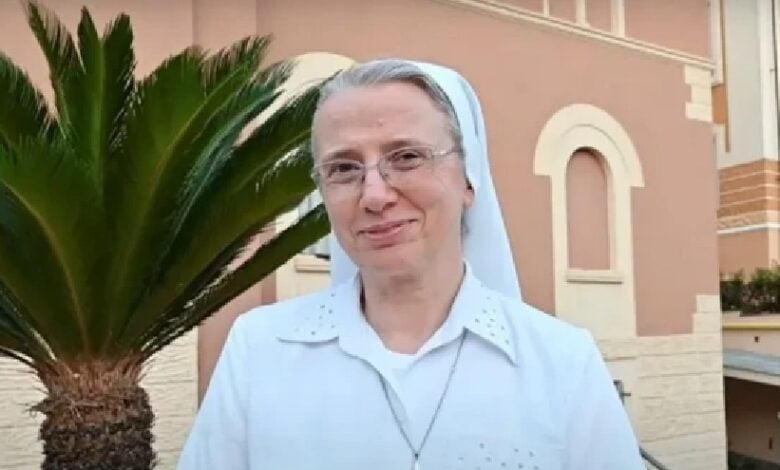
“Simona Brambilla” has been appointed as the first woman to head one of the Vatican’s major institutions.
For the first time in history, 59-year-old nun “Simona Brambilla” has been appointed as the first woman to head one of the Vatican’s important and major institutions. She has taken on the leadership of the “Dicastery for Institutes of Consecrated Life and Societies of Apostolic Life” on behalf of Pope Francis.
Simona was born in the city of “Monza” in Italy and studied nursing, but later joined the Sisters of the Consolata, a missionary institute. She served as the director of this institute from 2011 to 2023, which provided her with extensive and rich experience as a religious missionary in Mozambique.
Her appointment confirms that Brambilla, as the highest authority of this institution, will be responsible for overseeing religious communities of men and women and managing their relationships with their followers. Simona’s appointment to this position is a seal of approval on Pope Francis’s desire to increase the role of women in leadership positions within the Catholic Church.
Simona Brambilla stated last month: “I pray to God to grant us the grace to open our hearts even more. To receive this divine inspiration and allow it to transform us as individuals, as a community, as the Church, and as humanity.”
At the same time as appointing Simona as head of the Vatican’s religious institution, Pope Francis appointed Cardinal “Angel Fernández Artime” as her assistant to help her in her duties. However, this papal action has raised doubts among observers about the division of responsibilities and Brambilla’s actual role.
Dr. “Saul Prieto,” a specialist in social sciences and professor of society and religion at “Buenos Aires” University, commented on Simona’s appointment: “Brambilla’s appointment confirms a reality that has long existed—the numerical superiority of women in the Church at various levels. However, this recognition is not limited to statistics alone. This matter is related to internal dialogues within the religious community. This appointment is a sign of the synodal process that the Church is experiencing. In other words, a period of discussion and exchange of views taking place within the framework of meetings called Synods in the Catholic Church.”
Simona also stated last month regarding Synodal councils: “Synodality is a form of inspiration, listening, and a movement that transforms, liberates, unites, and harmonizes without creating superficial equality.”
It should be noted that Synods refer to councils in which leaders of the Catholic Church address important issues such as family, marriage, and priesthood. In the latest Synod, Pope Francis implemented reforms that created conditions allowing priests, nuns, women, and non-ordained men to participate in these meetings with equal status to bishops.