Trump Administration’s Maximum Pressure on Iran’s Nuclear Program
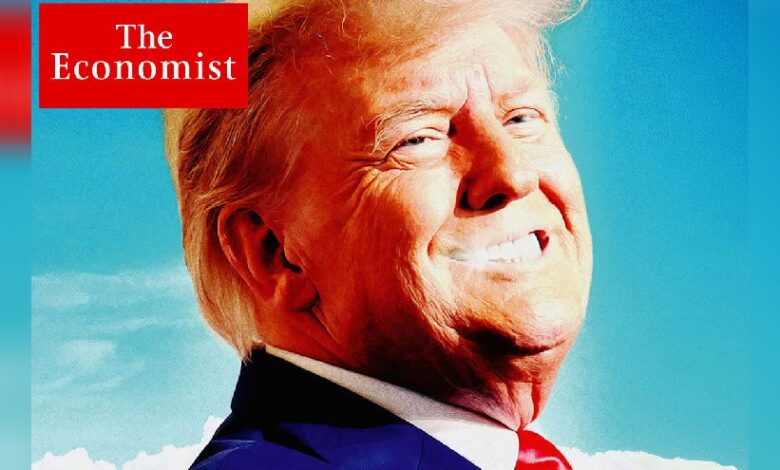
The “Economist” provided analysis on the maximum pressure policy of Donald Trump’s administration to counter Iran’s nuclear program.
British publication “The Economist” on Thursday, January 30, provided analysis on the dimensions of the Trump administration’s maximum pressure policy to counter Iran’s nuclear program. The Economist wrote: “Iran is in trouble at home and abroad. In less than a year, the country has lost a president, three allies (leaders of Syria, Hamas, and Hezbollah), several missile production sites, and all of its best air defense systems. The country has a dying economy, a growing energy crisis, and a dissatisfied population. It is no wonder that the regime relies on one of the few remaining arrows in its quiver: its nuclear program.”
The publication, which recently interviewed Rafael Grossi, Director General of the International Atomic Energy Agency, added: “The Islamic Republic has come closer to a bomb than ever before. Iran has also increased its uranium enrichment capacity and level following America’s withdrawal from the JCPOA, which occurred during Donald Trump’s first presidency, and can now enrich the uranium needed to make five atomic bombs in approximately one week. Iran also needs between 12 to 18 months to produce a bomb detonator cap.”
The Economist raised the question of what should be done about this nuclear capability. The publication also, while noting that some Israeli leaders want to take military action against Iran’s nuclear facilities and reduce the retaliatory capacity of Hamas and Hezbollah, wrote: “The only thing Israel needs is for America to provide it with bunker-buster bombs and help it against Iran’s inevitable retaliation.”
The Economist also posed another question under the heading of why America, with this action, doesn’t solve Iran’s nuclear issue once and for all, and wrote: “An attack would be very dangerous. It could destabilize the Middle East and keep America busy calming it down for years. Even a sustained bombing campaign against Iran’s nuclear facilities by America cannot destroy Iran’s nuclear knowledge, but there is room for diplomacy in this, which Mr. Trump appears eager for.”
The publication also referred to Donald Trump’s intention to apply maximum pressure against Iran and to tighten enforcement against Iranian oil smuggling, which compels Islamic Republic leaders to accept diplomatic solutions. Regarding the imposition of these sanctions, the Economist added: “At the same time, Britain, France, and Germany can also benefit from reapplying UN sanctions against Iran by activating the snapback mechanism, a measure that increases pressure on Tehran. If Mr. Trump’s harder approach is to bear fruit, it must have a coherent objective. Some hardliners want to use economic pressure to topple the Iranian regime. It is understandable that the Iranian government is a dying religious government that many Iranians despise and at the same time faces a succession crisis. But if cornered, it may jump out of the ring. However, at present, Iran’s leaders have not decided to issue a final order to make a bomb. So Mr. Trump’s goal should be to maintain the status quo.”
The Economist predicted that in addition to increasing pressure on Tehran, Trump will propose an agreement that includes lifting sanctions and supporting continued normalization of relations with Saudi Arabia, provided that the Iranian regime takes two practical steps.
The Economist described these practical steps as follows: “The first step is serious restriction of Iran’s nuclear program, and the second step is that Iran permanently stops problematic regional activities and ends military support to Hamas, Hezbollah, and Yemen’s Houthis.”