Sadegh Zibakalam: “Mr. Saleh, Cultural Engineering is Nothing but a Mirage”

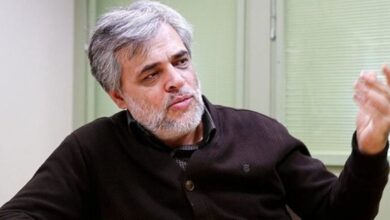
Sadegh Zibakalam, addressing Seyyed Abbas Saleh, Minister of Culture and Guidance, said: “Mr. Saleh, cultural engineering is nothing but a mirage.”
“Sadegh Zibakalam Mofrad” was a professor of law and political science at the University of Tehran and a professor at the Research and Science Unit of Azad University. He is a writer and one of Iran’s experts with a reformist and neoliberal orientation. He has been a critic of the Islamic Republic’s government in the field of foreign policy and is a supporter of normalizing Iran’s relations with Western countries.
Recently, in criticizing the remarks of Dr. “Seyyed Abbas Saleh,” Minister of Culture and Guidance, regarding the prevalence of South Korean pop music among Iranians, particularly youth and adolescents, he wrote: “Mr. Dr. Saleh, the esteemed Minister of Culture and Guidance, expressing dissatisfaction with the prevalence of South Korean pop music among Iranian youth, attributed the blame to the weakness and poor performance of cultural engineering by officials in promoting our own rich classical and modern Persian music.”
While pointing to numerous economic problems, unemployment, and the like, he added: “This is neither the first time nor will it be the last time that officials blame social problems on weak cultural engineering. Officials believe that culture can be created; that is, the system can impose its desired norms, behaviors, and beliefs—from social to religious, from moral conduct and lifestyle to hijab and philosophical and historical beliefs, and everything else it wishes—through education and propaganda, cultural engineering them, and transmitting them to new generations.”
He also referred to 1392 (2013), the time of Hassan Rouhani’s presidency, and continued: “I recall that in the early days of Mr. Rouhani’s presidency, because some hardline clerics in his government did not consider it theirs, they had started criticizing him for not allocating sufficient budget to religious institutions. I too prepared a statistic from the official budgets of government agencies and showed that the combined budget of organs, institutions, and organizations responsible for religious affairs is several times greater than that of our Environmental Organization and universities, a cost justified, of course, by the same mirage of cultural engineering.”
Of course, it was not only the Islamic Republic that has been chasing the mirage of cultural engineering for 46 years without any results—from the cultural revolution to the Islamization of universities and the humanities, to the production of dozens and hundreds of films and series, from educational matters from kindergarten to postgraduate level—ultimately failing and then resorting to guidance patrols and the hijab and chastity bill.”
In conclusion, referring to the Minister of Culture and Guidance Dr. Saleh, he added: “Officials like Dr. Saleh firmly believe in the mirage of cultural engineering. Education is blamed for the fading of religion among new generations; state media is blamed; universities are blamed for state media; seminaries are blamed for universities; and so on. All of which blame is placed on the West and recently also on cyberspace.”