Extension of UN Fact-Finding Committee and Special Rapporteur Mandate
Dozens of human rights organizations and civil society groups have called for the extension of the UN Fact-Finding Committee and Special Rapporteur mandate.
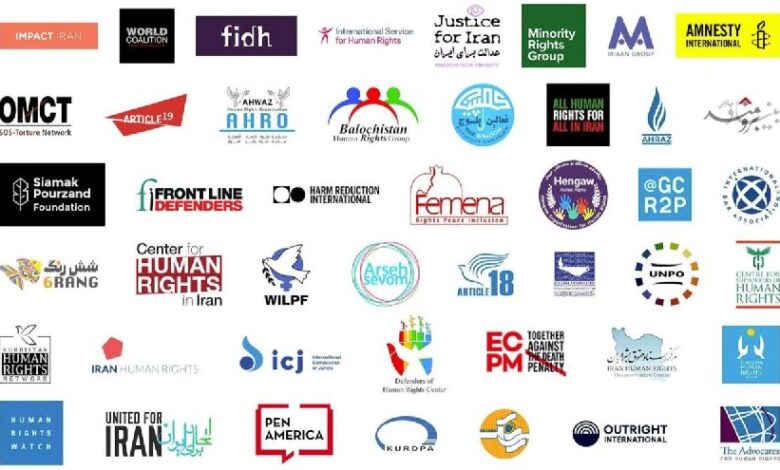
More than 40 international and Iranian human rights organizations, including Human Rights Watch, Article 19, Amnesty International, and the Boroumand Foundation, have issued and signed a statement calling on member states of the UN Human Rights Council to extend the mandate of the UN Special Rapporteur and the Fact-Finding Committee.
The UN Fact-Finding Committee published a report on Friday, March 8, stating that the Islamic Republic committed crimes against humanity during the suppression of 2022 protests and severely tortured prisoners from ethnic and religious minorities, a report welcomed by human rights organizations.
Reports released by UN Special Rapporteur Javaid Rehman regarding the human rights situation in Iran in recent weeks, as well as investigations by the Fact-Finding Committee into human rights violations during the 2022 protests in Iran, will also be reviewed.
Human rights organizations have now issued and signed a statement yesterday, March 18, coinciding with the UN Human Rights Council session in Geneva to review the human rights situation in Iran, emphasizing that the two aforementioned mandates are distinct yet complementary to each other. The signatories of this statement have also expressed concern about “severe and systematic human rights violations in Iran.” These organizations, while emphasizing the continued violations and severe suppression of Iranian citizens, religious, ethnic and religious minorities including Christians, Baha’is, Baluch people, Gonabadi Dervishes, and Sunnis, stated: “The revival of the Special Rapporteur’s mandate is necessary because the human rights crisis in Iran is severe and includes ongoing crimes against international law and serious human rights violations affecting millions of people in Iran and restricting a wide range of rights.”
The full text of the statement is as follows:
“To: Member States of the UN Human Rights Council
Your Excellency,
We, Iranian and international human rights organizations, request your support for the extension of the UN Special Rapporteur mandate on human rights in the Islamic Republic of Iran and the extension of the International Fact-Finding Committee mandate on the Islamic Republic of Iran at the fifty-fifth session of the Human Rights Council. The continuation of these two distinct yet complementary mandates is vital to fulfilling the Council’s duty to promote and protect human rights in Iran.
We also call upon your government to use this opportunity and publicly express concern about severe and systematic human rights violations within the country. The Fact-Finding Committee has stated that some of these violations “constitute crimes against humanity, committed as part of widespread and systematic attacks against civilian populations, namely women, girls and others who are human rights supporters.” We urge you to call for an end to these violations and demand justice, truth and reparations.
The revival of the Special Rapporteur mandate is essential because the human rights crisis in Iran is severe and includes ongoing crimes against international law and serious human rights violations affecting millions of people in Iran and restricting a wide range of rights. The monitoring, regular public reporting, and capacity to contact authorities and other stakeholders performed by the Special Rapporteur are vital in these circumstances.
The Council faces, once again, extensive evidence indicating a systemic failure to hold accountable those responsible for crimes under international law and other human rights violations in this country. These include widespread violations of the right to life, freedom from torture and other ill-treatment, personal security and liberty, fair trial, effective reparation, freedom of religion or belief, expression, peaceful assembly and association, and privacy rights, as well as rights to health, education, subsistence and work, as briefly outlined in the annex to this letter.
Women and girls continue to be treated as second-class citizens, with intensified suppression of the imposition of degrading and distressing mandatory hijab rules. LGBTQI individuals and ethnic and religious minorities also face systematic discrimination. Targeted individuals include Ahwazi Arabs, Azerbaijani Turks, Baluch, Kurdish, and Turkmen peoples; persons belonging to religious or belief minorities such as Baha’is, Christians, Gonabadi Dervishes, Jews, Yarsan (Ahl-e Haq), Sunni Muslims, and atheists.
In this context, the revival of the Special Rapporteur mandate is critical in monitoring and documenting developments and reporting to this Council on whether Iranian authorities are complying with their human rights obligations. The Special Rapporteur plays an essential role in engaging with Iranian authorities, and his urgent appeals and other correspondence can sometimes save lives. He also calls for an end to extrajudicial executions and improved conditions for detainees and access to emergency medical care. In a context of highly repressive tactics to restrict civic space, this mandate also draws attention to the voices of survivors, victims and their families, human rights defenders and others seeking truth and justice. Over the past decade, the Special Rapporteur’s expert findings and recommendations have been critical in informing and directing the efforts of UN bodies and member states to encourage Iranian authorities to take action to comply with their human rights obligations and hold them accountable.
The mandate of the Fact-Finding Committee, established following the death of Zhina (Mahsa) Amini in custody to investigate violations in the context of the nationwide protests in 2022 (with specific focus on women and children), remains essential. Not only do violations related to the 2022 protests continue in Iran, but this mandate also plays a vital role in addressing the failure to hold accountable those responsible for these crimes and other violations.
As stated, crimes under international law related to the 2022 protests continue. Thousands of people, including children, face harassment, arbitrary detention, unjust prosecution, and suspension or expulsion from education or employment for peaceful exercise of their human rights. Intelligence and security agencies continue to target family members of individuals unlawfully killed during protests because they seek truth and justice for their loved ones. At least 9 individuals have been arbitrarily executed following grossly unfair trials related to the protests. UN experts in January 2024 strongly condemned the execution of Mohammad Ghobadlou and noted that according to reports, at least four individuals are at imminent risk of execution in connection with nationwide protests, while 15 others face death sentences. However, impunity continues, and there has been no evidence of impartial, independent and effective domestic investigations into their use of unlawful and lethal force, torture and other ill-treatment including rape and other forms of sexual violence and other serious human rights violations.
The long-standing patterns of human rights violations outlined in the annexed document are rooted in what the Fact-Finding Committee describes as a situation of “widespread failure to hold accountable,” adding that under these conditions “authorities have failed to investigate alleged human rights violations or prosecute or punish those responsible and have systematically obstructed victims’ and their families’ efforts to obtain reparation and establish the truth.”
As this Council emphasized in its resolution last year, “persistent and systematic failure to hold accountable those responsible for serious human rights violations and crimes under international law and the lack of accountability create an environment of impunity that encourages perpetrators of violations to commit crimes. Victims of violations, deprived of effective reparation, and cycles of violence become perpetuated.”
To prevent past patterns of violations from recurring in the future, this situation of widespread failure to hold accountable those responsible for human rights violations and international crimes must be addressed. Only an independent investigative body with adequate resources, personnel and time can provide an appropriate response to this fundamental challenge. The Fact-Finding Committee clearly has an important role in this regard.
As part of its mandate, the Fact-Finding Committee has placed the issue of women and girls at the center of its investigations. The Committee has concluded that gender-based persecution, which constitutes a crime against humanity, has occurred, and that “pervasive, deep-rooted structural and institutionalized discrimination against women and girls in Iran that has cast a shadow over all aspects of their private and public lives” has both “triggered” and “enabled” the violations and crimes documented by this Committee. Extension of the Fact-Finding Committee mandate will enable further and deeper analysis of the gender dimension of human rights violations and crimes documented.
Despite delays in operationalization and budgetary challenges beyond the Committee’s control, this body has made significant progress in investigating human rights violations that occurred in the context of protests. However, as stated above, not all necessary work has been completed, and the Fact-Finding Committee needs more time and adequate resources to process the significant amount of evidence collected. More time will enable the Committee to, before presenting its final report, fill gaps in its findings and find more ways for Iranian authorities to achieve justice, truth and reparations for serious human rights violations and crimes under international law. This will also enable survivors, victims and their families, who testify and participate in achieving truth and justice, to have their voices heard.
These two mandates are clearly distinct and complementary to each other. The Fact-Finding Committee has a temporary mandate to investigate a specific set of events characterized by unbounded state violence. The Special Rapporteur mandate does not have the resources necessary to conduct this task. The Fact-Finding Committee has a specific mandate to address the failure to hold accountable and the rights of women and children. The long-term mandate of the Special Rapporteur, meanwhile, plays a key role in ensuring that other violations outside the scope of the Committee’s mandate receive appropriate responses and ensures that Iranian authorities maintain some level of engagement with the Council on a wide range of human rights violations committed against the Iranian population and continue to do so with impunity. The Special Rapporteur also plays a vital role in addressing individual cases, including in relation to executions which saw a sharp increase in 2023.
Victims and survivors of past and present violations need these two mechanisms to remain in place and operational. This applies to their families, human rights defenders, journalists and other media workers, activists and others who continue to face retaliation solely for the peaceful exercise of their human rights.
For all these reasons, we call upon your government to support both the extension of the UN Special Rapporteur mandate on the human rights situation in Iran and the extension of the UN Fact-Finding Committee mandate on Iran at this session, and to press the Iranian government to provide unhindered access to these mechanisms to Iranian territory. We also call upon your government to strongly express concern about the human rights crisis in Iran and send a strong message to Iranian authorities that continued human rights violations must stop, that the failure to hold accountable those responsible for human rights violations and international crimes must end, and that Iranian authorities will be held responsible.”