Dialogue between Fariborz Karmizand and Shahram Sabzwari Regarding Events in Iran
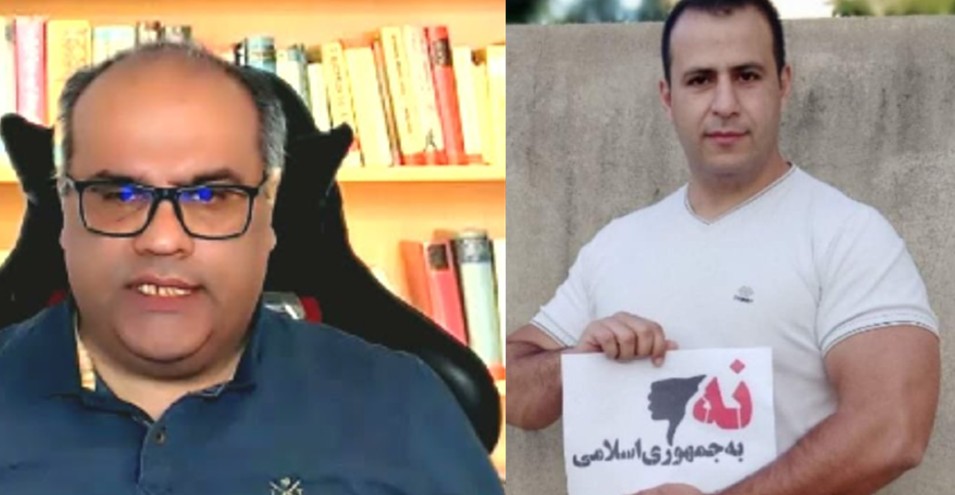
Fariborz Karmizand and Shahram Sabzwari discuss events in Iran in a dialogue with each other and present solutions to the Iranian people.
Sarvan Satwan Avval Fariborz Karmizand worked as an intelligence police officer in Tehran and during the December 2017 protests, after witnessing police corruption, he disobeyed orders and left the country. Now, with the knowledge he possesses, he helps protesters from outside the country.
Shahram Sabzwari was also a security employee in the information protection division of the Islamic Republic’s military, who in late 2014, after his resignation was not accepted by the Islamic Republic government, was forced to illegally leave the country and seek asylum in another country.
Now the conversations of these two experts revolve around issues in Iran and they want to, with their like-minded colleagues, help the Iranian people in overthrowing the Islamic Republic regime.
A summary of their remarks is as follows: “Regarding calls to action, it can be said that successive and unplanned calls to action not only fail to solve a problem but only create despair. A call to action should be principled and purposeful. Silent protests have practically been ineffective so far and have only caused protests to fizzle out. The revolution must be daily and continuous.
This uprising is not called a protest but a revolution, and a way must be created to overthrow it. There are no boundaries for action against the Islamic Republic. Every action must be taken to strike against the Islamic Republic because the goal is to overthrow the system.
There are forces that have supported the government until the last moment, but it should be noted that a large number of internal attrition has occurred within the police force and the Revolutionary Guards. They are now under considerable pressure from their families and relatives as well as society.
Many doctors do not accept insurance booklets from armed forces personnel (except the military code) and pharmacies do not give them medicine. Even from local stores they are under pressure. All these issues cause their attrition, despair, and exhaustion.
Another point is that when you go to the streets and block them, you must also block the sidewalks so that security motorcyclists cannot pass. The greatest fear of security forces is places where objects are thrown at them from inside houses. The Islamic Republic will fall with the unity of millions of people. The Islamic Republic will not relinquish power unless a coalition is formed between inside and outside the country. Different working groups are needed to accelerate the revolutionary process. A popular revolution will never proceed with silence.
The other issue is a military coup by the Revolutionary Guards. A military force carries out a coup when it lacks resources and wants to acquire them. But when they have financial resources, they will not do this, and if this happens, military conflict between the army and the Revolutionary Guards will occur. Therefore, strikes must take a more serious form. People should start by taking over less important government offices and centers.
Actions should also be taken to bring down transportation. Bus terminals and taxi services, BRT lines, metro, etc., whose users are conservative and middle-class, will only join the revolution when continuing a normal life becomes impossible for them.
It is worth noting that the change in the police chief, in which a burned-out piece was used, indicates that there is a path for them as a representative and a troublemaker within the system.
Fariborz Karmi also wrote on his Instagram page that the Islamic Republic government is even very afraid of holding the first stage of the university entrance exam. They have estimated that given the simultaneous nature and widespread administration of the exam across the country and the average age of young people and the presence of most families alongside their children, if action against the regime is organized, it will be difficult to control.
To what extent can these solutions be fruitful in overthrowing the Islamic Republic regime?